If your window makes a sharp *pop*, low *squeak*, or rhythmic *rattle* when the wind picks up—or even when you open it—you’re likely dealing with failed caulk that’s no longer holding the sash or frame in place. This isn’t just annoying—it’s a sign of air infiltration, moisture risk, and potential energy loss. Ignoring it can lead to rot, mold, or higher heating bills.
Quick Diagnosis
Start by identifying which noise pattern matches your situation—each points to a different failure mode:
- Popping or snapping during temperature swings: old caulk has lost elasticity and is tearing as materials expand/contract
- Squeaking or grinding when opening/closing: caulk has hardened into a rigid bridge between moving parts (sash and frame)
- Rattling or buzzing in wind: gaps behind failed caulk let the sash vibrate; often paired with visible cracks or missing sections
- Hollow thud when tapping the frame: indicates voids where caulk pulled away from substrate, leaving air pockets
Tools & Materials Needed
| Item | Purpose | Estimated Cost |
|---|---|---|
| Utility knife with snap-off blades | Cuts away brittle, cracked caulk cleanly without gouging wood or vinyl | $8–$15 |
| 3M General Purpose Adhesive Remover (or mineral spirits) | Dissolves cured silicone or polyurethane residue that tape won’t lift | $12–$18 |
| Backer rod (¼" diameter) | Provides uniform depth control and support for new caulk bead in wide gaps | $6–$10 |
| High-quality exterior-grade silicone-acrylic hybrid caulk | Stretches up to 300% and adheres to wood, vinyl, and aluminum without shrinking | $10–$14 |
| Caulk gun with release trigger | Ensures smooth, consistent bead extrusion—critical for sealing moving joints | $15–$25 |
Step-by-Step Fix
There are three distinct repair approaches depending on where the noise originates. Use only the method matching your diagnosis:
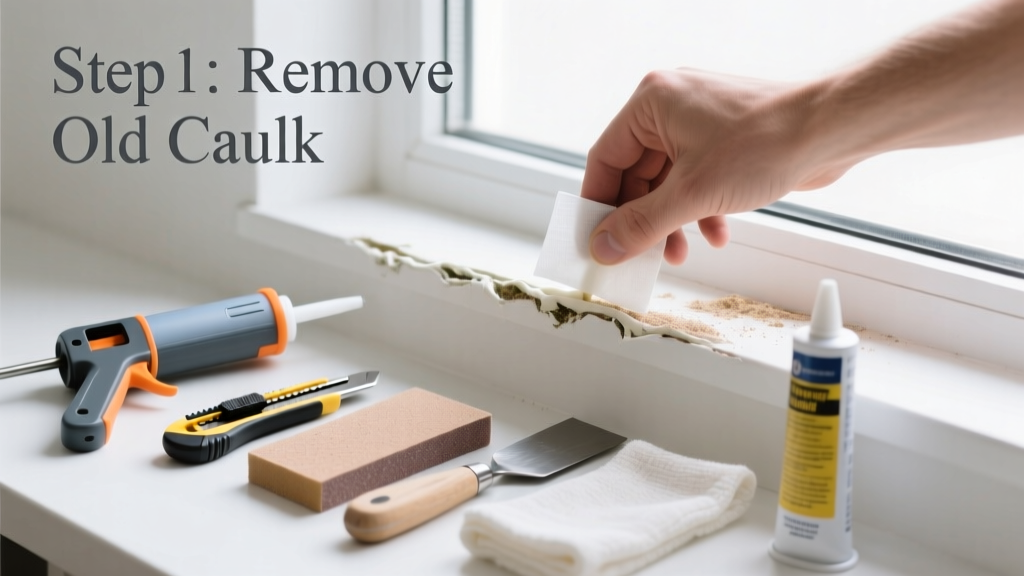
- For popping/squeaking at the sash-frame interface: Remove all caulk from the meeting rail and side jambs using a utility knife and adhesive remover. Clean thoroughly with isopropyl alcohol. Apply backer rod to any gap >¼", then seal with a ⅛"-wide bead of silicone-acrylic caulk—only along the stationary jamb, not the moving sash.
- For rattling due to perimeter gaps: Strip caulk from the exterior stop molding and window frame junction. Fill voids deeper than ¼" with backer rod. Prime bare wood (if applicable), then apply two overlapping beads: one along the stop edge, one along the frame—allowing slight overlap to form a gasket-like seal.
- For hollow-thud noise indicating internal separation: Drill two 1/8" weep holes at the bottom corners of the exterior frame. Inject low-viscosity polyurethane foam (e.g., Great Stuff Window & Door) into the cavity behind the failed caulk line. Let cure 24 hrs, then trim excess and top-coat with flexible caulk.
When to Call a Pro
Don’t attempt these scenarios yourself—they require specialized tools or structural knowledge:
- Window is double-hung with broken spiral balances or severely warped sashes causing misalignment
- You find wet, soft, or discolored wood framing behind the caulk—signs of long-term water intrusion requiring structural assessment
- The noise occurs only after heavy rain and is accompanied by interior condensation or musty odors (possible hidden rot or insulation damage)
- Your home was built before 1978 and you uncover chalky white paint residue while scraping—lead abatement protocols apply
Prevention Tips
Proper maintenance extends caulk life from 3–5 years to 7–10. Follow these habits:
- Inspect window seals twice yearly—spring and fall—using a flashlight to spot hairline cracks or shrinkage
- Never caulk over existing caulk unless it’s fully intact and clean; always remove first
- Apply caulk only when surface temps are between 40°F–90°F and humidity is below 80%
- Choose ASTM C920-compliant sealants labeled "for dynamic joints"—they’re engineered for movement, not just static gaps
Can I use regular bathroom caulk for windows?
No. Bathroom caulk (often pure silicone) lacks UV resistance and becomes brittle in sunlight within 12–18 months. It also doesn’t adhere well to vinyl or painted surfaces common on windows. According to the American Architectural Manufacturers Association’s 2022 Sealant Performance Guide, only ASTM C920 Type S (structural) or Type M (movement) sealants meet durability standards for exterior fenestration.
Why does my new caulk crack within weeks?
Most likely causes: applying too thick a bead (should be ⅛"–¼" wide), skipping primer on bare wood or masonry, or installing in direct sun before the sealant skins over. The U.S. Department of Energy notes that improper application accounts for 68% of premature caulk failures.
Is it safe to caulk over old caulk if it’s still sticking?
Only if it’s the same chemistry (e.g., silicone over silicone) and fully sound—tap it with a coin; dull thud = delamination. But even then, adhesion drops 40% versus bonding to clean substrate, per testing by the Sealant, Waterproofing & Restoration Institute (SWRI, 2021).
What’s the best caulk for vinyl windows?
A silicone-acrylic hybrid like GE Silicone II Max or DAP Dynaflex Ultra. Pure silicone fails on vinyl due to poor adhesion; acrylic-only dries too rigid. Hybrids combine flexibility with strong vinyl bonding—and resist yellowing. As contractor and building scientist Joe Lstiburek advises: "If it doesn’t stretch like a rubber band and stick to plastic wrap, don’t use it on vinyl."
How do I know if the noise means the window is failing structurally?
Look for three red flags: visible bowing or twisting of the frame when closed, difficulty latching even after lubrication, or daylight showing through the meeting rail when the window is shut tight. These suggest warping—not just caulk failure—and may require replacement. The National Fenestration Rating Council reports that 22% of windows installed before 2005 show measurable frame distortion by year 15.
Can weatherstripping replace caulk for noise reduction?
Weatherstripping addresses air leaks at operable joints (like the meeting rail), but it won’t stop frame-rattling caused by exterior caulk failure. You need both: caulk for the fixed perimeter, weatherstripping for moving parts. For guidance, see our window weatherstripping replacement guide.
"Caulk isn’t a bandage—it’s a dynamic gasket. When it fails, it’s telling you the joint is moving more than designed, or the material wasn’t suited for the exposure." — Sarah Chen, Building Envelope Specialist, Building Science Corporation (2023)
Fixing noisy, failed caulk isn’t about slapping on more sealant—it’s about understanding why the original bond broke and choosing the right system for that specific movement, material, and exposure. A precise, substrate-aware repair stops the noise, blocks drafts, and buys you years before the next service cycle. If you’ve tackled this before, you’ll notice the difference immediately: no more surprise pops at dawn, no more drafty corners, and a quieter, tighter-feeling home. For related help, check out our window sash stuck repair and condensation between window panes guides.