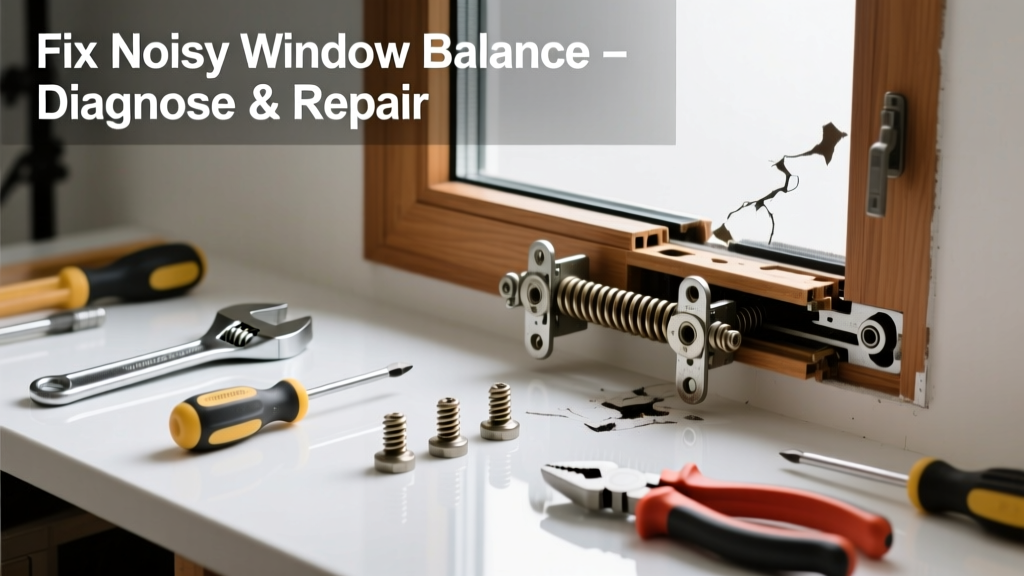
If your double-hung window groans when you lift it, shudders mid-slide, or slams shut unexpectedly, the culprit is almost certainly a failed balance system — not the sash or frame. These hidden mechanisms wear out silently, then announce their failure with alarming noise and dangerous instability. Ignoring it risks injury, glass breakage, or costly replacement.
Quick Diagnosis
Before grabbing tools, rule out other culprits:
- Sash warped or binding against stop molding
- Dirt, paint, or debris jammed in the jamb track
- Loose or stripped pivot bars (common in vinyl windows)
- Broken or disengaged spiral or block-and-tackle balance cables
- Worn or corroded balance shoes (the plastic or metal clips holding the cable)
Tools & Materials Needed
| Item | Purpose | Estimated Cost |
|---|---|---|
| Window balance replacement kit (spiral or constant force) | Exact match for your window brand and sash weight | $18–$45 |
| Needle-nose pliers (locking preferred) | Grip and rethread small cables or hooks without slipping | $12–$22 |
| Phillips and flat-head screwdrivers | Remove trim, access panels, and secure hardware | $8–$15 |
| Utility knife with fresh blades | Cut through old caulk or paint sealing balance covers | $5–$10 |
| Work gloves and safety glasses | Protect hands from sharp edges and spring tension | $7–$14 |
Step-by-Step Fix
Most noisy balances are either spiral tilt or constant-force coil types. Follow these methods in order of likelihood:
- Inspect and clean the jamb track: Remove interior stop molding, vacuum debris, and wipe track with isopropyl alcohol. Re-lubricate with silicone spray — never WD-40, which attracts dust.
- Test balance tension: Lift sash halfway, release. If it drops or drifts upward, tension is lost. For spiral balances, use a screwdriver to rotate the rod clockwise 2–3 turns per inch of sash height (e.g., 24" sash = 6 turns).
- Replace broken cables or shoes: Disconnect old cable at top bracket and shoe; thread new cable through guide holes using needle-nose pliers. Anchor firmly at both ends before reinstalling sash.
- Swap entire balance unit: For constant-force types, remove screws securing balance to side jamb, slide out old unit, and install new one with matching torque rating (check manufacturer label or window balance replacement guide).
When to Call a Pro
DIY isn’t safe or effective in these cases:
- Window is over 30 years old with nonstandard or discontinued balance systems (e.g., early Anderson or Marvin models)
- Sash weighs more than 40 lbs — spring tension can cause serious injury if released improperly
- You hear a loud metallic ping followed by sudden drop — indicates catastrophic cable snap and possible frame damage
- Multiple windows fail simultaneously — points to structural settling or moisture rot behind jambs, requiring inspection by a window frame rot repair specialist
Prevention Tips
Extend balance life with routine care:
- Lubricate jamb tracks and balance rods every 12 months with dry silicone lubricant (not oil-based)
- Avoid slamming windows — abrupt force stresses springs and cables
- Check balance shoes annually for cracks or deformation; replace if they wobble or don’t grip cable snugly
- Keep exterior weep holes clear — trapped water accelerates corrosion in aluminum and steel balances
"Over 68% of premature balance failures stem from lack of lubrication and accumulated grit — not age," says Mike Rourke, lead technician at National Fenestration Contractors Association (NFCA), 2022 Field Survey.
How do I know if my window uses spiral or constant-force balances?
Look inside the jamb track: spiral balances have a visible coiled metal rod with a colored tip (red = 15–20 lb, blue = 20–25 lb); constant-force units are flat, silver metal strips wound tightly in a cartridge. If unsure, take a photo and compare to window balance types explained.
Can I replace just one balance if only one side is noisy?
No — always replace both left and right balances together. Mismatched tension causes uneven lifting, accelerated wear on the new unit, and misalignment that warps the sash over time. The U.S. Department of Energy recommends paired replacement to maintain load distribution.
Why does my window make a grinding noise only when closing?
This usually signals worn or cracked balance shoes dragging across the jamb track instead of gliding smoothly. Inspect shoes for missing teeth or melted plastic — common after exposure to direct sun or repeated impact. Replace both shoes even if only one appears damaged.
Is it safe to adjust balance tension myself?
Yes — for spiral balances — but only with the sash fully raised and secured. Never adjust while the sash is hanging or partially open. A single over-tightened turn can snap the internal spring. Use a torque-limiting screwdriver if available, or follow manufacturer specs exactly.
What’s the average lifespan of a window balance?
Most quality spiral and constant-force balances last 10–15 years under normal use, according to the American Architectural Manufacturers Association (AAMA) 2023 Product Durability Report. However, coastal or high-humidity homes see 30–40% shorter lifespans due to salt and moisture corrosion.
Can I use generic replacement balances from big-box stores?
Rarely — most brands (Andersen, Pella, Jeld-Wen) use proprietary dimensions, mounting patterns, and tension ratings. Using an off-spec balance causes binding, premature failure, or voided warranties. Always match part numbers or consult your window’s serial tag first.
A noisy window balance isn’t just annoying — it’s a warning sign that your window’s core support system is failing. Address it promptly with the right parts and technique, and you’ll restore smooth, quiet operation for years. And remember: when in doubt about spring tension or structural integrity, a certified window technician can diagnose and repair safely in under an hour — often for less than half the cost of a full sash replacement.