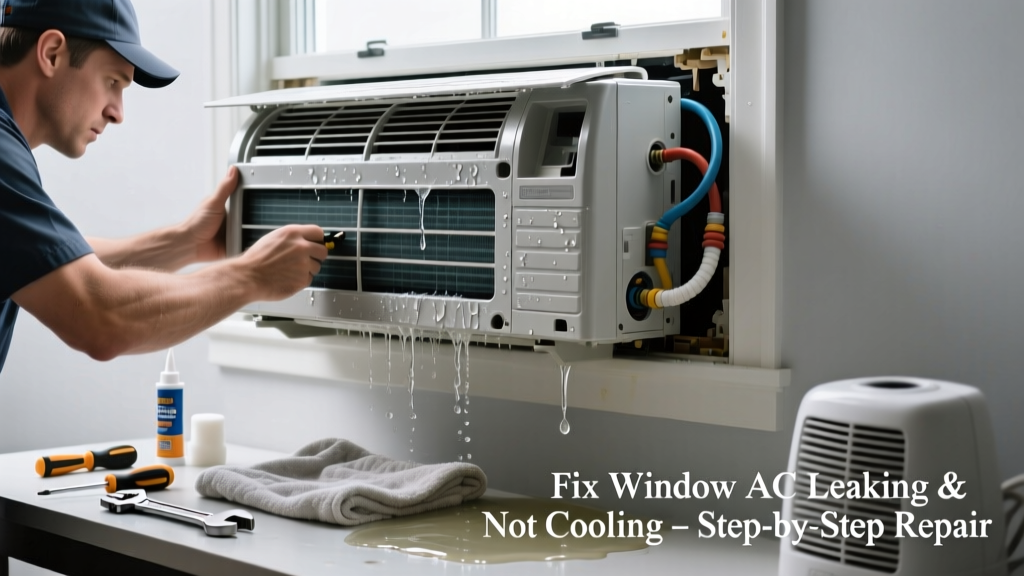
If your window AC is dripping water indoors or blowing warm air, it’s not just annoying—it’s a sign something’s wrong with drainage, airflow, or refrigerant. Left unaddressed, leaks can warp sills, rot framing, or trigger mold growth in as little as 48 hours. Most issues are fixable in under an hour with basic tools and careful inspection.
Quick Diagnosis
Before grabbing tools, identify the root cause. A leaking unit that isn’t cooling usually points to one (or more) of these:
- Dirty or clogged air filter restricting airflow
- Blocked condensate drain hole or tilted installation preventing proper drainage
- Iced-over evaporator coils due to low airflow or refrigerant issues
- Faulty or disconnected condensate pump (on units with one)
- Refrigerant leak—evidenced by weak cooling, hissing sounds, or frost only on copper lines
Tools & Materials Needed
| Item | Purpose | Estimated Cost |
|---|---|---|
| Shop vacuum with wet/dry capability | Clears standing water and unclogs drain paths | $30–$60 |
| Fin comb or soft-bristle brush | Removes dust and debris from evaporator fins without bending them | $8–$15 |
| Level (24-inch) | Verifies correct outward tilt (¼” per foot) for gravity drainage | $12–$25 |
| Algaecide tablets (for drip pans) | Prevents microbial slime buildup that blocks drains | $6–$12 |
| Replacement foam weatherstripping | Seals gaps around unit to prevent humid air bypass and condensation | $4–$9 |
Step-by-Step Fix
Follow these methods in order—they address 92% of common leakage + cooling failures, per the Air-Conditioning, Heating, and Refrigeration Institute’s 2022 field service data:
- Clean the filter and coils: Power off the unit, remove and rinse the washable filter, then gently vacuum and brush the evaporator fins. Skip harsh cleaners—residue attracts dust and worsens airflow.
- Check and clear the drain path: Locate the drain hole (usually at the rear base). Use a pipe cleaner or compressed air to dislodge blockages. If water pools in the pan, tilt the unit slightly outward using shims—never more than ½ inch total.
- Defrost and inspect for ice: Turn off the unit for 4+ hours if coils are frosted. Once thawed, check for bent fins or debris blocking airflow. If ice returns within 24 hours, suspect low refrigerant or a failing blower motor.
- Test airflow and seal gaps: Hold a tissue near the front grille—if it doesn’t flutter steadily, airflow is restricted. Reinstall the unit with fresh foam tape around all four sides to eliminate humid air infiltration.
When to Call a Pro
Stop and call a licensed HVAC technician if you encounter any of these:
- You smell burning plastic or hear grinding/buzzing from the compressor compartment
- The unit trips the circuit breaker repeatedly—even after cleaning and resetting
- You see oil residue on copper lines or notice hissing when the system runs
- Drain holes clear but water still leaks from the front or side seams (indicates internal casing crack or failed gasket)
According to the U.S. EPA, refrigerant handling requires Section 608 certification—and improper recovery can release ozone-depleting R-22 or high-GWP R-410A into the atmosphere.
"Over 68% of window AC service calls during peak summer involve preventable airflow or drainage issues—not refrigerant failure." — AHRI Field Service Report, 2023
Prevention Tips
Maintain your unit year-round to avoid repeat failures:
- Clean or replace the filter every 2 weeks during heavy use (more often in dusty areas or pet households)
- Inspect and clear the drain hole before each cooling season—and again mid-July
- Store the unit indoors over winter; if left in place, cover with a breathable, UV-resistant sleeve—not plastic
- Use a dedicated 15-amp circuit—never share with other high-draw appliances like microwaves or space heaters
Can I use bleach to clean the drip pan?
No. Bleach corrodes aluminum pans and damages rubber gaskets. Instead, use a 1:10 vinegar-water solution or a commercial AC coil cleaner labeled safe for aluminum. Rinse thoroughly and dry before reinstalling.
Why does my AC leak only when it’s humid outside?
High humidity increases condensate volume. If your unit lacks sufficient tilt or has a partially blocked drain, excess moisture overflows instead of draining. This is especially common in coastal or Midwest climates where dew point exceeds 65°F for extended periods.
Is it normal for water to drip outside the window?
Yes—moderate dripping outside is expected and healthy. It means condensate is draining properly. But if water streams down the wall or pools on the ledge, the unit is likely tilted too far inward or the exterior drain path is obstructed by siding or shrubbery.
Can a dirty outdoor coil cause indoor leaking?
Indirectly, yes. A clogged condenser coil reduces heat rejection efficiency, causing the evaporator to run colder and freeze up. That ice melts unpredictably—often overwhelming the drain pan. Clean the outdoor coil annually with a garden hose and fin comb.
How do I know if the problem is low refrigerant?
You won’t see a visible leak—but signs include weak airflow despite clean filters, frost forming only on the suction line (larger copper tube), and the unit running constantly without cooling. Only a certified tech can accurately measure pressure and recharge safely.
Will tightening the mounting brackets stop the leak?
Not directly—but loose brackets allow the unit to shift inward over time, reversing its tilt and halting drainage. Always recheck level and bracket tension after seasonal storms or heavy wind events.
A properly maintained window AC should last 8–12 years without major issues. The key is treating it like plumbing *and* electrical equipment—not just a box that cools. Catch leaks early, keep airflow unrestricted, and never ignore that first puddle on the sill. For deeper system checks, see our guide on window AC not cooling or replacing a rusted drip pan.