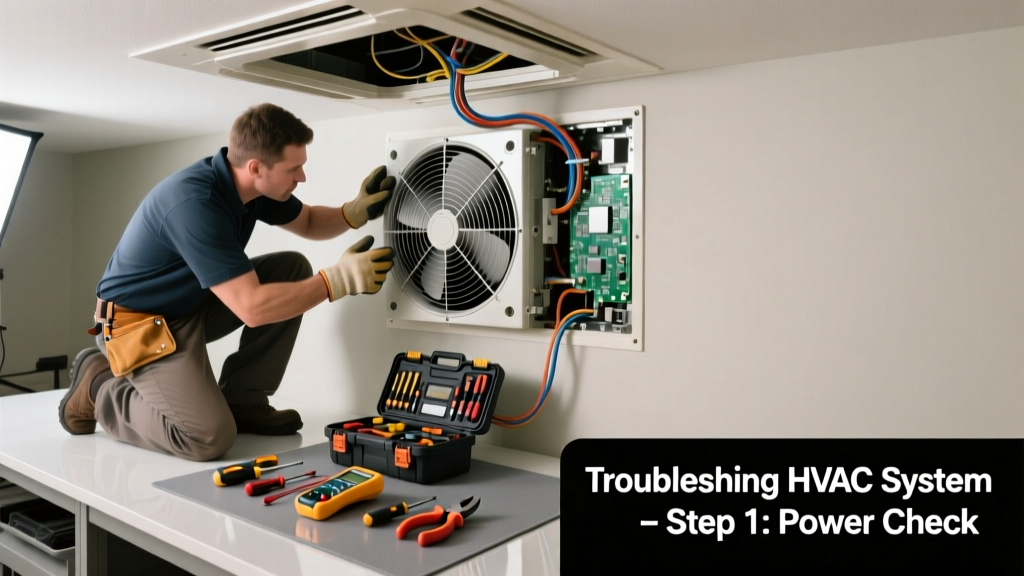
Your whole house fan cools your home fast—but when it’s silent on a hot afternoon, that relief vanishes. A non-working fan isn’t always a death sentence for the unit; many issues are simple, safe fixes you can handle in under an hour. Start here before you assume it’s beyond repair.
Quick Diagnosis
Before grabbing tools, eliminate the obvious. Most whole house fan failures fall into one of these categories:
- No power at the switch or circuit breaker tripped
- Thermostat or timer switch misconfigured or faulty
- Blade binding or debris jamming the motor shaft
- Fan belt cracked, stretched, or slipped (on belt-drive models)
- Capacitor failure—especially if the fan hums but won’t spin
Tools & Materials Needed
| Item | Purpose | Estimated Cost |
|---|---|---|
| Voltmeter or multimeter | Verifies power at switch, capacitor, and motor terminals | $25–$60 |
| Insulated screwdrivers (Phillips & flat) | Safely tighten connections and remove access panels | $12–$20 |
| Replacement start/run capacitor | Most common electrical failure point; match µF and voltage rating | $8–$18 |
| Shop vacuum with brush attachment | Removes dust and insulation buildup from motor housing and blades | $40–$120 |
| Replacement fan belt (if applicable) | Restores drive tension and eliminates slippage on older belt-drive units | $6–$15 |
Step-by-Step Fix
Work methodically—and always shut off power at the main panel before touching wiring or internal components.
- Check the circuit breaker and wall switch: Confirm the dedicated 240V (or 120V) breaker is ON and not warm to the touch. Test voltage at the switch terminals with a multimeter—if no reading, trace back to the panel or inspect for loose lugs.
- Inspect the thermal cutoff switch: Located near the motor housing, this safety device opens when overheated. Let the unit cool 30+ minutes, then test continuity across its two leads with the meter. No continuity? Replace it—it’s a $12 part.
- Test the capacitor: Discharge it first with an insulated screwdriver across terminals. Use your multimeter’s capacitance setting: readings more than ±6% off the labeled µF mean replacement is needed. According to the U.S. Department of Energy’s 2022 Residential HVAC Maintenance Guide, failed capacitors cause over 68% of whole house fan startup failures.
- Clean and lubricate (if applicable): Remove the grille and blade assembly. Vacuum dust from motor windings and bearings. For sleeve-bearing motors, apply 1–2 drops of ISO 32 non-detergent oil—not WD-40—to each end. Avoid over-lubrication.
When to Call a Pro
Some problems require licensed expertise—not just for safety, but code compliance and warranty protection.
- You measure 240V at the motor terminals but hear no hum or click—this points to internal winding failure or a seized bearing requiring motor replacement.
- The fan runs but vibrates violently or emits burning smells—even after cleaning and lubrication.
- Wiring shows signs of melting, charring, or aluminum-to-copper splices without proper connectors (a fire hazard per NEC 2023 Article 110.14).
- Your fan is integrated with smart home systems (e.g., Control4 or Savant) and fails communication diagnostics.
Prevention Tips
Extend your fan’s life with routine care—not just reactive fixes.
- Clean the grille and blades every spring before first use—dust buildup reduces airflow and strains the motor.
- Verify the attic vent area meets minimum requirements: 1 ft² of net free vent area per 750 CFM of fan capacity (per ASHRAE Standard 62.2-2022).
- Install a programmable timer switch to prevent accidental overnight operation, which can overcool and condense moisture in ductwork.
- Label all wires before disassembly—take photos with your phone. Miswired capacitors or switches are a top DIY error.
Why does my whole house fan make a loud grinding noise?
A grinding sound usually means failing bearings or metal-on-metal contact. Shut it down immediately. If the motor has sealed ball bearings, replacement is required. Sleeve-bearing units may be salvageable with cleaning and proper oiling—but only if the shaft isn’t scored.
Can I replace the capacitor myself?
Yes—if you’re comfortable verifying power is off, discharging the capacitor safely, and matching the microfarad (µF) and voltage ratings exactly. Mismatched capacitors can overheat the motor windings.
"A 10% over-voltage capacitor may seem harmless—but repeated use shortens motor life by up to 40%, per the National Electrical Manufacturers Association’s Motor Application Guide (2021)."
My fan turns on but stops after 30 seconds—what’s wrong?
This is almost always a thermal overload trip caused by restricted airflow or excessive dust in the motor. Check attic vents for blockages (insulation, bird nests, paint overspray), clean the fan housing thoroughly, and confirm the damper opens fully. If it still trips, the internal thermal switch may be weak and need replacement.
Is it safe to run a whole house fan with windows closed?
No—running it with insufficient open window area creates negative pressure that can backdraft combustion appliances (water heaters, furnaces) and pull carbon monoxide indoors. Always open at least two windows fully—preferably on opposite sides of the house—before starting.
How often should I replace the fan belt?
Belt-drive models need inspection annually. Replace if cracked, glazed, or stretched more than ½ inch beyond its original length. Belts degrade faster in attics over 120°F—so in hot climates like Phoenix or Dallas, consider switching to a direct-drive model during your next upgrade.
Does a whole house fan need a dedicated circuit?
Yes—NEC 430.52 requires a dedicated branch circuit for any motor over 1/3 HP. Most residential whole house fans (1–2 HP) must be on their own 240V circuit with correct overcurrent protection. Sharing with lighting or outlets risks nuisance tripping and voltage drop.
A working whole house fan slashes cooling costs by up to 90% compared to AC alone—when maintained right. Don’t let a simple capacitor or dusty motor sideline that efficiency. Tackle the basics confidently, know your limits, and keep air moving safely all summer long. For deeper electrical work, always consult a licensed electrician—and pair your fan with a properly sized attic ventilation system to maximize performance.