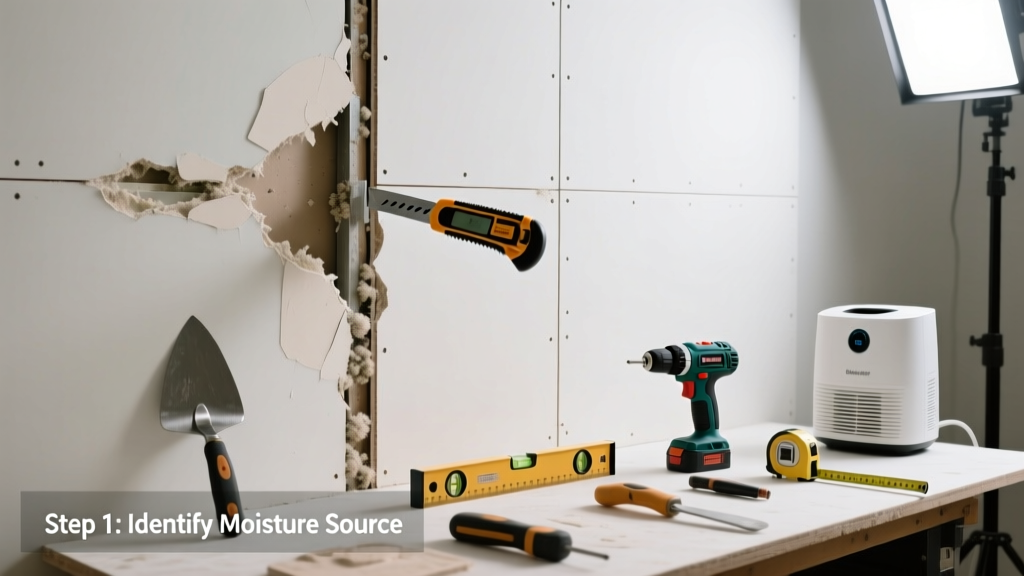
That musty, sour, or damp odor clinging to your walls isn’t just unpleasant—it’s a red flag. Wet drywall smell usually means moisture has penetrated the gypsum core, creating ideal conditions for mold, bacteria, and decay. Ignoring it risks health issues and costly structural repairs down the line.
Quick Diagnosis
Before grabbing tools, identify the source. Most wet drywall smells stem from one (or more) of these causes:
- Hidden roof or window seal leaks behind wall surfaces
- Plumbing leaks inside walls (especially supply lines near sinks or toilets)
- Poor ventilation in bathrooms or laundry rooms causing condensation buildup
- Flooding or sewer backup that soaked baseboard-level drywall
- Improperly sealed exterior siding allowing rain infiltration
Tools & Materials Needed
| Item | Purpose | Estimated Cost |
|---|---|---|
| Moisture meter (pin-type) | Measures exact moisture content in drywall (15%+ indicates active saturation) | $45–$85 |
| HEPA air purifier | Captures airborne mold spores during remediation | $180–$320 |
| Antimicrobial fogger (EPA-registered) | Kills mold and odor-causing microbes in wall cavities without demolition | $65–$120 |
| Dehumidifier (70-pint/day capacity) | Removes ambient moisture to halt microbial growth | $220–$400 |
| OSB or plywood sheathing (for replacement) | More moisture-resistant than drywall for high-risk zones like basements | $22–$38 per sheet |
Step-by-Step Fix
Not all wet drywall needs full replacement—targeted action saves time and money. Follow this sequence:
- Shut off water sources and verify no active leaks using a pressure test on suspect plumbing lines.
- Measure moisture levels with a pin-type meter: readings above 15% warrant removal; 12–15% may respond to drying + antimicrobial treatment.
- Dry thoroughly using fans aimed at wall surfaces and a dehumidifier running continuously for 72+ hours—monitor daily with the meter.
- Treat remaining odor with an EPA-registered antimicrobial fogger (e.g., Benefect Decon 30), applied after drying but before sealing.
- Seal and repaint with mold-inhibiting primer (like Kilz Mold & Mildew Resistant) and low-VOC paint—never skip priming over treated drywall.
When to Call a Pro
DIY is unsafe or ineffective in these scenarios:
- Moisture readings exceed 20% across more than 10 sq ft of wall surface
- Visible black or green mold colonies larger than 10 inches in diameter
- Smell persists after 5 days of aggressive drying and treatment
- The affected area includes HVAC ductwork, insulation, or load-bearing framing
- You suspect sewage contamination (foul, fecal odor)—this requires biohazard-certified remediation
According to the Insurance Institute for Business & Home Safety's 2023 report, 68% of homeowners who delayed professional intervention after water intrusion experienced secondary mold damage within 72 hours.
Prevention Tips
Stop recurrence before it starts:
- Install humidity sensors in bathrooms and basements (trigger alerts at >60% RH)
- Use closed-cell spray foam insulation behind shower walls instead of fiberglass batts
- Apply liquid waterproofing membrane (e.g., RedGard) over drywall in tub/shower surrounds
- Check roof flashing and caulk around windows twice yearly—reapply if cracked or shrunk
- Run bathroom exhaust fans for 20 minutes post-shower, even if you open a window
Can I use bleach on this?
No—bleach only kills surface mold and doesn’t penetrate drywall paper or gypsum. It also produces hazardous fumes when mixed with other cleaners. The U.S. EPA explicitly advises against bleach for porous materials like drywall (EPA Mold Remediation Guidelines, 2022).
Will a dehumidifier alone eliminate the smell?
Only if moisture is still present and the source is fully contained. A dehumidifier won’t neutralize volatile organic compounds (VOCs) from decomposing drywall paper or existing mold metabolites. Pair it with antimicrobial treatment and proper ventilation.
How long does drywall take to dry after a leak?
Typically 3–7 days with active airflow and dehumidification—but this assumes the leak is stopped and no insulation is trapped behind the wall. Wet fiberglass insulation can retain moisture for weeks, prolonging odor and decay.
Is the smell dangerous to breathe?
Yes—musty odors often indicate microbial volatile organic compounds (mVOCs) linked to respiratory irritation, headaches, and allergic reactions. The American College of Occupational & Environmental Medicine notes that prolonged exposure correlates with increased asthma exacerbations in sensitive individuals (ACOEM Clinical Guidelines, 2021).
Can I paint over smelly drywall?
Temporarily masking odor with paint is ineffective and risky. Paint seals in moisture and microbes, accelerating decay and potentially releasing concentrated spores later. Always address moisture and microbial growth first—drywall replacement costs are far lower than long-term health impacts or structural repair.
What’s the difference between wet drywall smell and mildew?
Mildew is a surface fungus (often white/gray) that grows on damp paint or caulk—it smells earthy and fades with cleaning. Wet drywall smell comes from anaerobic bacteria breaking down the paper backing inside saturated gypsum; it’s sour, rotten, or sweet-rotten and lingers even after surface cleaning. For related issues, see our guide on bathroom mold smell and basement drywall repair.
A persistent wet drywall smell isn’t just an annoyance—it’s your home’s early warning system. Addressing it promptly with the right tools and timing protects both your structure and your family’s well-being. When in doubt, get a moisture reading before you reach for the roller brush or the phone.