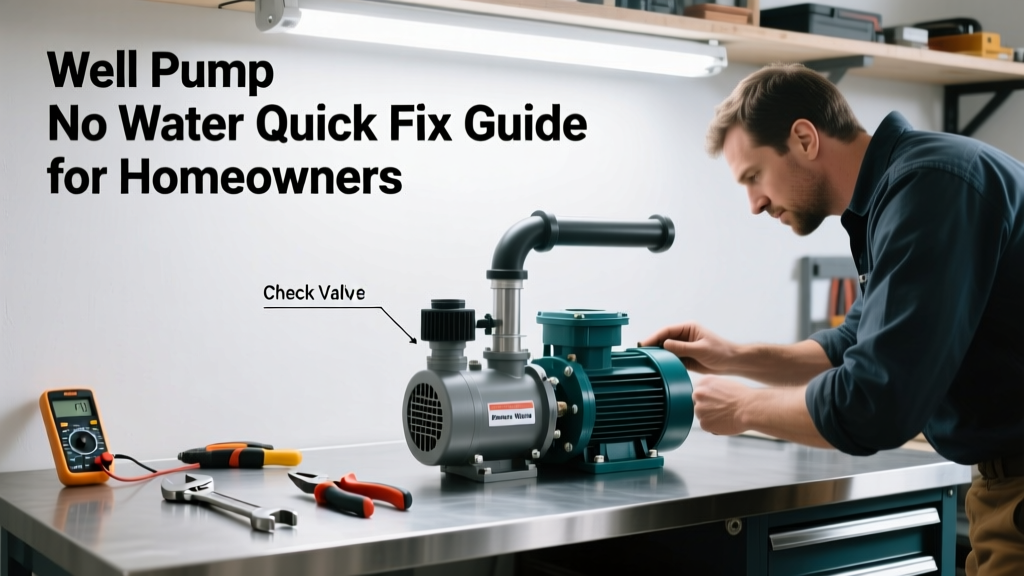
Your kitchen faucet sputters, then goes silent. The pressure tank reads zero psi. You flip the breaker—nothing. A dry well pump isn’t just inconvenient; it’s a red flag that something’s wrong underground or in your electrical system. Don’t panic—many causes are simple and fixable in under an hour.
Quick Diagnosis
Before grabbing tools, rule out these five most common culprits:
- No power to the pump (tripped breaker, blown fuse, or faulty wiring)
- Low water level in the well (especially during drought or after heavy pumping)
- Clogged foot valve or suction pipe (common in shallow wells)
- Failed pressure switch (stuck open or corroded contacts)
- Broken or leaking drop pipe (causing air lock or loss of prime)
Tools & Materials Needed
| Item | Purpose | Estimated Cost |
|---|---|---|
| Multimeter | Test voltage at pressure switch and pump leads | $25–$60 |
| Adjustable wrench | Tighten fittings, remove pressure switch cover | $12–$28 |
| Pressure gauge (0–100 psi) | Verify tank pre-charge and system pressure | $10–$22 |
| Small funnel & food-grade bleach | Sanitize system after priming (if needed) | $5–$8 |
| Insulated gloves & safety glasses | Protect against shock and debris during electrical checks | $15–$30 |
Step-by-Step Fix
Work methodically—start with the simplest fixes first:
- Check power and reset the breaker. Turn off the main well circuit, inspect for scorch marks on the panel, then reset. Use a multimeter to confirm 230V (or 120V for shallow pumps) at the pressure switch terminals.
- Test the pressure switch. Tap gently with a screwdriver handle—if it clicks and restores power, replace it. According to the National Ground Water Association’s 2022 Well Maintenance Handbook, faulty switches account for 34% of residential well pump service calls.
- Verify tank pre-charge. With all water drained from the system, check air pressure in the bladder tank using a tire gauge. It should be 2 psi below cut-in pressure (e.g., 28 psi for a 30/50 switch). Add air if low—but never exceed manufacturer specs.
- Prime the pump (for jet or shallow well types only). Remove the priming plug, fill with clean water until it overflows, then reinstall and run briefly. Do not attempt this on submersible deep-well pumps—they’re sealed and self-priming.
When to Call a Pro
Stop and call a licensed well contractor if you encounter any of these:
- No voltage at the pump wires—even after confirming breaker output
- Water level drops more than 20 feet below static level (measured with a wetted tape or electronic sounder)
- Visible corrosion or cracked casing at the wellhead
- Pump runs continuously but delivers no water or air bubbles in faucets
- You suspect a broken drop pipe—diagnosing requires pulling the pump, which demands specialty rigging and permits in many counties
"Submersible pump failures below 100 feet almost always require professional retrieval. Attempting DIY pull risks dropping the pump into the well—or worse, damaging the casing." — U.S. Department of Energy, Residential Well System Guide, 2021
Prevention Tips
Extend your well system’s life with consistent maintenance:
- Test pressure tank pre-charge every 6 months using a quality air gauge
- Inspect wiring connections and conduit for cracks or rodent damage annually
- Install a whole-house sediment filter if your well produces sand or iron bacteria
- Keep a log of pump runtime—sudden increases signal declining efficiency or low yield
- Have your well tested for coliform bacteria and nitrates yearly (well water testing helps catch contamination before it affects flow)
Why does my well pump click but not start?
The clicking sound usually means the pressure switch is trying to engage—but insufficient voltage, a seized motor, or a failed start capacitor prevents startup. Test voltage first. If power is present, the capacitor (a silver cylinder near the motor) may be bulging or leaking oil. Replace it only if you’re comfortable working with high-voltage components—electrical safety for home repairs is non-negotiable here.
Can I use bleach to clear a clogged foot valve?
No—bleach won’t dissolve mineral scale or debris blocking a foot valve. It can also degrade rubber seals and corrode brass components. Instead, shut off power, drain the line, and disassemble the valve for manual cleaning. For persistent iron bacteria buildup, consult a water treatment specialist about peroxide-based well cleaning solutions.
How do I know if my well is running dry?
Signs include delayed water delivery, sand in faucets, rapid cycling, or a noticeable drop in static water level (measure depth-to-water twice yearly). The U.S. Geological Survey reports that 19% of private wells in drought-prone regions saw ≥15 ft drawdown between 2020–2023—often mistaken for pump failure.
Is it safe to reset a tripped well pump breaker repeatedly?
No. Repeated tripping indicates overload, short circuit, or ground fault. Each reset risks overheating windings or arcing inside the control box. Unplug or disconnect power, then troubleshoot systematically—or call a pro. Ignoring it can lead to total motor burnout, costing $800–$2,200 to replace.
What’s the difference between a pressure tank and a storage tank?
A pressure tank uses compressed air to maintain steady household pressure and reduce pump cycling. A storage tank (often aboveground) holds large volumes of water but requires a separate booster pump to deliver pressure. Most homes use pressure tanks—but rural properties with low-yield wells sometimes combine both. Learn more in our pressure tank vs. storage tank comparison.
How often should I replace my well pump?
Submersible pumps average 10–15 years; jet pumps last 5–10. But lifespan depends heavily on water quality, duty cycle, and voltage stability. A 2023 study by the Water Systems Council found pumps in areas with >3 gpg hardness failed 40% sooner than those in soft-water zones—underscoring the value of preventive maintenance.
A dry well pump doesn’t always mean disaster—it’s often the first symptom of a small issue that’s easy to correct. Keep your multimeter charged, your pressure gauge calibrated, and your well log updated. And remember: when in doubt about electricity, depth, or water chemistry, hiring a certified well driller or pump technician isn’t a cost—it’s insurance against bigger headaches down the line.