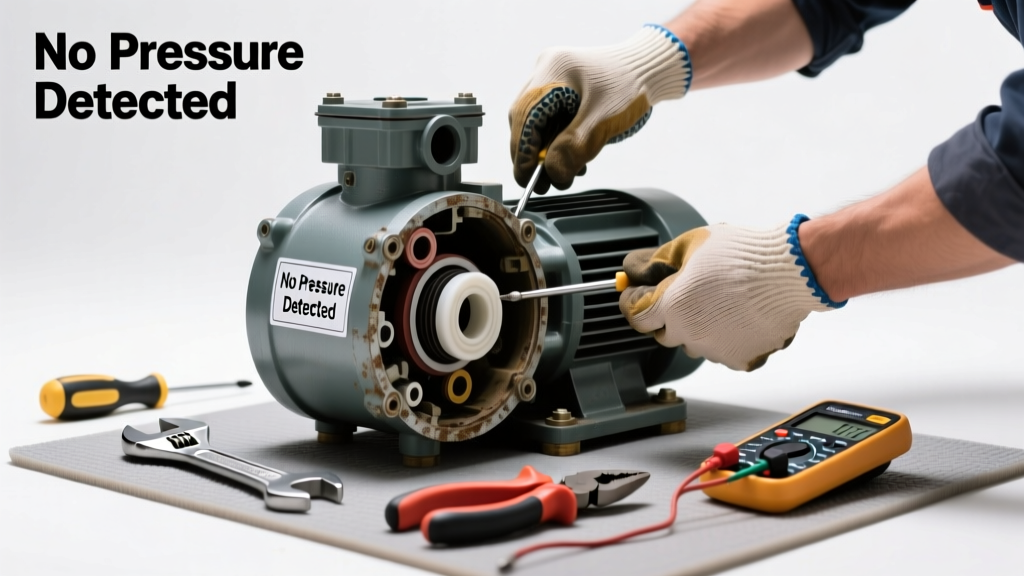
Your well pump is humming, buzzing, or clanking—but your faucets are dry. That combination—no water pressure plus abnormal noise—isn’t just annoying; it’s a red flag pointing to mechanical failure, electrical issues, or system blockage. Ignoring it risks pump burnout or contamination.
Quick Diagnosis
Before grabbing tools, narrow down the culprit with these most common causes:
- Air lock in the pressure tank or piping
- Faulty pressure switch stuck open or corroded
- Low water level in the well (sucking air)
- Cracked or leaking drop pipe or foot valve
Tools & Materials Needed
| Item | Purpose | Estimated Cost |
|---|---|---|
| Multimeter | Test voltage at pressure switch and motor terminals | $25–$60 |
| Pressure gauge (0–100 psi) | Verify tank pre-charge and system pressure | $12–$28 |
| Adjustable wrench & socket set | Tighten connections, remove switch housing, access pump components | $18–$45 |
| Bladder tank air charger | Recharge pressure tank to correct pre-charge (usually 2–4 psi below cut-in) | $30–$75 |
| Food-grade silicone grease | Lubricate switch contacts and O-rings during reassembly | $8–$15 |
Step-by-Step Fix
Try these methods in order—most failures resolve at Steps 1 or 2:
- Check and recharge the pressure tank: Turn off power, drain tank, use an air gauge to verify pre-charge. If below 28 psi (for a 30/50 switch), add air to 28 psi using a bicycle pump or compressor. Reconnect and test.
- Inspect and clean the pressure switch: Power off, remove cover, check for burnt contacts or corrosion. Gently file contacts with fine emery cloth and wipe with isopropyl alcohol. Replace if pitting is deep or spring tension feels weak.
- Listen and isolate the noise source: With power on (stand clear!), place a screwdriver against the pump housing like a stethoscope. A high-pitched whine points to bearing failure; a rhythmic clunk suggests impeller hitting housing or air ingestion.
- Test for low well yield: Run pump continuously for 5 minutes while monitoring pressure. If pressure drops steadily below 30 psi and doesn’t recover, your well may be drawing air—confirm with a flow test or consult local well logs.
When to Call a Pro
Stop and call a licensed well contractor if:
- You measure less than 20 volts at the motor terminals (indicates serious wiring or transformer issues)
- The pump runs but draws over 25 amps (check with clamp meter)—suggests seized motor or shorted windings
- You suspect a broken drop pipe—retrieving or replacing it requires specialized pulling equipment and well seal expertise
- Water tests positive for coliform after the issue started (possible contamination from cracked casing or air entry)
According to the National Ground Water Association’s Well Owner’s Handbook (2022), “Over 68% of premature submersible pump failures stem from voltage fluctuations or improper installation—not age.”
Prevention Tips
Extend your pump’s life and avoid repeat failures:
- Test pressure tank pre-charge every 6 months—air loss is silent but deadly to pump cycling
- Install a whole-house surge protector rated for 40,000+ joules near the pressure switch panel
- Keep wellhead sealed and graded away from surface runoff to prevent sediment infiltration
- Log pump runtime: more than 30 minutes per cycle or frequent short-cycling signals developing trouble
Can I reset the pressure switch myself?
Yes—if the switch has a manual reset lever (common on older Square D or Goulds models), power off, press firmly until you hear a click, then restore power. But if it trips again within 90 seconds, the underlying cause—like low water or a failing motor—is still present.
Why does my pump make a loud groaning sound only when starting?
This often means the start capacitor is weak or failing. It can’t provide enough torque to spin the motor up quickly, causing drag and overheating. Replace capacitors every 5 years—or immediately if bulging, leaking oil, or measuring >10% off rated µF.
Is it safe to bypass the pressure switch temporarily?
No. Bypassing removes critical protection against dry-running, which can destroy a submersible pump in under 90 seconds. The U.S. EPA estimates that dry-run damage accounts for 41% of emergency well repairs annually.
How do I know if the impeller is damaged?
Remove the pump (if above-ground jet) or pull the submersible unit (requires professional help). Visually inspect for cracks, bent vanes, or debris lodged in the volute. A damaged impeller produces inconsistent pressure and a grinding or scraping noise under load.
Can air in the lines cause both noise and zero pressure?
Absolutely. Air locks prevent water from moving through the pressure tank bladder or into the house piping. You’ll hear gurgling or hissing, and gauges may peg at zero or fluctuate wildly. Bleed air at the highest faucet first—then work downward—and watch for consistent flow return.
What’s the average lifespan of a residential well pump?
Submersible pumps last 8–15 years with proper maintenance; jet pumps average 5–10. But lifespan drops sharply if voltage varies more than ±10% or if the well sits unused for >30 days without flushing—follow this seasonal maintenance checklist to stay ahead.
A noisy, pressureless well pump isn’t just inconvenient—it’s a symptom screaming for attention before it becomes a $2,500 replacement job. Most fixes take under two hours and cost less than $100 in parts. Start with the pressure tank and switch—they solve over half of all cases. And if you’re unsure about voltage testing or well depth, knowing when to call a pro isn’t admitting defeat—it’s protecting your water supply and your wallet.