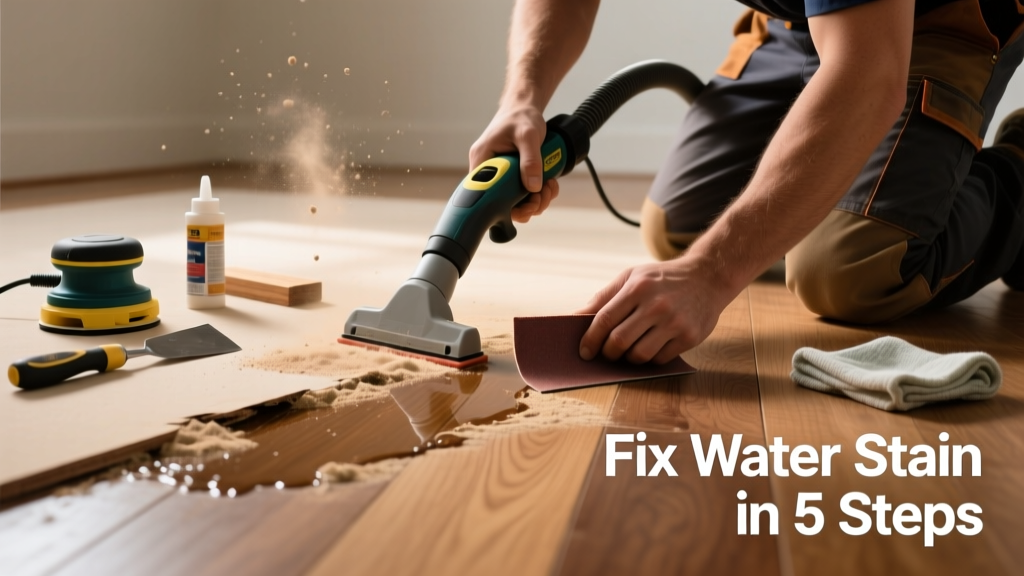
That dark, spreading spot under your kitchen table? It’s not just unsightly—it’s a red flag. Water stains on floors mean moisture has breached the surface, potentially compromising subfloor integrity or inviting mold. Don’t wait for warping or squeaks to appear before acting.
Quick Diagnosis
Before grabbing sandpaper or bleach, identify the source. Most water stains stem from one of these:
- Leaking refrigerator drip pan or ice maker line
- Overflowing sink or dishwasher during a cycle
- Condensation buildup under poorly ventilated appliances
- Roof or plumbing leak migrating through ceiling joists into upper-floor flooring
- Spilled liquids left unattended longer than 10–15 minutes on unfinished or low-grade laminate
Tools & Materials Needed
| Item | Purpose | Estimated Cost |
|---|---|---|
| 99% isopropyl alcohol | Breaks down surface-level tannin discoloration without damaging finish | $8–$12 |
| 0000 steel wool | Gentle abrasion for light scuffing without gouging wood grain | $4–$7 |
| Wood filler (water-based, color-matched) | Fills shallow cupping or minor delamination in laminate or engineered wood | $12–$18 |
| Moisture meter (pin-type) | Confirms subfloor dryness (<12% reading) before refinishing | $45–$85 |
| 120-grit and 220-grit sandpaper | Progressive smoothing for prep before resealing | $6–$10 per sheet pack |
Step-by-Step Fix
Method depends on material and stain depth. Start conservative—aggressive sanding can ruin thin veneers.
- Blot & Dry (within 24 hours): Use microfiber cloths to absorb residual moisture. Place fans on low speed for 48 hours. Skip this if the stain is older than 3 days—the damage is already set.
- Alcohol Swab Test: Dampen 0000 steel wool with isopropyl alcohol and gently rub the stain in the direction of the grain. If the discoloration lightens, it’s surface tannin oxidation—no sanding needed.
- Light Sand & Reseal (for hardwood): Sand only the stained area with 120-grit, then 220-grit. Wipe dust, apply 2 coats of water-based polyurethane (e.g., Bona Traffic HD), allowing 4 hours between coats.
- Laminate Repair Kit: For swollen or bubbled planks, use a laminate repair paste like Roberts Laminate Floor Repair Kit. Apply with toothpick, wipe excess, let cure 24 hours before walking.
When to Call a Pro
DIY stops where structural risk begins. Call a licensed flooring contractor or water damage specialist if you notice any of these:
- Stain covers more than 3 square feet and feels spongy or gives underfoot pressure
- Mold odor or visible black/green growth near baseboards or seams
- Moisture meter reads >15% in subfloor or adjacent undamaged boards
- Stain appeared after a known burst pipe, roof leak, or sewer backup (requires EPA-certified remediation)
"Over 60% of hardwood floor replacements due to water damage could have been avoided with subfloor moisture testing within 48 hours of the incident." — National Wood Flooring Association (NWFA) Technical Bulletin #2022-07
Prevention Tips
Stop stains before they start with simple, habit-based safeguards:
- Install drip pans under refrigerators and dishwashers—and empty them weekly
- Use rubber-backed rugs (not vinyl) in high-splash zones like sinks and bathtubs
- Check supply lines for cracks or bulges every 6 months; replace braided stainless hoses every 5 years
- Run bathroom and kitchen exhaust fans for 20 minutes post-shower or cooking
- Keep indoor humidity between 30–50% year-round using a dehumidifier or HVAC humidistat
Can I use bleach on this?
No. Bleach oxidizes wood tannins and worsens discoloration. It also degrades laminate adhesives and voids most manufacturer warranties. Stick to isopropyl alcohol for surface stains or consult hardwood floor refinishing pros for deeper issues.
Will vinegar remove the stain?
Vinegar’s acidity can slightly lighten fresh stains on sealed hardwood—but it’s unreliable and risks dulling finishes over time. It’s ineffective on laminate and unsafe near grout or metal fasteners. Skip it unless you’re testing on an inconspicuous corner first.
How long does it take to dry after cleaning?
Air-drying alone takes 72+ hours for full subfloor equilibrium. With two industrial fans (not box fans) aimed at floor level and a dehumidifier running at 45% RH, most surface-stained areas reach safe moisture levels in 48 hours. Always verify with a pin-type meter before sealing.
Can I paint over the stain?
You can—but it’s a temporary cosmetic fix that hides underlying decay. Paint won’t stop ongoing moisture migration or prevent mold growth beneath. If you must mask it, use a shellac-based primer like Zinsser BIN first, then latex floor paint. Better yet, replace the board: see our guide on replace laminate floor board.
Is this covered by homeowners insurance?
Yes—if the water source is sudden and accidental (e.g., burst pipe), not gradual (e.g., leaking faucet ignored for months). Document everything: photos pre- and post-dry, receipts for fans/dehumidifiers, and a plumber’s report. Most policies cover labor and materials up to $10,000 for covered water damage, per the Insurance Information Institute’s 2023 Homeowners Claims Report.
Do I need to replace the whole floor?
Rarely. Unless the subfloor is rotted or >20% of visible boards are cupped, buckled, or discolored beyond repair, targeted replacement works. Engineered hardwood and quality laminate allow board-by-board swaps without full demolition. Watch our laminate floor repair video for alignment tricks.
Water stains aren’t just blemishes—they’re moisture’s fingerprint. Treat the symptom, yes, but always chase the source. A five-minute inspection of supply lines or appliance seals today prevents weeks of sanding, staining, and stress tomorrow. And if your meter reads above 12%, pause, photograph the area, and call someone who owns a thermal camera—not just a sander.