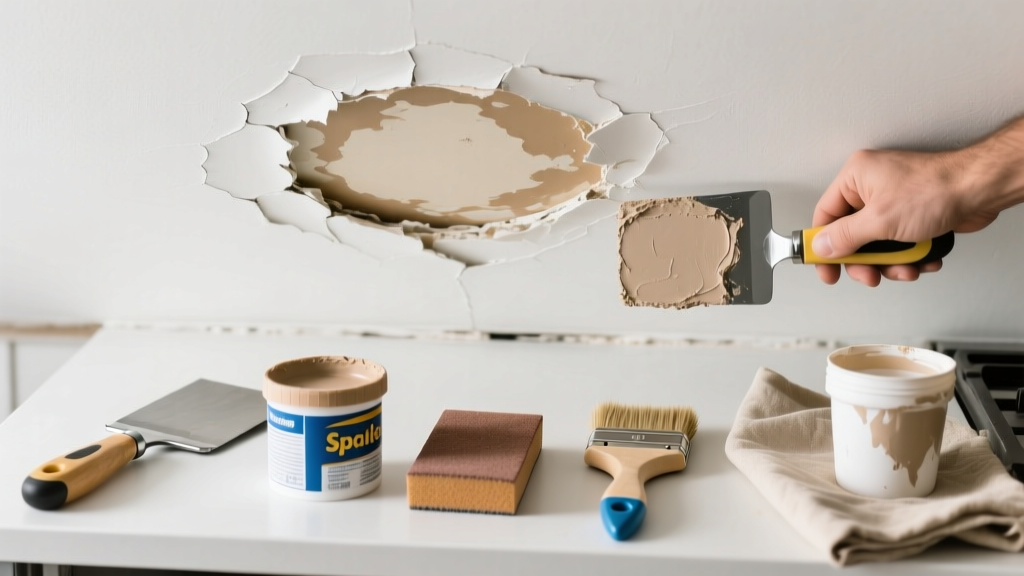
A water stain on your kitchen ceiling isn’t just an eyesore—it’s a red flag that something’s leaking, condensing, or failing overhead. Since kitchens host high-heat cooking, steam-heavy dishwashing, and plumbing stacks for upper floors, the causes differ from bathroom or attic leaks. Catch it early, and you’ll avoid drywall collapse, mold growth, or electrical hazards.
Quick Diagnosis
Kitchen ceiling stains almost always trace back to one of these sources—check in this order:
- Leaking supply line or shut-off valve under the sink (especially if cabinets above are damp)
- Condensation from unvented range hoods or poorly insulated ductwork
- Roof leak above (if kitchen is under a sloped roof or dormer)
- Plumbing stack leak from upstairs bathroom or laundry room
- Failed caulk or grout around kitchen window sills or soffits
Tools & Materials Needed
| Item | Purpose | Estimated Cost |
|---|---|---|
| Moisture meter | Detects hidden moisture behind drywall before sanding or painting | $45–$85 |
| Stain-blocking primer (oil-based or shellac) | Seals tannins and mineral deposits; prevents bleed-through | $18–$32 |
| 120-grit sandpaper + pole sander | Smooths blistered or chalky drywall without ladder contortion | $12–$24 |
| Drop cloths & painter’s tape | Protects countertops, appliances, and flooring during prep | $8–$16 |
| LED work light with clamp | Illuminates tight soffit areas and underside of cabinets | $22–$38 |
Step-by-Step Fix
Don’t rush to paint over the stain—first confirm the leak is stopped and the area is fully dry (minimum 72 hours post-dryout). Then follow this sequence:
- Stop the source: Turn off water supply if pipe-related; check roof flashing if rain-linked; verify range hood vent terminates outside (not into attic).
- Assess damage: Press gently—if drywall feels soft or spongy, cut out and replace the section (drywall repair guide).
- Prep surface: Sand stained area lightly, vacuum dust, then wipe with TSP substitute (e.g., Krud Kutter) to remove residue.
- Prime & paint: Apply Zinsser BIN shellac primer with a 3-inch angled brush—cover 2 inches beyond stain edges. Let dry 45 minutes. Topcoat with ceiling paint matching sheen (flat or eggshell).
When to Call a Pro
DIY stops where safety or code compliance begins. Call a licensed professional if:
- You see active dripping, bulging drywall, or rust-colored streaks near electrical junction boxes
- The stain reappears within 48 hours after drying and sealing
- You suspect a leak in a concealed plumbing stack—access often requires cutting through walls or floors
- Mold covers more than 10 square feet or has a musty odor (per EPA guidelines, larger infestations require certified remediation)
"Over 60% of kitchen ceiling water damage originates from plumbing above—not the roof—so always inspect second-floor bathrooms first." — National Association of Home Inspectors, 2022 Field Survey
Prevention Tips
Kitchen-specific prevention means managing heat, steam, and aging infrastructure:
- Clean and inspect range hood filters monthly; ensure duct runs are rigid metal (not flexible plastic) and slope upward to prevent condensate pooling
- Replace rubber supply lines under sinks every 5 years—even if they look fine (per American Society of Home Inspectors)
- Install a humidity sensor near the ceiling (like the AcuRite 01512) and set alerts above 60% RH
- Re-caulk around kitchen windows and soffits annually using silicone rated for wet locations (e.g., GE Silicone II)
Can I use bleach on this?
No. Bleach doesn’t remove mineral deposits or tannins causing yellow-brown stains—it only whitens surface mold spores temporarily and degrades drywall paper facing. It also fails to seal underlying moisture wicking. Use a dedicated stain blocker instead.
How long does it take to dry out?
With airflow and low humidity, small stains (<2 sq ft) dry in 2–3 days. Larger or deeper saturation may need 5–7 days—and a dehumidifier set to 40% RH speeds recovery by 40%, per the U.S. Department of Energy’s 2023 Home Moisture Guide.
Will painting over it cause peeling later?
Yes—if you skip the stain-blocking primer. Regular ceiling paint lacks the solvent strength to lock in water-soluble dyes and minerals. Shellac-based primers like BIN create an impermeable barrier that prevents future bleed-through.
Is this covered by homeowners insurance?
Sometimes—but only if the leak resulted from a sudden, accidental event (e.g., burst pipe). Chronic leaks from neglected maintenance (like cracked caulk or corroded valves) are routinely denied. Document everything with dated photos and keep repair receipts for claims.
Do I need to replace insulation above the ceiling?
Only if it’s wet, compressed, or shows mold growth. Fiberglass batts lose R-value when damp; blown-in cellulose holds moisture longer. If insulation is saturated, remove it completely and wear an N95 mask—mold removal steps here.
What’s the average cost to fix this professionally?
For diagnosis + minor drywall patch + paint: $280–$490. If plumbing repair or roof flashing replacement is needed, expect $650–$1,800, according to Angi’s 2023 Home Repair Cost Report.
A water stain on your kitchen ceiling is rarely just cosmetic—it’s your home’s way of asking for attention to systems you can’t see. Fix the source, not just the symptom, and you’ll protect both your drywall and your peace of mind. And remember: if the stain returns, don’t repaint again—reinvestigate the origin. That drip has a story, and it’s worth hearing twice.