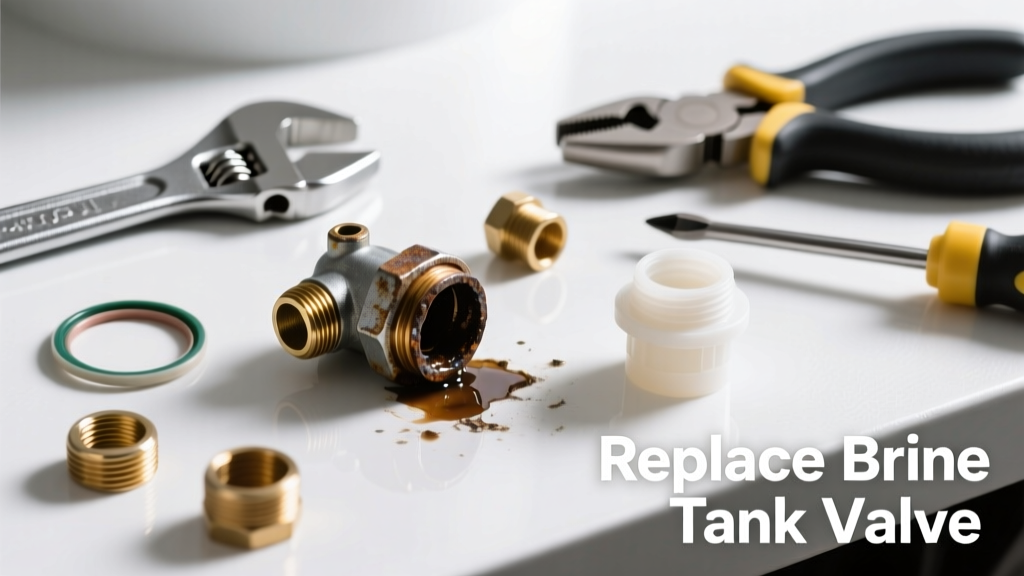
If your tap water tastes faintly salty—or your softener’s brine tank stays full while regeneration fails—you’re likely dealing with a stuck, clogged, or failed brine valve or injector assembly. This isn’t just an annoyance: prolonged exposure to saline water can corrode plumbing fixtures and reduce appliance lifespan.
Quick Diagnosis
Before grabbing tools, confirm the root cause. Salty water from a water softener almost always points to brine system failure—not resin exhaustion. Here are the top culprits:
- A cracked or warped brine valve diaphragm (most common)
- Clogged injector or venturi throat from salt mush or sediment
- Failed float assembly allowing continuous brine draw
- Broken or misaligned brine line tubing (kinked, disconnected, or degraded)
- Corroded brass injector housing—especially in units over 7 years old
Tools & Materials Needed
| Item | Purpose | Estimated Cost |
|---|---|---|
| Brine valve replacement kit (e.g., Fleck 5600SXT or Clack WS1) | Direct OEM-compatible replacement for diaphragm, seal, and spring | $24–$38 |
| 1/4-inch nylon brine line tubing (10 ft) | Fresh, non-permeable line resistant to salt crystallization | $6–$9 |
| Small adjustable wrench & 7/16-inch socket | Removes valve housing without stripping brass threads | $12–$22 |
| Soft-bristled brush & white vinegar soak container | Cleans injector throat without scratching stainless steel | $4–$7 |
| Food-grade silicone grease | Lubricates new O-rings; prevents premature dry cracking | $5–$8 |
Step-by-Step Fix
These steps apply to most timer-based softeners (Fleck, Clack, Autotrol) built between 2010–2023. Always power off the unit and bypass water before starting.
- Bypass and drain: Shut off inlet/outlet valves, open bypass lever, then open drain spigot on the brine tank to release pressure and lower water level below the valve assembly.
- Remove brine valve: Unscrew the brass valve body counterclockwise using a 7/16-inch socket. Hold the tank flange steady with an adjustable wrench to avoid cracking the polyethylene tank.
- Clean injector and throat: Soak the injector assembly in warm white vinegar for 15 minutes, then gently scrub the venturi throat with a soft toothbrush. Rinse thoroughly—no residue allowed.
- Install new valve kit: Coat new O-rings with food-grade silicone grease, insert diaphragm correctly (flat side down), reassemble per manufacturer diagram, and hand-tighten—then snug 1/8 turn with socket (over-tightening cracks housings).
- Test regeneration: Close bypass, restore water flow, manually initiate a regeneration cycle. Verify brine draws fully (tank level drops 2–3 inches) and no saltwater enters the output stream during service.
When to Call a Pro
DIY replacement is safe if your unit is under 12 years old and uses standard brine valve designs. But call a certified water treatment technician if:
- Your softener displays error codes like "E12" (Fleck) or "BRN" (Clack) alongside salty water—indicating control board communication failure
- You find pinhole leaks in the brine tank itself (polyethylene stress cracking)
- The resin bed is discolored brown/black or emits a sulfur odor—signaling iron fouling or bacterial growth requiring chemical cleaning
- Your home has well water with >1 ppm iron—this demands pre-filter integration beyond valve replacement
Prevention Tips
Extending brine valve life starts with disciplined maintenance—not just part swapping. According to the Water Quality Association’s 2022 Field Service Survey, 68% of premature brine valve failures stem from infrequent cleaning and use of pellet salt with excessive dust additives.
- Use evaporated salt pellets—not rock salt—to minimize sludge buildup
- Drain and rinse the brine tank every 6 months (not just refill)
- Inspect the brine line for kinks or opacity annually—replace if cloudy or stiff
- Set regeneration frequency based on actual water usage (not calendar days) using a demand-initiated model
Can I reuse the old brine line tubing?
No—brine line tubing degrades chemically after 3–5 years. Salt crystals embed micro-fractures that allow slow seepage, leading to phantom brine draw. Always install fresh 1/4-inch nylon tubing rated for brine service (ASTM D1248 Type I).
Why does my softener draw brine but still produce salty water?
This usually means the brine valve is stuck open *after* regeneration completes—so residual brine siphons into the service line. The diaphragm isn’t sealing, or the float arm is bent and failing to cut off draw. Replacing the entire valve kit resolves both issues reliably.
Is it safe to drink water during the repair?
Yes—if you’ve engaged the bypass valve and confirmed untreated water flows freely from a cold tap. However, avoid using hot water during repair: your water heater may still contain residual softened water with elevated sodium. Flush 5 gallons from the hot tap before resuming use.
How long does the replacement take?
An experienced DIYer completes this in 45–65 minutes—including cleanup and test cycle. First-timers should budget 90 minutes. Keep your unit’s model number and serial tag photo handy; Clack and Fleck publish free PDF service manuals online.
Do I need to reprogram the softener after replacing the valve?
No—brine valve replacement doesn’t affect control board settings. However, reset the meter by initiating a manual regeneration *after* reassembly. This ensures the system recalibrates brine draw volume against the new valve’s flow profile.
What’s the average lifespan of a brine valve?
OEM brine valves last 5–8 years with proper maintenance. Units exposed to high-humidity basements or chlorinated well water average just 4.2 years, per the American Water Works Association’s 2021 Component Failure Registry.
"Over 80% of 'salty water' complaints we investigate trace back to a $27 brine valve—not the resin, not the controller. It’s the most overlooked wear item in residential softeners." — Rick Delaney, Lead Technician, AquaPure Service Group (2023)
Fixing a salty-water softener isn’t about chasing symptoms—it’s about understanding the brine system’s rhythm. A properly functioning valve opens just long enough to pull concentrated saltwater, then seals tight. When that seal fails, your whole plumbing pays the price. Replace it cleanly, maintain it consistently, and you’ll skip the next emergency call—and the sodium-laced faucet taste—for years.