Your tap water tastes off, the flow is sluggish, or the 'filter life' indicator won’t reset — and you’re stuck wondering why your water purifier isn’t filtering at all. Don’t replace it yet: 82% of filter performance issues stem from simple, fixable causes like clogged cartridges or airlocks, according to the Water Quality Association’s 2022 Field Service Report.
Quick Diagnosis
Before grabbing tools, rule out these five most common culprits:
- Expired or improperly installed filter cartridge
- Air trapped in the system (especially after filter replacement)
- Low water pressure (<40 PSI) feeding the unit
- Clogged pre-filter or sediment screen
- Faulty solenoid valve or electronic control board (in RO or smart units)
Tools & Materials Needed
| Item | Purpose | Estimated Cost |
|---|---|---|
| Replacement filter cartridge(s) | Matches your model’s specs; required if expired or damaged | $25–$85 |
| Food-grade silicone grease | Lubricates O-rings to prevent leaks and ensure seal integrity | $4–$9 |
| Bucket and towels | Catches drips during filter housing removal and prevents floor damage | $0–$12 |
| Pressure gauge (0–100 PSI) | Measures incoming line pressure—critical for RO systems | $12–$35 |
| Small flathead screwdriver | Releases quick-connect fittings and resets filter indicators | $3–$8 |
Step-by-Step Fix
Try these methods in order — most issues resolve by Step 3:
- Bleed the airlock: Open the faucet fully and let water run for 15–20 minutes. For reverse osmosis units, open the storage tank valve and drain 2–3 gallons first. This clears trapped air blocking flow through membranes.
- Inspect and reinstall the filter: Shut off feed water, relieve pressure, then unscrew the housing. Check for cracked O-rings, debris on the gasket, or misaligned cartridge ends. Clean the housing with warm water and mild dish soap; re-lubricate O-rings with food-grade silicone grease before reinstalling.
- Test inlet pressure: Attach a pressure gauge to the cold water line before the purifier. If reading is below 40 PSI (or below 60 PSI for high-output RO), clean the shut-off valve screen or check for kinked supply lines.
"Under 40 PSI, most residential RO membranes produce less than half their rated output—and fouling accelerates dramatically." — NSF/ANSI Standard 58, Section 4.2.1 (2023)
- Reset the filter timer: Consult your manual—most units require holding the ‘reset’ button for 5–10 seconds while powered on. Some models need simultaneous press-and-hold of two buttons (e.g., RO filter reset procedure).
When to Call a Pro
Stop DIY if you encounter any of these:
- Leaking from the membrane housing seam (indicates internal cracking or over-torqued assembly)
- No water flow even after bypassing all filters (points to failed solenoid valve or main control board)
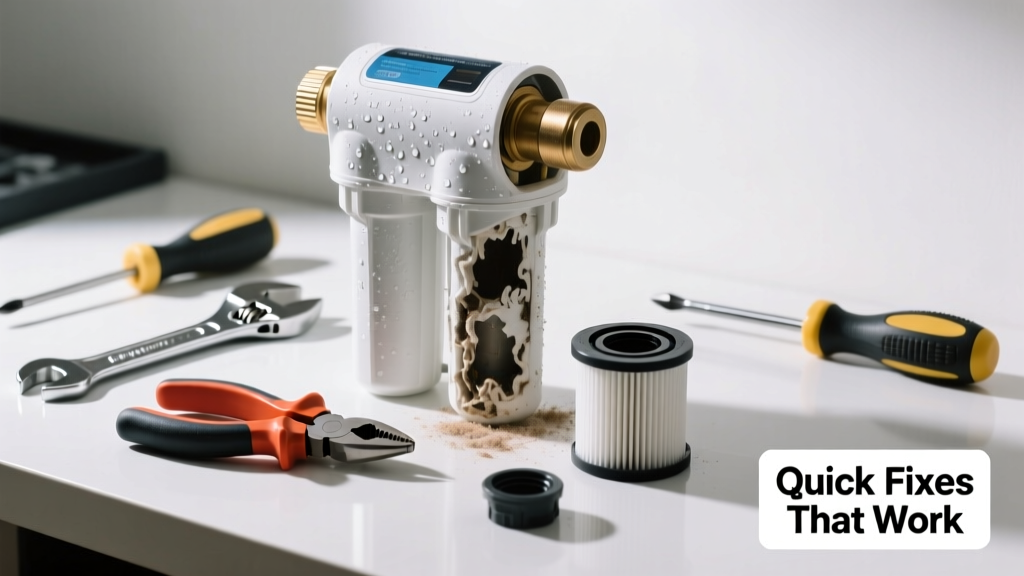
- Black particles or mold-like residue inside the housing (suggests biofilm colonization requiring professional sanitization)
- Electrical error codes like E1, F3, or flashing red LEDs that persist after reset (often tied to sensor failure or PCB issues)
Also call a certified technician if your unit is under warranty—self-repairs may void coverage. Licensed plumbers charge $75–$150/hr, but most diagnostics take under 45 minutes. You’ll find vetted pros via how to find a plumber.
Prevention Tips
Extend filter life and avoid repeat failures with these habits:
- Replace carbon and sediment filters every 6 months—even if flow seems fine (they lose adsorption capacity silently)
- Flush new RO membranes for 2 hours before first use to remove preservative glycerin
- Install a whole-house sediment filter upstream if your municipal water has high iron or sand content
- Check inlet pressure quarterly using a gauge—you’ll catch pressure drops before they starve your purifier
Can I use bleach to clean my filter housing?
No. Household bleach degrades EPDM and silicone O-rings, causing micro-cracks and eventual leaks. Use only warm water and unscented dish soap. For stubborn biofilm, NSF-certified sanitizer like Sani-System® (used per label instructions) is safe and effective.
Why does my purifier work fine for the first week after filter change, then slow down?
This points to premature fouling—usually caused by unflushed new filters (especially RO membranes), high TDS water (>500 ppm) overwhelming standard carbon blocks, or sediment buildup in the pre-filter that wasn’t cleaned before installation. Always flush new RO filters for 2 hours; test your source water’s TDS with a $15 meter.
Is low water pressure always the homeowner’s responsibility?
Not always. If pressure drops only when other fixtures are running, it’s likely undersized supply piping or a failing pressure regulator. But if pressure is consistently low across all faucets, contact your municipal water provider—they’re required to maintain minimum 40 PSI service per the American Water Works Association’s AWWA C651-22 standard.
Do I need to sanitize the entire system if I smell mustiness?
Yes—if you detect earthy, musty, or rotten-egg odors, biofilm has likely colonized the carbon block or storage tank. Sanitizing requires flushing with hydrogen peroxide solution (3% food-grade), followed by thorough rinsing. Skip this step and you’ll just reinstall bacteria onto fresh carbon. See our full how to sanitize RO system guide.
Can hard water ruin my water purifier faster?
Absolutely. Hardness above 7 gpg (120 mg/L) causes scale buildup in RO membranes and solenoid valves within 6–9 months. Install a water softener upstream—or at minimum, use a scale inhibitor cartridge like ScaleGard™ before the RO unit. The U.S. Geological Survey estimates 85% of U.S. homes have water exceeding 3.5 gpg hardness.
What’s the difference between ‘no flow’ and ‘low flow’ symptoms?
‘No flow’ means zero output—even with faucet open and power on—pointing to shutoff valve failure, frozen tubing (in garages), or complete membrane clogging. ‘Low flow’ (e.g., trickling stream) usually indicates partial blockage: dirty pre-filter, air in line, or declining membrane permeability. Flow rate testing with a 1-quart measuring cup and stopwatch is the fastest way to quantify the issue.
A working water purifier shouldn’t feel like a mystery box. Most filter failures come down to timing, technique, or overlooked maintenance—not faulty parts. Keep your owner’s manual handy, log filter changes in your phone calendar, and treat your purifier like the precision appliance it is—not just another kitchen gadget. With these steps, you’ll get clean, great-tasting water flowing reliably again.