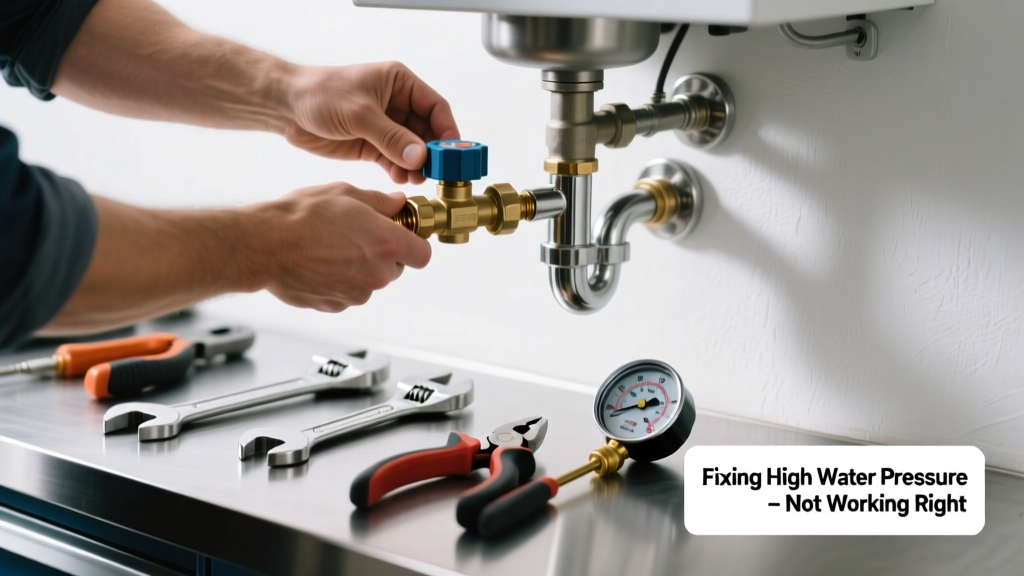
If your shower scalds you the second you turn it on, faucets sputter violently, or you hear banging pipes when appliances cycle off, your water pressure is likely too high—and possibly unsafe. Most homes need 40–80 psi; anything above 80 psi risks damage to fixtures, water heaters, and washing machines. Ignoring it can lead to premature failures and costly emergency repairs.
Quick Diagnosis
Before adjusting anything, confirm the problem isn’t misdiagnosed. High pressure often mimics other issues—like failing regulators or thermal expansion—but these signs point squarely to excessive pressure:
- Water hammer (loud banging) when shutting off taps or appliances
- Leaking toilet fill valves or dripping faucets despite new washers
- Cracked or bulging hoses on washing machines or dishwashers
- Pressure gauge on main line reads consistently above 80 psi
- Hot water heater relief valve discharges water regularly
Tools & Materials Needed
| Item | Purpose | Estimated Cost |
|---|---|---|
| Pressure test gauge (0–160 psi) | Measures actual static and dynamic pressure at multiple points | $12–$25 |
| Adjustable wrench | Tightens/loosens regulator lock nuts and supply lines | $18–$32 |
| Phillips and flathead screwdrivers | Accesses regulator adjustment screws and panel covers | $8–$15 |
| Thread seal tape (PTFE) | Ensures leak-free reassembly of threaded connections | $3–$6 |
| Replacement pressure reducing valve (PRV) | Required if current PRV is corroded, stuck, or non-adjustable | $45–$120 |
Step-by-Step Fix
Start with verification, then move to adjustment or replacement. Never skip testing before and after each step.
- Test baseline pressure: Attach a calibrated pressure gauge to an outdoor spigot or laundry sink cold tap. Turn off all water-using devices. Open the faucet fully and record the static reading. Then run the dishwasher or washing machine and note the dynamic drop—if pressure spikes *above* 80 psi during cycling, suspect regulator failure.
- Locate and inspect your PRV: Usually found near the main shutoff valve, often in the basement or utility room. Look for a bell-shaped brass unit with an adjustment screw on top and a lock nut beneath. Check for corrosion, weeping, or mineral buildup around the body.
- Adjust the existing PRV: Loosen the lock nut with a wrench. Turn the adjustment screw counterclockwise ½ turn to lower pressure. Wait 2 minutes, retest, and repeat until pressure stabilizes between 50–65 psi. Over-tightening clockwise can jam the diaphragm.
- Replace a failed PRV: Shut off main water, open lowest faucet to relieve pressure, then drain line using the boiler drain valve. Unscrew old PRV (watch for pipe stress), apply PTFE tape to threads, install new unit with flow arrow pointing toward house, and tighten evenly. Re-pressurize slowly and test.
When to Call a Pro
Some situations require licensed expertise—not just for safety, but code compliance. According to the International Plumbing Code (IPC 2021), PRV installation must include a thermal expansion tank if your system has a closed-loop configuration (e.g., backflow preventer or check valve on municipal supply). Don’t risk it if:
- Your home lacks a visible PRV—pressure may be regulated upstream by the municipality or a hidden inline unit
- You measure over 120 psi, which suggests a failed municipal regulator or booster pump issue
- Pressure fluctuates wildly (>30 psi swing) while no water is running—points to air pockets, faulty gauges, or well-pump control problems
- You’re uncomfortable cutting into copper or PEX supply lines, especially near gas lines or electrical panels
"Over 62% of premature water heater failures are linked to sustained pressure above 75 psi—especially when combined with thermal expansion," says the Plumbing-Heating-Cooling Contractors Association's 2022 Field Service Report.
Prevention Tips
High pressure doesn’t happen overnight—it creeps up as regulators age or municipal supply changes. Stay ahead with these habits:
- Test pressure annually—especially after winter pipe freezes or municipal water main work
- Install a whole-house pressure gauge near the main shutoff for real-time monitoring
- Add a thermal expansion tank if you have a closed system and a tank-type water heater
- Replace PRVs every 7–10 years—even if they ‘seem fine’—as internal springs fatigue and diaphragms degrade
Can high water pressure cause my water heater to leak?
Yes—excessive pressure stresses the tank’s weld seams and can force the temperature and pressure (T&P) relief valve to open repeatedly. The U.S. Department of Energy warns that sustained pressure over 80 psi reduces tank life by up to 40%. If your T&P valve drips more than once per week, test pressure first before replacing the valve.
Why does my pressure drop after adjusting the regulator?
A temporary drop is normal as trapped air escapes and the diaphragm settles—but if pressure falls below 40 psi within hours, the regulator may be undersized or damaged. Verify flow rate: open two faucets simultaneously. If pressure plummets, your PRV’s capacity (measured in GPM) is too low for your home’s demand—common in homes with 3+ bathrooms or irrigation systems.
Is it safe to adjust the PRV myself?
Yes—if you own a standard adjustable brass PRV and follow torque specs. But avoid touching regulators labeled “non-adjustable” or those made of plastic/composite materials. Those require full replacement. Also never adjust during peak municipal pressure hours (typically 6–9 a.m. and 5–8 p.m.), when readings are artificially high.
Do I need a permit to replace my PRV?
In most jurisdictions, yes—especially if the replacement involves soldering copper or altering the main supply line. Contact your local building department before starting. Permits ensure inspection for proper orientation, support, and inclusion of required expansion tanks. Skipping this step can void homeowner’s insurance coverage for water damage.
Can high water pressure damage my smart home water sensors?
Absolutely. Many IoT leak detectors (like Moen Flo or Phyn) rely on stable pressure baselines to detect anomalies. Sustained pressure above 90 psi can trigger false alarms or desensitize flow algorithms. Resetting them after PRV adjustment is essential—consult the smart water sensor troubleshooting guide for calibration steps.
Will lowering pressure affect my sprinkler system?
Most residential rotor heads require 40–60 psi to function properly. If your system was designed for 75+ psi, lowering main pressure may reduce coverage or cause misting. Consider installing a dedicated booster pump or zone-specific PRV instead of reducing whole-house pressure. For help sizing irrigation components, see our sprinkler system pressure issues article.
Fixing high water pressure isn’t about chasing perfect numbers—it’s about protecting your home’s plumbing skeleton. A properly adjusted PRV pays for itself in avoided repairs within 12–18 months. Keep your gauge handy, test twice yearly, and treat your regulator like the unsung guardian it is: small, silent, and absolutely critical. And if you notice persistent fluctuations or hear new knocking sounds after your fix, revisit your expansion tank or call a licensed plumber—some issues hide behind the walls, not behind the shutoff valve.