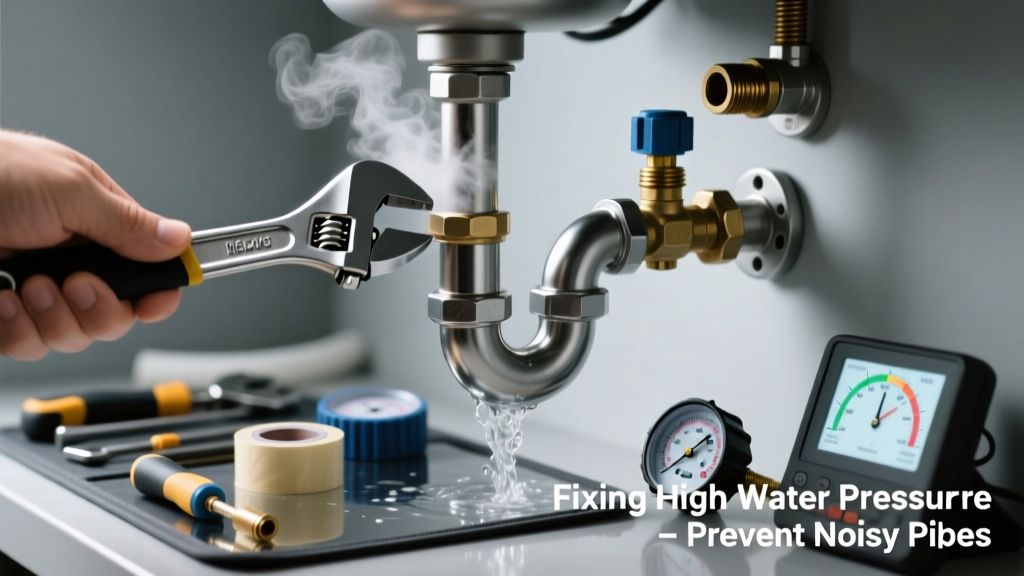
If your pipes are banging, whistling, or shuddering when you turn on a faucet or flush a toilet, high water pressure is likely the culprit — and it’s more than just annoying. Left unchecked, pressure above 80 psi can crack fittings, shorten appliance lifespans, and cause leaks. The good news? Most cases can be diagnosed and fixed in under an hour with basic tools.
Quick Diagnosis
Start by ruling out common causes before assuming it’s pressure-related:
- Loose pipe straps or hangers letting pipes vibrate against framing
- Failing or air-logged water hammer arrestors (especially near washing machines or dishwashers)
- Partially closed shut-off valves creating turbulence
- Mineral buildup in aerators or valve seats causing restricted flow and noise
- Pressure regulator failure — most homes with municipal supply have one installed near the main shutoff
Tools & Materials Needed
| Item | Purpose | Estimated Cost |
|---|---|---|
| Water pressure gauge (threaded) | Measures static and dynamic pressure at an outdoor spigot or laundry faucet | $12–$25 |
| Adjustable wrench | Tightens or loosens regulator locknuts and supply lines | $10–$22 |
| Phillips and flathead screwdrivers | Accesses regulator adjustment screws and panel covers | $8–$15 |
| Replacement pressure regulator (3/4") | Required if current unit is corroded, stuck, or non-adjustable | $45–$95 |
| Thread seal tape (PTFE) | Ensures leak-free reassembly of threaded connections | $3–$6 |
Step-by-Step Fix
Follow these methods in order — start with testing, then adjust, then replace if needed:
- Test your home’s water pressure: Attach a pressure gauge to an outdoor spigot or washing machine cold-water valve. Turn on the spigot fully and record the reading. Repeat during peak usage (e.g., morning shower + dishwasher running) to check for dynamic drops or spikes.
- Adjust the pressure regulator: Locate the bell-shaped brass regulator near your main shutoff. Loosen the locknut, then turn the adjustment screw clockwise to lower pressure (¼ turn = ~5 psi drop). Retest after each adjustment. Aim for 50–70 psi — never below 40 psi or above 80 psi.
- Install or replace water hammer arrestors: If knocking occurs only when appliances shut off, add arrestors to washing machine and dishwasher supply lines. Use ½" threaded models rated for 150 psi and install within 6 feet of the valve.
- Bleed air from the system: Shut off the main water supply, open all faucets starting from the highest point in the house, then slowly reopen the main. Let water run until air stops sputtering — this restores cushioning in air chambers and arrestors.
When to Call a Pro
DIY isn’t safe or effective in these scenarios:
- Your pressure consistently reads above 100 psi — this suggests a failed pressure-reducing valve upstream or municipal supply issues requiring utility coordination
- You detect wet drywall, buckling flooring, or dripping near the regulator — indicating internal corrosion or a catastrophic seal failure
- Your home has a well system with a pressure tank and switch; adjusting those requires electrical and pump expertise
- The noise persists after regulator adjustment and arrestor installation — could indicate undersized piping, thermal expansion, or hidden galvanic corrosion
Prevention Tips
Keep pressure stable year-round with these habits:
- Test pressure every 6 months — regulators drift over time, especially in hard-water areas
- Install a thermal expansion tank if you have a closed-loop system (common with backflow preventers or check valves)
- Replace rubber washer seats in older faucets every 3 years — worn seats cause chattering and amplify pressure noise
- Insulate exposed supply lines in unheated spaces — cold pipes contract and transmit vibration more readily
How do I know if my pressure regulator is failing?
A failing regulator often shows inconsistent pressure (e.g., 45 psi at the kitchen sink but 92 psi at the basement laundry), visible corrosion or weeping around its body, or inability to hold an adjusted setting after tightening the locknut. According to the American Society of Plumbing Engineers’ Design Handbook, 2022, regulators should be replaced every 7–12 years — even if they appear functional.
Can high water pressure damage my water heater?
Yes — sustained pressure above 80 psi stresses tank seams, accelerates anode rod depletion, and can trip the temperature-pressure relief (TPR) valve prematurely. The U.S. Department of Energy notes that 22% of premature water heater failures are linked to excessive inlet pressure or lack of expansion control.
Why does the noise only happen at night?
Nighttime noise often points to thermal expansion: as heated water cools overnight in a closed system, pressure builds without an expansion tank to absorb it. This pressure surge activates when the first faucet opens — causing a loud thump. Installing an expansion tank on the cold-water line resolves this in 90% of cases.
Is it safe to adjust the pressure regulator myself?
Yes — if your regulator is labeled "adjustable" and you follow torque and psi guidelines. But don’t force the adjustment screw. As plumbing contractor Maria Chen advises in Modern Residential Plumbing Practice (2023): "If the screw spins freely or feels stripped, stop immediately — internal threads are compromised and replacement is mandatory."
What’s the difference between water hammer and high-pressure noise?
Water hammer is a sharp, single *bang* that happens the instant a valve closes — caused by momentum stopping abruptly. High-pressure noise is more constant: whistling at faucets, groaning in walls, or rhythmic pulsing in supply lines. Both stem from pressure issues, but hammer requires arrestors; sustained noise usually means regulator or supply-side problems.
Do I need a permit to replace a pressure regulator?
In most municipalities, yes — especially if the regulator is located inside the home’s main water service line. Check with your local building department; many require inspection due to its role in protecting the entire plumbing system. Permits typically cost $45–$85 and take 1–3 business days to process.
High water pressure doesn’t announce itself with warning lights — it speaks through noise, leaks, and shortened appliance life. Catching it early saves hundreds in future repairs and protects your home’s plumbing integrity. If you’ve adjusted the regulator and added arrestors but still hear persistent groaning or rattling, revisit your pressure readings and consider whether thermal expansion or pipe anchoring might be the real issue — our water hammer guide and expansion tank installation article walk through those next steps in detail.