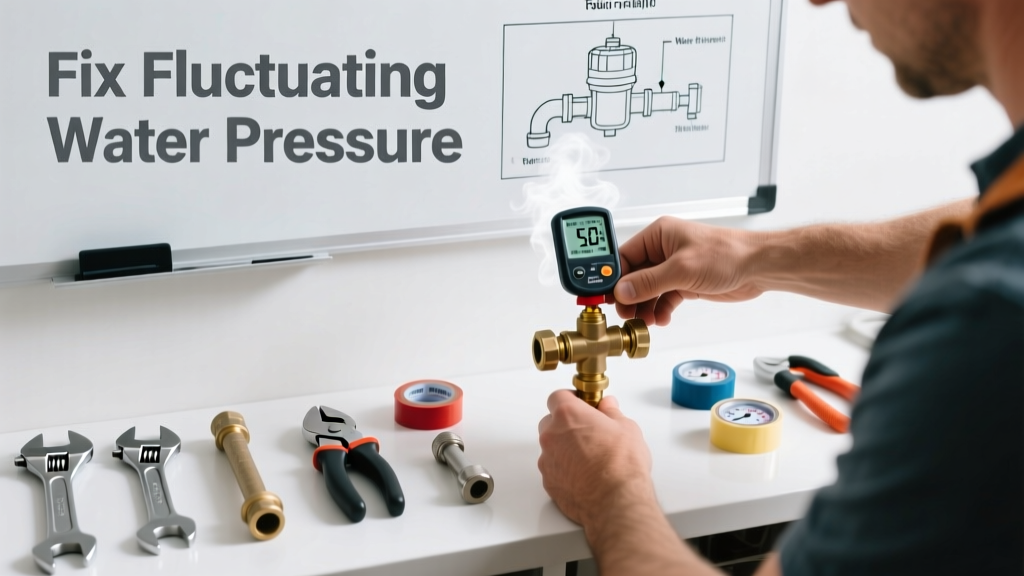
If your shower sputters, faucets pulse, or the toilet tank fills erratically, your water pressure isn’t just annoying—it’s signaling a real issue in your plumbing system. These fluctuations often worsen over time and can damage appliances or waste hundreds of gallons annually. Ignoring them risks pipe stress, premature valve failure, or even hidden leaks behind walls.
Quick Diagnosis
Start by isolating when and where the problem occurs. Is it isolated to one fixture—or every tap? Does it happen only during high-demand times (e.g., laundry + dishwasher running)? Here are the five most common culprits:
- Failing pressure regulator (most frequent cause in homes with municipal supply)
- Clogged aerators or cartridge-based faucet valves
- Partially closed main shutoff or street-side valve
- Corroded galvanized pipes (common in homes built before 1980)
- Well system issues: failing pressure tank bladder or pump cycling too frequently
Tools & Materials Needed
| Item | Purpose | Estimated Cost |
|---|---|---|
| Pressure gauge (0–160 PSI) | Measures static and dynamic pressure at hose bibs and fixtures | $12–$25 |
| Adjustable wrench & channel locks | Tightens/loosens regulator nuts, shut-off valves, and fittings without stripping | $18–$35 |
| Replacement pressure regulator (if needed) | Direct replacement for failed units; choose brass body, 40–70 PSI adjustable range | $45–$85 |
| Vinegar soak container & soft brush | Cleans mineral buildup from aerators and showerheads safely | $5–$10 |
| Well pressure tank air gauge & bicycle pump (for well owners) | Checks and adjusts pre-charge pressure in bladder tanks | $8–$22 |
Step-by-Step Fix
Work methodically—start simple and escalate only when needed. Always shut off the main water supply before disassembling any component.
- Test baseline pressure: Screw a pressure gauge onto an outdoor spigot (not frost-free), open fully, and record static pressure. Then turn on two indoor fixtures simultaneously and retest. A drop >10 PSI indicates restriction or regulator failure (how to test water pressure).
- Clean all aerators and showerheads: Soak in white vinegar for 30 minutes, scrub with a soft toothbrush, rinse thoroughly. Replace worn rubber washers—replacing an aerator takes under 5 minutes.
- Inspect and adjust your pressure regulator: Locate the bell-shaped brass unit near the main shutoff (usually after the meter). Use an adjustable wrench to loosen the locknut, then turn the adjustment screw clockwise to increase pressure (¼ turn increments). Retest after each adjustment. If pressure still surges or drops unpredictably, the diaphragm is likely ruptured.
- Check well tank pre-charge (well systems only): With pump OFF and tank drained, use an air gauge to measure bladder pressure. It should be 2 PSI below the pump’s cut-in pressure (e.g., 38 PSI for a 40/60 switch). Add air with a bicycle pump if low—never exceed manufacturer specs.
When to Call a Pro
Some scenarios demand licensed expertise—not just for safety, but code compliance and liability. Call a plumber immediately if:
- You detect wet drywall, warped flooring, or musty odors near pipes (possible hidden leak)
- Pressure exceeds 80 PSI consistently—even after regulator adjustment (risk of pipe burst or appliance voided warranty)
- Your home has polybutylene piping (gray plastic, installed 1978–1995); these degrade unpredictably and require full repipe
- The regulator fails repeatedly within 12 months (indicates upstream sediment or water hammer damage)
According to the Insurance Institute for Business & Home Safety's 2023 report, 68% of water-related insurance claims involve pressure-related failures originating from unaddressed regulator or tank issues.
Prevention Tips
Maintain stable pressure year-round with these proactive habits:
- Test pressure annually using a gauge—record readings in a home maintenance log
- Flush sediment from your water heater every 6 months (especially if you have hard water)
- Install whole-house water filtration if iron/manganese levels exceed 0.3 ppm (prevents regulator clogging)
- Replace pressure regulators every 7–10 years—even if working—to avoid sudden failure
Why does my water pressure drop only when the washing machine runs?
This points to undersized supply lines or a failing pressure regulator unable to maintain flow during peak demand. Homes with ½-inch supply piping feeding multiple large appliances often see this. Check whether other fixtures dimish pressure simultaneously—if yes, upgrade to ¾-inch main line or install a booster pump.
Can I replace a pressure regulator myself?
Yes—if you’re comfortable shutting off main water, draining lines, and torquing brass fittings to manufacturer specs (typically 25–35 ft-lbs). But improper installation causes leaks, noise, or catastrophic failure. Always verify compatibility: inlet/outlet size, max PSI rating, and thread type (NPT vs. compression). Full regulator installation guide includes torque charts and sealant tips.
Is fluctuating pressure dangerous?
Yes—repeated surges accelerate wear on washing machine hoses (rated for 200 PSI max), toilet fill valves, and tankless water heaters. The U.S. EPA estimates that 14% of household water usage is from leaks caused by pressure-related failures—many starting as minor fluctuations.
What PSI should my home water pressure be?
Optimal range is 40–70 PSI. Below 40 PSI feels weak at showers; above 80 PSI risks pipe joint failure, water heater relief valve discharge, and shortened appliance life. Municipal supplies often deliver 60–85 PSI—hence the need for a regulator.
Will a water softener fix pressure fluctuations?
No—but a clogged softener resin tank or bypass valve can mimic regulator failure. Test pressure before and after the softener. If drop exceeds 10 PSI, clean the resin bed or replace the control valve. Softeners don’t regulate pressure; they only remove minerals.
How do I know if my well pressure tank is failing?
Short-cycling (pump turning on/off every 30–60 seconds), water that feels 'spongy' or pulsates from taps, or visible air bubbles in water indicate a waterlogged tank. Drain the tank and check air charge—if it’s below 38 PSI (for 40/60 switch) or won’t hold air, the bladder is ruptured and replacement is required.
Stable water pressure isn’t just about comfort—it’s foundational to your plumbing’s longevity and safety. Address fluctuations early, track changes over time, and treat your regulator like a tire: it holds pressure, wears out, and needs scheduled replacement. When in doubt, a $150 diagnostic call beats a $3,000 slab leak repair—and saves thousands of gallons of wasted water.