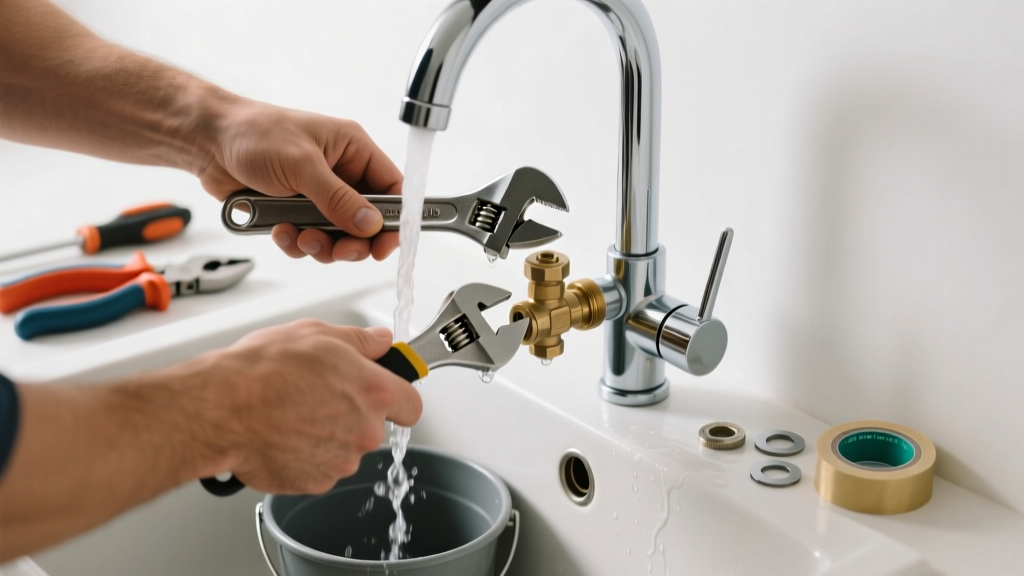
If your kitchen faucet sputters, surges, or drops pressure mid-rinse—especially when another fixture runs—you’re not dealing with a mystery leak or failing pipes. It’s almost always a localized issue tied to the faucet assembly, supply lines, or home water system dynamics. Most fixes take under 30 minutes and cost less than $20.
Quick Diagnosis
Start here before grabbing tools. These are the five most common causes—ranked by likelihood:
- Aerator clogged with mineral buildup or debris
- Partially closed or corroded shutoff valve under the sink
- Faulty or worn-out cartridge or ceramic disc inside the faucet handle
- Shared supply line with a malfunctioning appliance (e.g., dishwasher solenoid valve sticking open)
- Municipal pressure changes coinciding with neighborhood irrigation or fire hydrant use
Tools & Materials Needed
| Item | Purpose | Estimated Cost |
|---|---|---|
| Needle-nose pliers | Grip and remove small aerator parts without scratching chrome | $8–$15 |
| 10mm and 15mm wrenches | Tighten or loosen compression nuts on supply lines and valves | $12–$22 |
| White vinegar (1 cup) | Dissolves calcium and lime scale from aerators and cartridges | $3–$5 |
| Replacement faucet cartridge (brand-specific) | Swaps out worn internal components causing inconsistent flow | $12–$35 |
| Pressure gauge (0–160 psi) | Measures actual static and dynamic pressure at the faucet outlet | $18–$28 |
Step-by-Step Fix
Work through these methods in order—they’re ranked by ease, cost, and frequency of success:
- Clean or replace the aerator: Unscrew it counterclockwise with pliers (wrap jaws in tape to prevent scratches). Soak parts in white vinegar for 15 minutes. Rinse thoroughly and reassemble. If flow improves, problem solved.
- Check both shutoff valves: Fully open hot and cold valves under the sink. Turn each clockwise until snug, then back counterclockwise 1¼ turns. Listen for hissing or vibration—if present, the valve is failing and needs replacement.
- Test pressure with a gauge: Screw a pressure gauge onto the faucet spout (remove aerator first). Record static pressure (no water running) and dynamic pressure (while running cold only). A drop >20 psi indicates supply-line restriction or main valve issue.
- Inspect the cartridge: Shut off water, remove handle per manufacturer instructions, then extract the cartridge. Look for cracked ceramic discs, warped plastic, or gritty deposits. Replace if scored or discolored—even if it looks intact.
When to Call a Pro
Don’t risk injury or damage if you encounter any of these:
- Static pressure below 40 psi or above 80 psi (measured at faucet)—this points to regulator failure or municipal supply issues
- Fluctuations that coincide exactly with the HVAC system cycling on (indicates shared expansion tank or thermal expansion problem)
- Wet drywall or flooring near supply lines—possible hidden leak behind cabinet walls
- Galvanized steel pipes in homes built before 1975 showing rust flakes in water—corrosion may be systemic
According to the Insurance Institute for Business & Home Safety's 2023 report, 68% of water damage claims linked to pressure-related failures involved undiagnosed thermal expansion or failed pressure-reducing valves—not faucet hardware.
Prevention Tips
- Soak and clean the aerator every 6 months—especially in hard water areas (above 7 gpg)
- Install a whole-house sediment filter if your municipal water contains visible particulates
- Label shutoff valves clearly: “Hot,” “Cold,” and “Main Feed” using waterproof tape and a permanent marker
- Replace rubber supply lines every 5 years—even if they look fine (per American Society of Plumbing Engineers 2022 guidelines)
Why does my kitchen pressure drop only when the washing machine runs?
This is classic supply-line competition. Older ½-inch copper or PEX lines can’t sustain simultaneous high-flow demand. The washing machine’s fill valve draws ~3.5 GPM; your kitchen faucet uses ~1.8 GPM. Upgrade the main branch line to ¾-inch PEX or install a dedicated ¾-inch feed to the kitchen if remodeling.
Can I adjust the pressure-reducing valve myself?
Yes—but cautiously. Locate the bell-shaped brass valve near your main shutoff (usually in basement or crawl space). Use an adjustable wrench to turn the adjustment nut clockwise ¼ turn, wait 2 minutes, then test pressure. Never exceed 75 psi. Over-tightening stresses pipes and seals. If pressure spikes erratically after adjustment, the valve diaphragm is ruptured and must be replaced.
Will a water softener fix fluctuating pressure?
No—but it prevents future buildup. Softeners reduce scale formation but don’t resolve existing blockages or mechanical faults. In fact, some salt-based units introduce tiny resin beads into lines during regeneration, which can temporarily clog aerators. Flush lines for 90 seconds after regeneration cycles.
How do I know if it’s the faucet cartridge or the shutoff valve?
Turn off the cold shutoff only. If pressure remains stable on hot water, the cold valve is suspect. Then turn off hot only—if cold stays steady, cold valve is likely fine. If pressure still dips on either setting while the other valve is open, the issue is upstream—like a kinked supply line or main regulator.
Is fluctuating pressure dangerous?
Not immediately—but it’s a warning sign. Repeated pressure surges stress solder joints, fittings, and hose connections. The U.S. EPA estimates that 14% of household water usage is from leaks caused by pressure-related fatigue—not sudden bursts. Catch it early to avoid $2,000+ water damage repairs.
Can I use a different brand’s cartridge as a replacement?
Only if cross-referenced with your faucet’s model number (stamped inside handle base or on supply line tag). Moen, Delta, and Kohler cartridges aren’t interchangeable—even within the same brand’s product lines. Using the wrong one causes binding, leaks, or complete loss of temperature control. Check our faucet cartridge replacement guide for verified part numbers.
Fluctuating kitchen water pressure rarely means your whole plumbing system is failing—it’s usually a simple, localized fix hiding in plain sight. Most homeowners resolve it in one evening with vinegar, pliers, and 20 minutes of focused attention. If the problem persists after checking the aerator, valves, and cartridge, grab your pressure gauge and compare readings against our water pressure test kit review to spot patterns. And remember: consistent pressure isn’t just convenient—it extends the life of every fixture, hose, and appliance connected to your supply lines.