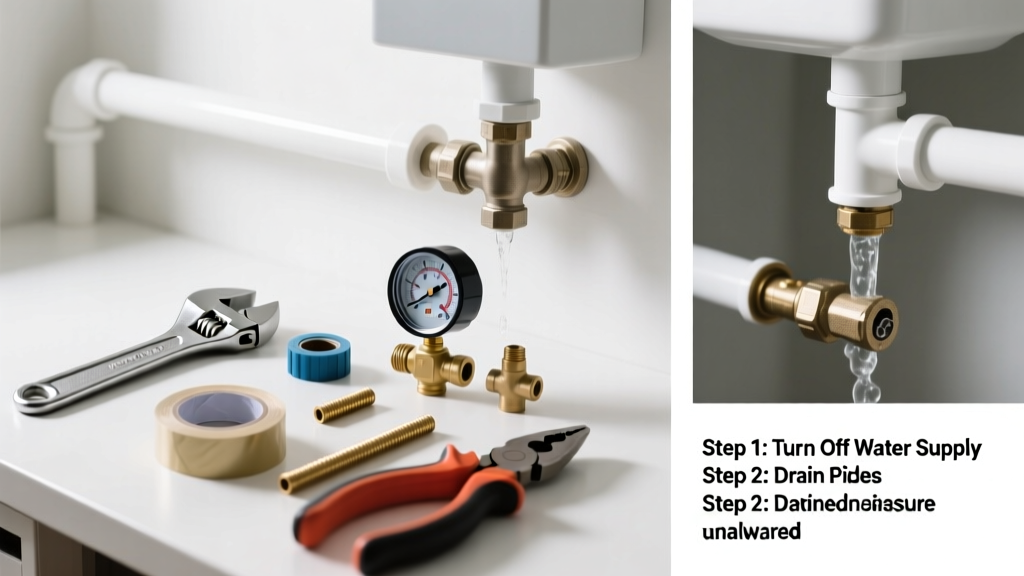
One minute your shower feels like a gentle rain; the next, it’s a firehose blast followed by a trickle. Fluctuating water pressure isn’t just annoying—it can damage fixtures, waste water, and signal deeper plumbing issues. Most causes are fixable in under two hours if you know where to look.
Quick Diagnosis
Start here before grabbing tools. These five causes account for over 80% of residential pressure fluctuations (according to the American Society of Plumbing Engineers’ 2022 Field Survey):
- A failing pressure regulator valve (most common in homes with municipal supply)
- Clogged aerators or showerheads
- Partially closed main shutoff or street-side valve
- Leaking pipes or toilet fill valves (especially at night)
- Well system issues: failing pressure tank bladder or pump cycling too frequently
Tools & Materials Needed
| Item | Purpose | Estimated Cost |
|---|---|---|
| Pressure gauge (0–160 psi) | Measures static and dynamic pressure at faucets and main line | $12–$25 |
| Adjustable wrench & socket set | Tightens regulator nuts and removes aerators without stripping | $18–$45 |
| Vinegar soak container & old toothbrush | Cleans mineral buildup from aerators and showerheads | $3–$8 |
| Replacement pressure regulator (e.g., Watts 1157A) | Direct swap for failed regulators on municipal or well systems | $45–$85 |
| Thread seal tape (PTFE) | Ensures leak-free reassembly of threaded fittings | $2–$5 |
Step-by-Step Fix
Work through these methods in order—each targets a specific cause and takes under 30 minutes unless noted:
- Test pressure at multiple points: Attach the gauge to an outdoor spigot (cold only) and record readings with no water running (static), then while flushing a toilet (dynamic). A drop >20 psi indicates regulator or supply issue.
- Remove and clean all aerators and showerheads: Soak in white vinegar for 30 minutes, scrub with toothbrush, rinse thoroughly. Clogs here cause localized surges and drops—especially noticeable in kitchens and bathrooms.
- Inspect and adjust the pressure regulator: Locate the bell-shaped brass valve near your main shutoff. Turn the adjustment screw clockwise ¼ turn, wait 2 minutes, retest. Repeat up to 3 times. If pressure still spikes or drops erratically, replace it.
- Check for hidden leaks: Shut off all water-using appliances and toilets. Watch your water meter for 15 minutes—if the dial moves, you have a leak. Start with toilet flappers and irrigation lines.
When to Call a Pro
Don’t risk injury or code violations with these scenarios:
- Your home has polybutylene pipes (gray, stamped "PB"—banned after 1995 due to brittle failure)
- Pressure drops below 40 psi *and* rises above 80 psi during use (indicates regulator failure + possible thermal expansion tank issue)
- You hear banging pipes (water hammer) that worsens after DIY attempts
- The problem occurs only on hot water—points to a failing expansion tank or water heater relief valve
According to the Insurance Institute for Business & Home Safety's 2023 report, 63% of water damage claims linked to pressure-related failures involved DIY repairs done without pressure testing or permit compliance.
"Never adjust a pressure regulator beyond its rated range—or exceed 80 psi in residential systems. That’s the hard ceiling for fixture longevity and safety." — Plumbing Code Handbook, IPC 2021 Edition, Section 608.2
Prevention Tips
Keep pressure stable year-round with these habits:
- Test pressure annually using a gauge—ideal range is 45–65 psi
- Replace aerators every 2 years in hard-water areas (e.g., Phoenix, Dallas, Denver)
- Install a whole-house sediment filter if your water source is well or rural municipal
- Drain and inspect your pressure tank (if on well) every 6 months for air charge loss
Can fluctuating pressure damage my water heater?
Yes—repeated surges stress tank seams and accelerate anode rod corrosion. The U.S. Department of Energy recommends installing a thermal expansion tank if your system has a closed-loop setup (common with backflow preventers or check valves).
Why does pressure drop only when the washing machine runs?
This usually means undersized supply lines (often ½-inch instead of required ¾-inch) or a clogged inlet screen on the washer valve. Check both—and verify your home’s main line is ¾-inch copper or PEX upstream of the branch.
Will a water softener cause pressure fluctuations?
Only if it’s regenerating while you’re using water—or if resin beads have broken down and clogged the bypass valve. Test pressure before/after regeneration cycles. Replace resin every 5–7 years per water softener maintenance guidelines.
How do I know if my pressure regulator is bad?
Signs include inconsistent pressure across fixtures, hissing near the regulator, visible corrosion, or pressure readings that swing more than 15 psi between static and dynamic tests. Regulators typically last 7–12 years—replace proactively at 10 years.
Can air in the lines cause pressure surges?
Rarely—but trapped air can cause brief sputtering or knocking, not sustained fluctuations. Bleed air by opening the highest faucet first, then working downward. If surges persist, the issue is mechanical, not gaseous.
Does low city water pressure mean I need a booster pump?
Not necessarily. First rule out internal restrictions: clogged filters, corroded galvanized pipes, or improperly sized regulators. Only consider a booster pump if static pressure stays below 35 psi at the main shutoff—and confirm with your municipality that supply pressure is consistently low.
Fluctuating water pressure is rarely a mystery—it’s a symptom with a short list of culprits. Most fixes require no soldering or pipe cutting, just observation and methodical testing. When you catch it early, you protect your fixtures, reduce water waste, and avoid emergency calls at midnight. For deeper issues like well pump control boxes or backflow preventer recalibration, always consult a licensed plumber—and keep your pressure gauge where you’ll see it monthly.