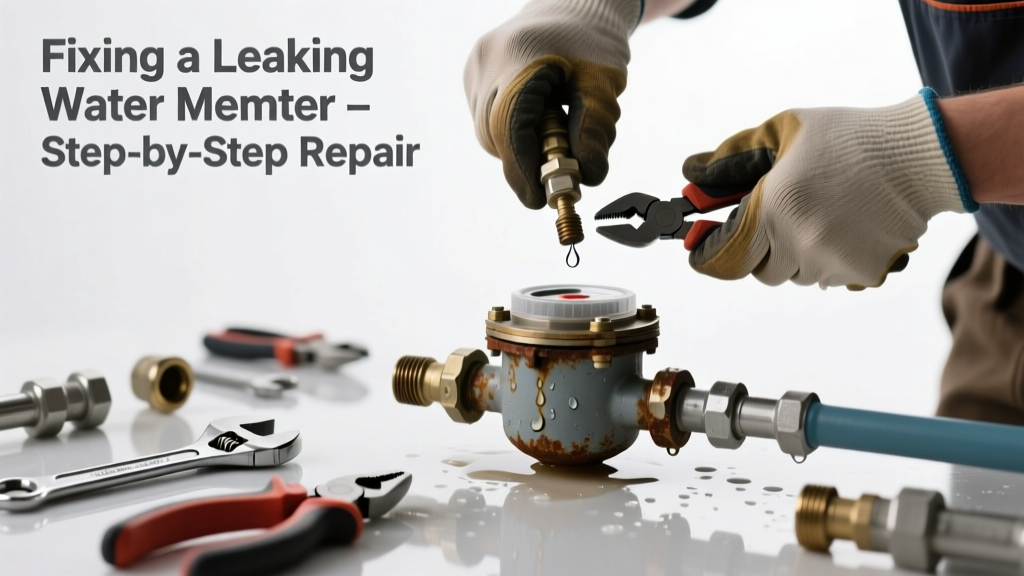
If your water meter is leaking *and* showing no movement—or erratic readings—you’re likely losing water, money, and control over your supply. This isn’t just an annoyance: the U.S. EPA estimates that 14% of household water usage is from leaks, many starting at the meter assembly. Ignoring it risks foundation damage, mold, or sudden shutoffs by your utility.
Quick Diagnosis
Before grabbing tools, confirm what’s really happening. A leaking meter may appear broken—but often the issue lies upstream, downstream, or in misinterpretation:
- Leak at the meter’s inlet or outlet unions (most common—loose compression fittings)
- Cracked or corroded brass body (especially in meters installed before 2010)
- Frozen or cracked register glass causing condensation that mimics leakage
- Internal gear seizure or magnet failure (no dial movement despite flow)
- Utility-side isolation valve not fully closed during inspection
Tools & Materials Needed
| Item | Purpose | Estimated Cost |
|---|---|---|
| Adjustable wrench (12-inch) | Tightens meter unions without stripping brass threads | $12–$25 |
| Thread seal tape (PTFE, yellow-rated for water) | Seals tapered pipe threads on inlet/outlet connections | $3–$6 |
| Brass union replacement kit (½" or ¾") | Replaces worn or cracked factory unions; matches most residential meters | $18–$32 |
| Digital multimeter (for smart meters) | Tests voltage output and pulse signal integrity on AMI/remote-read models | $25–$65 |
| Flashlight with magnetic base | Illuminates tight, buried meter pits without holding | $10–$20 |
Step-by-Step Fix
These methods address both leakage and non-functioning issues—apply in order of likelihood:
- Shut off main supply and relieve pressure: Close the utility’s curb stop (if accessible) or your home’s main shutoff valve. Open two lowest faucets to drain line pressure—wait until flow stops completely.
- Tighten unions with calibrated torque: Use your adjustable wrench to snug—not overtighten—the inlet and outlet brass unions. Turn only 1/8 turn past hand-tight. Over-torquing cracks brittle older bodies.
- Replace leaking unions: If tightening fails, remove old unions, clean threads with a brass brush, wrap new ones with 4 wraps of yellow PTFE tape, and install finger-tight + 1/4 turn with wrench.
- Test register function: With water restored, run a known flow (e.g., fill a 5-gallon bucket in 30 seconds = ~10 GPM). Watch the low-flow indicator (red triangle or star). If it doesn’t move, the internal turbine or gear train is seized—replace the entire meter.
When to Call a Pro
DIY ends where liability and regulation begin. Contact your water utility or a licensed plumber immediately if:
- The leak originates from the meter’s body—not the unions—and shows visible cracks or green corrosion
- Your meter is owned and sealed by the utility (tampering voids service agreements and may trigger fines)
- You detect sulfur odor or black water—possible cross-connection or backflow contamination
- The meter is located inside a concrete vault deeper than 36 inches (confined space entry requires OSHA training)
Prevention Tips
Most meter failures stem from seasonal stress and deferred maintenance. Extend life with these field-tested habits:
- Insulate exposed meters in unheated basements or crawlspaces with closed-cell foam wrap (R-4 minimum)
- Drain and winterize exterior meter pits before first freeze—use compressed air, not antifreeze (toxic to aquifers)
- Check for vibration transfer from nearby sump pumps or HVAC lines; install rubber isolation gaskets between pipe and meter
- Record baseline reading monthly—sudden zero movement or unexplained spikes flag early failure
Can I replace my water meter myself?
No—unless you’re a licensed utility technician. Most residential meters are utility property. Tampering violates municipal code and can result in service termination or fines per Section 7.2 of the 2021 Uniform Plumbing Code. Always request a meter inspection first.
Why does my meter leak only when water is running?
This points to dynamic pressure failure: worn O-rings in the union swell when static, then compress and leak under flow. Replace both unions and verify thread alignment—cross-threading causes intermittent sealing.
Is a leaking meter dangerous?
Yes—beyond water waste, persistent leaks erode soil around foundations and create slip hazards in meter pits. According to the Insurance Institute for Business & Home Safety's 2023 report, 22% of slab leaks originate within 12 inches of the meter assembly due to undetected seepage.
"Never use pipe dope on meter unions—only PTFE tape. Dope migrates into the register mechanism and gums up the magnetic pickup sensor." — John R. Vargas, Lead Meter Technician, Denver Water (2022)
How much does a professional meter replacement cost?
Utility-provided replacements are typically free if the meter is defective and under warranty (usually 10 years). For homeowner-owned meters or emergency after-hours service, expect $180–$320 labor + $95–$210 for a new ¾" SmartStar or Badger E-Series meter.
Will my water bill increase if the meter isn’t working?
It depends. If the meter is stuck *low*, you’ll be undercharged—and the utility may audit and bill retroactively for estimated usage (often 12–18 months’ average). If stuck *high*, you’ll overpay until corrected. Always document readings before reporting.
A properly functioning water meter is the single most reliable gauge of your home’s plumbing health. Catching a leak early—and diagnosing whether it’s mechanical, environmental, or regulatory—keeps your system efficient and your utility relationship intact. Pair these fixes with routine visual checks every spring and fall, and you’ll rarely face an emergency call at midnight.