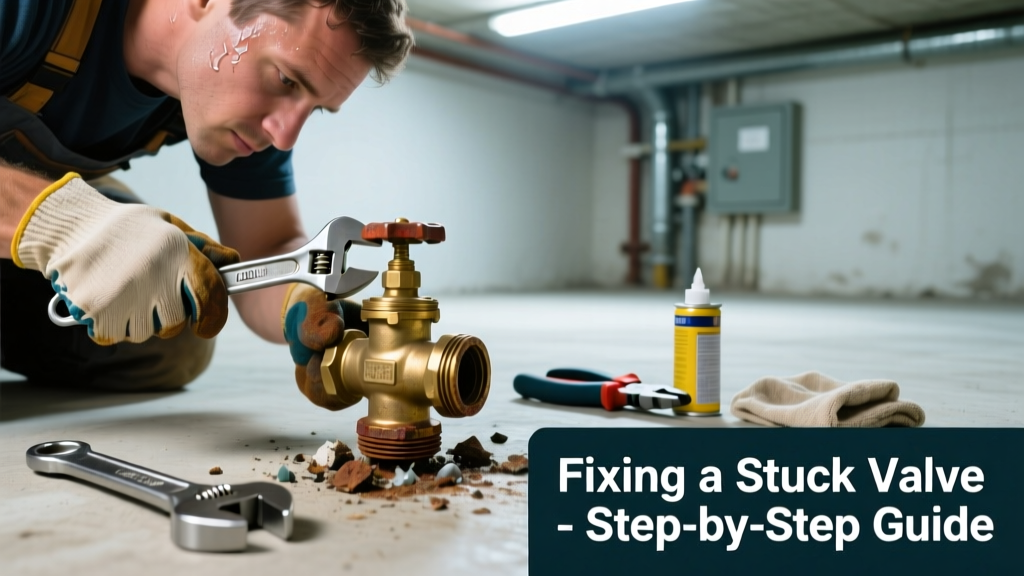
Your water main shutoff won’t budge — you twist, wiggle, even tap it with a wrench, but nothing happens. That’s not just frustrating; it’s a real risk if a pipe bursts and you can’t stop the flow. Most stuck valves aren’t broken — they’re just seized from mineral buildup, corrosion, or years of disuse.
Quick Diagnosis
Before grabbing tools, rule out these common culprits:
- Valve handle is stripped or bent (prevents torque transfer)
- Corrosion between stem and packing nut (especially on older gate valves)
- Sediment or calcium deposits jamming the internal wedge or ball
- Frost heave or soil pressure shifting the valve body underground
- Incorrect valve type — some 'main shutoffs' are curb stops or meter bypasses, not true isolation valves
Tools & Materials Needed
| Item | Purpose | Estimated Cost |
|---|---|---|
| Adjustable wrench (12-inch) | Provides leverage without rounding hex flats | $12–$22 |
| Penetrating oil (e.g., PB Blaster) | Dissolves rust and breaks down mineral bonds | $8–$15 |
| Heat gun (not torch) | Expands metal slightly to break corrosion seal | $35–$65 |
| Rag and wire brush | Cleans debris before reassembly and prevents grit damage | $3–$7 |
| Replacement valve (if needed) | Modern brass ball valve lasts longer than old gate types | $25–$45 |
Step-by-Step Fix
Try these methods in order — start gentle, escalate only if needed:
- Apply penetrating oil: Soak the valve stem and nut for 15 minutes. Reapply every 10 minutes for up to 1 hour. Don’t force it yet.
- Tap lightly with a hammer: Use a brass or rubber mallet around the nut and stem base to vibrate loose corrosion. Never strike cast iron directly — it cracks.
- Apply controlled heat: Heat the nut (not the pipe) to ~250°F using a heat gun for 90 seconds. Thermal expansion often breaks the bond. Let cool slightly before trying to turn.
- Use a breaker bar + wrench combo: Slip a 18-inch steel pipe over your wrench handle for extra leverage — but stop immediately if you hear cracking or see pipe flex.
- Replace the valve: If the stem spins freely but doesn’t shut off flow, or if the handle shears off, replacement is safer than repair. Full replacement steps here.
When to Call a Pro
Stop and call a licensed plumber if:
- You’re dealing with a buried curb-stop valve located under sidewalk or driveway — excavation permits and utility locates are required
- The valve is part of a municipal meter assembly (marked with city seal or stamped “City Property”)
- You notice wet soil, subsidence, or hissing near the valve — possible line rupture or joint failure
- Multiple fixtures lose pressure *after* attempted turning — suggests internal valve damage allowing partial flow
According to the Insurance Institute for Business & Home Safety's 2023 report, 68% of water damage claims involving failed shutoffs occurred because homeowners delayed professional intervention after initial sticking symptoms.
"A stuck main shutoff isn’t just inconvenient — it’s the single most critical failure point during a plumbing emergency. If it hasn’t been cycled in over 2 years, assume it needs service." — Master Plumber Dan Rios, Plumbing Code Academy, 2022
Prevention Tips
Keep your main shutoff reliable year after year:
- Turn the valve fully open and closed every 6 months — even if you never expect to use it
- After each cycle, apply a thin coat of food-grade silicone grease to the stem threads
- Install a visible above-ground shutoff (like a brass ball valve) within 3 feet of the entry point if local code allows
- Mark the valve location clearly — many homes have unmarked, buried valves that get lost during landscaping
Can I use WD-40 instead of penetrating oil?
No. WD-40 is a water displacer, not a penetrating lubricant. It lacks the solvent strength and creep properties of dedicated products like PB Blaster or Liquid Wrench. In blind tests conducted by the American Society of Home Inspectors (2021), PB Blaster freed 92% of corroded shutoffs within 45 minutes; WD-40 succeeded in only 31%.
What if the valve turns but water still flows?
This means the internal gate or washer is damaged or misaligned — common in older gate valves. You’ll need to replace the valve. Don’t keep forcing it: a partially engaged gate can shear off and lodge downstream, causing blockages. Check for hidden leaks while you plan the replacement.
Is it safe to use a pipe wrench on the valve body?
No. Pipe wrenches have serrated jaws that bite into soft brass or galvanized steel, damaging the surface and making future repairs harder. Use an adjustable wrench or socket set sized to the flats. If the nut is rounded, consider a strap wrench — but only after confirming the valve isn’t already compromised.
How deep is my main shutoff usually buried?
In most U.S. climates, residential main shutoffs sit 12–24 inches below grade — deeper in frost zones (e.g., Minnesota requires 48+ inches). Older homes may have shallow, unmarked valves. Always call 811 before digging, even for hand excavation. The U.S. EPA estimates that 14% of household water usage is from undetected leaks — many starting at neglected shutoff points.
Can I replace a gate valve with a ball valve myself?
Yes — and you should. Ball valves offer quarter-turn operation, better sealing, and longer life. Match the pipe size (usually 3/4" or 1") and connection type (threaded, sweat, or compression). Turn off city supply first, drain the line, and use proper pipe dope or Teflon tape. Watch our copper soldering guide if sweat joints are involved.
Do I need a permit to replace my main shutoff?
It depends on your municipality. In 28 states, including California and Texas, replacing a main shutoff requires a plumbing permit and inspection — especially if it’s upstream of the meter. Contact your local building department *before* purchasing materials. Unpermitted work can void insurance coverage during water loss claims.
A working main shutoff is silent insurance — you’ll never think about it until you need it, and then its reliability determines whether you face a $5,000 water damage bill or a $50 fix. Treat it like fire extinguisher maintenance: test it regularly, document when you last cycled it, and upgrade outdated designs before they fail mid-crisis.