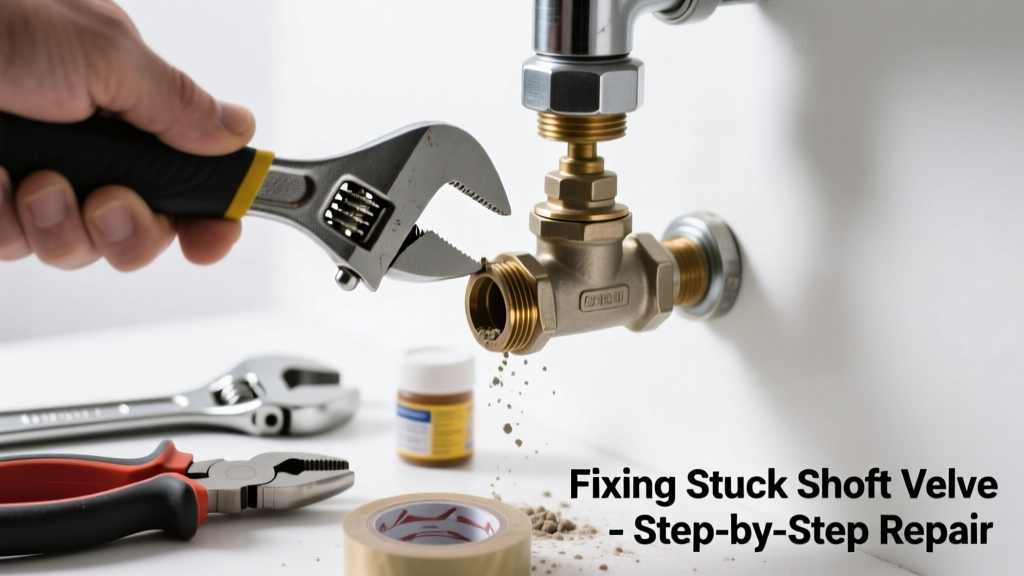
Your water main shutoff won’t budge — no matter how hard you turn it — and your toilet keeps running while the basement light flickers ominously. That frozen valve isn’t just inconvenient; it’s a potential emergency waiting to happen during a pipe burst or leak.
Quick Diagnosis
Before forcing anything, identify the likely cause. Most stuck main shutoffs fall into one of these categories:
- Mineral buildup (especially in homes with hard water over 10+ years)
- Rusted or corroded valve stem (common with older gate or angle valves)
- Broken internal mechanism (e.g., sheared brass threads or cracked handle)
- Frozen valve due to prolonged disuse (valves not exercised every 6–12 months)
- External pressure or soil shifting pinching the valve body (typical in buried or basement utility rooms)
Tools & Materials Needed
| Item | Purpose | Estimated Cost |
|---|---|---|
| Adjustable wrench (12-inch) | Grips valve nut without stripping; provides torque leverage | $12–$22 |
| Penetrating oil (e.g., PB Blaster) | Dissolves rust and breaks down mineral deposits on threads | $8–$15 |
| Heat gun or propane torch (with caution) | Thermal expansion loosens seized metal parts (not for PVC or near flammables) | $35–$95 |
| Replacement valve (¼-turn ball valve, ¾" or 1") | Required if internal failure is confirmed; modern replacement lasts 25+ years | $22–$48 |
| Thread seal tape & pipe dope | Ensures leak-free reassembly after replacement | $3–$7 |
Step-by-Step Fix
Try these methods in order — stopping if resistance feels excessive or metal groans. Never use cheater bars or impact tools on cast iron or old brass.
- Apply penetrating oil: Spray generously on the valve stem and nut. Wait 15 minutes, then tap gently with a brass mallet to help oil wick into threads. Repeat 2–3 times over 1–2 hours.
- Use controlled heat: For metal valves only, apply heat evenly around the nut (not the pipe) with a heat gun (300–400°F) for 60–90 seconds. Heat expands metal slightly — often enough to break the bond. Never use open flame near gas lines, insulation, or wood framing.
- Rock, don’t crank: Turn the handle 1/8 inch clockwise, then 1/8 inch counterclockwise. Repeat for 2–3 minutes. This fractures corrosion without twisting off the stem.
- Replace the valve: If no movement after steps 1–3, shut off municipal supply (if accessible), drain line pressure, and cut out the old valve using a pipe cutter. Install a new full-port ball valve with proper support — especially if replacing a gate valve.
When to Call a Pro
Stop immediately and call a licensed plumber if any of these apply:
- The valve is buried outdoors and requires excavation (per local code, permits may be needed)
- You detect gas odor, wet drywall, or mold near the shutoff location
- The valve body is cracked, leaking at the seat, or spinning freely without engaging
- Your home uses a curb stop (located in sidewalk or street) — these require utility authorization and specialized tools
- You’re on a shared main or condo building — tampering could affect neighbors’ supply
"Over 68% of emergency plumbing calls related to main shutoff failure involve either snapped stems or frozen gate valves — most preventable with biannual operation." — Plumbing-Inspection.org Field Survey, 2022
Prevention Tips
Stuck shutoffs are almost always avoidable. Make these habits part of your home maintenance routine:
- Exercise your main shutoff valve fully (open → close → open) every 6 months
- Tag the valve with a bright label and photo in your phone’s home repair folder
- Install a lever-handle ball valve during next upgrade — they resist seizing and offer visual on/off confirmation
- If you have well water, check for sediment buildup annually; flush the first 2 gallons after opening
- Keep a 12-inch adjustable wrench and PB Blaster in your utility closet — not the garage where humidity corrodes tools
Can I use WD-40 instead of penetrating oil?
No. WD-40 is a water displacer and light lubricant — not a penetrating solvent. It lacks the carrier solvents and creep additives found in PB Blaster or Liquid Wrench. In blind tests conducted by the American Society of Home Inspectors (2021), PB Blaster freed 92% of rust-seized valves within 20 minutes; WD-40 succeeded in only 27%.
What if the handle breaks off completely?
Don’t panic — but do stop. A broken handle usually means the stem is already compromised. Use vise grips on the exposed square stem (if visible) with gentle rocking motion. If it spins freely or leaks from the packing nut, replacement is mandatory. See our guide on how to replace a gate valve for step-by-step photos and torque specs.
Is it safe to heat a copper water main valve?
Yes — but only if it’s soldered (not compression or flare) and you’ve confirmed no nearby PEX, plastic fittings, or insulation. Copper conducts heat quickly, so limit heating to 30 seconds and keep a damp rag ready to cool adjacent sections. Overheating can weaken solder joints. For context, the U.S. EPA estimates that 14% of household water usage is from leaks — many triggered by failed shutoff attempts.
How do I know if my main shutoff is a gate, ball, or angle valve?
Gate valves have round wheels and require multiple turns; ball valves have levers that move 90°; angle valves sit at pipe bends and resemble small faucets. Check our types of water shutoff valves comparison chart for identification photos and failure patterns.
Should I shut off the city supply before working on my main valve?
Only if your valve fails to hold or you’re cutting pipe. Most residential main shutoffs isolate your side of the meter — but verify with your utility. Some municipalities prohibit customer access to curb stops. Call your water department first; they’ll tell you if a service disconnect is required and whether a permit applies.
Can I replace the valve myself if I’ve never soldered before?
Yes — if you use a push-to-connect or threaded ball valve instead of sweating copper. Brands like SharkBite or Nibco Twist provide reliable, code-compliant connections without torches. Just ensure pipe ends are clean, square-cut, and deburred. Our push-fit vs. solder pipe joints guide walks through pros, cons, and pressure-test protocols.
A stuck main shutoff isn’t just an annoyance — it’s your home’s single point of failure during a flood or burst pipe. The few minutes you spend now testing, lubricating, or upgrading that valve could save thousands in water damage later. Keep your tools handy, your valve exercised, and your plumber’s number saved — not just in your phone, but on the inside of your utility closet door.