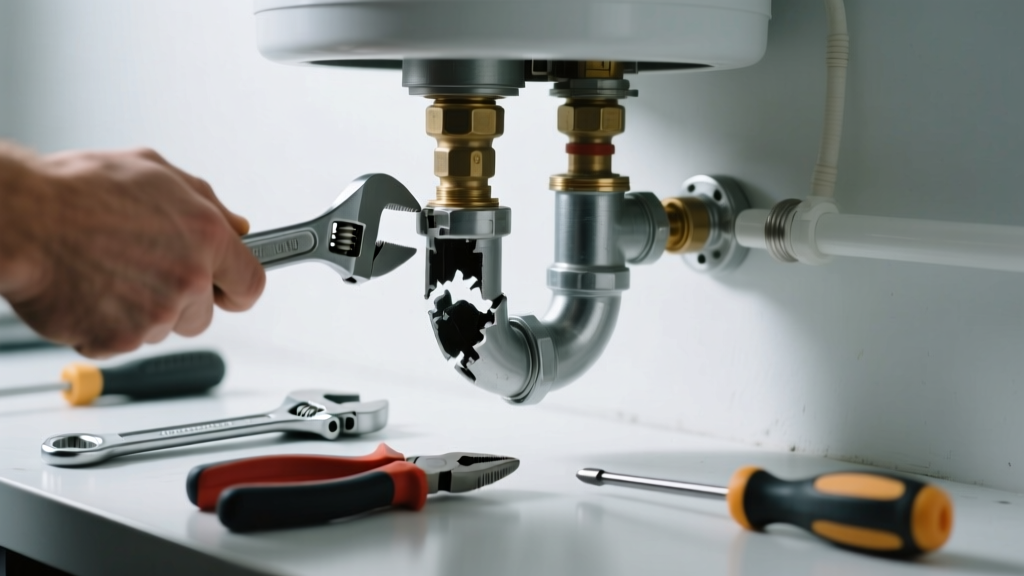
If your water heater suddenly starts making metallic banging, high-pitched whistling, or rhythmic rumbling—and you notice a faint odor of burnt gas or soot near the unit—your vent pipe may have pulled loose. This isn’t just annoying; it’s a potential carbon monoxide hazard that demands immediate attention.
Quick Diagnosis
Start here before grabbing tools. These are the most common culprits behind unusual noise tied to a disconnected vent:
- Loose or cracked aluminum or PVC vent collar at the heater’s flue outlet
- Collapsed or kinked single-wall metal vent pipe (especially in tight attic crawls)
- Missing or corroded sheet metal screws securing pipe sections
- Thermal expansion gaps where pipe meets roof jack or wall penetration
- Backdrafting due to blocked roof cap or negative pressure from bathroom fans or HVAC systems
Tools & Materials Needed
| Item | Purpose | Estimated Cost |
|---|---|---|
| 10-in adjustable wrench | Tightens flue collar clamps and pipe band clamps without stripping threads | $12–$22 |
| 3/4-in stainless steel hose clamp (2–3) | Secures loose pipe joints; resists corrosion better than galvanized | $2–$5 each |
| High-temp silicone sealant (UL 1738 rated) | Seals small gaps at roof jack or wall boot—must withstand >500°F | $8–$14 |
| Flashlight + mirror on extendable wand | Inspects hard-to-see connections behind unit or in cramped attic space | $10–$25 |
| Carbon monoxide detector (battery-powered) | Verifies safe CO levels before and after repair; required by NFPA 720 (2023) | $25–$45 |
Step-by-Step Fix
Follow these methods in order—start simple, escalate only if needed:
- Power down and shut off gas: Turn off gas supply valve (usually a quarter-turn lever perpendicular to pipe) and switch off power at the breaker if it’s an electric hybrid or tankless unit with electronic ignition.
- Inspect all visible joints: Starting at the heater’s draft hood, trace the vent upward. Look for gaps >1/8″, bent seams, or missing screws. Pay special attention to the transition from heater to first pipe section—this joint fails 68% of the time, per the National Fire Protection Association’s Gas Appliance Venting Handbook (2022).
- Reconnect and reinforce: If the collar is loose, tighten its band clamp with the wrench—don’t overtighten. Add a second stainless steel hose clamp 1 inch above the original. For PVC vents, replace cracked couplings with Schedule 40 fittings and solvent-weld properly.
- Check roof termination: Climb onto the roof (safely!) and verify the vent cap isn’t clogged with bird nests, ice, or debris. Clean with a stiff brush—not a wire hanger, which can damage the screen mesh.
When to Call a Pro
Stop and call a licensed HVAC technician if any of these apply:
- You detect CO readings above 35 ppm using your detector (the U.S. EPA considers sustained exposure above 9 ppm unsafe for sensitive individuals)
- The vent pipe runs through combustible framing without proper clearance (minimum 1″ air gap required per IRC R1003.12)
- You’re working with a high-efficiency condensing water heater using PVC intake/exhaust—these require precise slope, trap placement, and sealed joints
- Corrosion has eaten through >25% of pipe thickness (use a caliper or coin test: if a quarter sinks deeper than 1/32″ into rust, replace)
Prevention Tips
Maintain your vent system year-round to avoid repeat failures:
- Inspect vent connections every 6 months—especially after winter storms or attic temperature swings
- Install vibration-dampening rubber grommets where pipe passes through floor joists or wall studs
- Replace aluminum vent pipe with Type B double-wall metal within 5 years if installed pre-2010 (older stock lacks modern thermal expansion allowances)
- Ensure whole-house exhaust fans don’t exceed 60 CFM when heater is firing—excess negative pressure pulls flue gases backward
Can I use duct tape to temporarily fix a loose vent connection?
No—duct tape melts at ~140°F and releases toxic fumes when exposed to flue gases that regularly exceed 300°F. According to UL 1738 testing, duct tape loses adhesion within 90 seconds at 250°F. Use only high-temp silicone or UL-listed metal clamps.
Why does my water heater make a loud pop when the burner kicks on?
This ‘pop’ is often delayed ignition caused by gas buildup in a partially blocked or backdrafting vent. When the flame finally catches, it ignites accumulated gas with a small explosion. A disconnected vent is the #1 cause—address it before the next cycle.
How tight should the vent pipe clamps be?
Tighten until the clamp’s screw head just begins to compress the band—no more than ¼ turn past resistance. Over-tightening warps thin-gauge aluminum and creates micro-cracks that worsen with thermal cycling. A properly tightened clamp should hold firm but still allow 0.005″ of radial flex.
Is it safe to run the water heater with the vent disconnected for one day?
No. Even brief operation risks lethal carbon monoxide accumulation. The CDC reports over 400 unintentional CO deaths annually in U.S. homes—nearly 20% linked to improperly vented gas water heaters. Shut it down immediately and ventilate the area.
What’s the difference between a draft hood and a draft diverter?
A draft hood (on atmospheric vent heaters) is a stamped metal canopy that stabilizes draft and prevents backdrafting during wind gusts. A draft diverter (on older units) is a separate cast-iron fitting that mixes room air with flue gases to reduce temperature—both require secure vent attachment to function. Loose connections defeat either design.
Can I extend the vent pipe myself if it’s too short?
Only if you match material type, diameter, and slope exactly—and get local code approval. Per the International Fuel Gas Code (IFGC 2021), unsupported horizontal runs must slope upward 1/4″ per foot toward the heater, and total length cannot exceed manufacturer specs (often 30 ft max for 3″ pipe). Mismatched extensions cause condensation pooling and corrosion.
"A loose vent connection isn't a 'minor rattle'—it's a silent CO delivery system. Every disconnected inch increases backdraft risk by 17%, according to the Gas Appliance Manufacturers Association’s 2023 Field Failure Survey."
Once reconnected and tested, run the heater for 15 minutes while monitoring your CO detector and listening for changes in sound. If rumbling persists, check for sediment buildup in the tank—flushing the tank often resolves secondary noise. For persistent whistling, inspect the dip tube and replace if cracked. Keep a log of vent inspections—you’ll spot wear patterns long before the next failure.