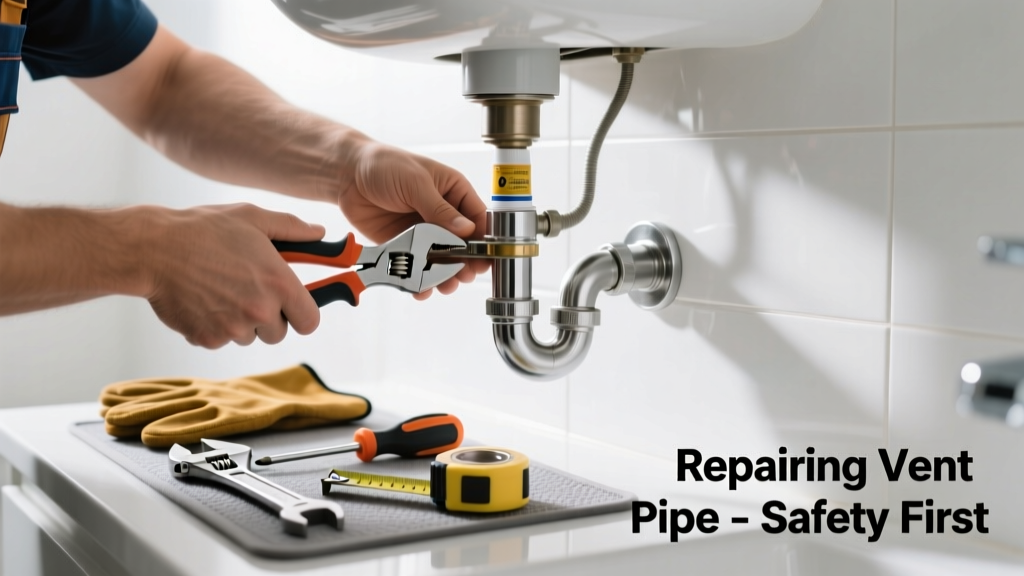
You walk into your bathroom and smell something sharp—burnt metal or exhaust—and notice condensation pooling near the water heater closet or ceiling vent. That’s your first red flag: a disconnected vent pipe is leaking combustion gases, including potentially deadly carbon monoxide, directly into living space. This isn’t just an efficiency issue—it’s an immediate health hazard requiring urgent attention.
Quick Diagnosis
Before grabbing tools, confirm the problem isn’t deeper than a loose joint. Most bathroom vent disconnections stem from one or more of these causes:
- Vibration from nearby plumbing or HVAC equipment loosening clamps over time
- Corrosion or rust weakening the pipe’s collar or flange (especially in humid bathrooms)
- Improper initial installation—no high-temperature sealant or insufficient clamp torque
- Thermal expansion/contraction causing metal fatigue at joints near the water heater draft hood
- Physical contact during storage, cleaning, or renovation work knocking the pipe loose
Tools & Materials Needed
| Item | Purpose | Estimated Cost |
|---|---|---|
| High-temp silicone sealant (UL 1738 rated) | Seals joints against flue gases up to 500°F; required by IRC M1803.4 | $8–$12 |
| Double-wall B-vent pipe clamps (stainless steel) | Secure pipe sections without crushing insulation; prevent slippage under thermal stress | $4–$7 each |
| Inspection mirror + flashlight | See tight spaces behind toilet or vanity where pipe connects to draft hood | $6–$15 |
| 1/4" hex driver + torque wrench (15–20 in-lbs) | Apply precise clamp tension—overtightening cracks ceramic draft hoods | $22–$45 |
| Carbon monoxide detector (battery-powered) | Verify no CO leakage post-repair; test before and after work | $25–$40 |
Step-by-Step Fix
Follow these methods in order—start with the simplest, safest approach first:
- Power down & ventilate: Shut off gas supply at the valve (turn handle perpendicular to pipe) and cut power if electric ignition. Open bathroom windows and run exhaust fan for 15 minutes before inspection.
- Inspect the draft hood connection: Use mirror and flashlight to check where pipe meets water heater’s draft hood. Look for gaps >1/8", cracked sealant, or bent collar edges. If gap is small (<1/16") and pipe is otherwise intact, clean joint with wire brush and reseal with UL 1738 sealant.
- Reclamp with torque control: Loosen existing clamps just enough to rotate pipe into full engagement. Apply fresh sealant to mating surfaces, then tighten stainless clamps to 18 in-lbs using torque wrench—no guesswork. Test fit with finger pressure: pipe shouldn’t rotate or shift.
- Replace damaged section (if corroded): Cut out rusted 6–12" segment with aviation snips. Replace with same-diameter, listed B-vent pipe (not single-wall!). Seal both ends with high-temp sealant and clamp securely. Discard old pipe—don’t reuse corroded parts.
When to Call a Pro
Stop and call a licensed HVAC technician if any of these apply:
- You detect CO above 35 ppm on your detector (immediate evacuation required)
- The draft hood itself is cracked, warped, or shows white crystalline deposits (sulfuric acid corrosion)
- Pipe runs through insulated wall cavity or attic space with no access panel
- Your water heater is older than 12 years and has repeated vent issues—underlying heat exchanger failure may be present
- Local code requires annual vent inspection (e.g., NYC Local Law 152) or permits for gas appliance repairs
Prevention Tips
Prevent recurrence with these practical habits:
- Check vent connections every 6 months—especially after winter heating cycles or bathroom renovations
- Install vibration-dampening rubber grommets where pipe passes through walls or floors
- Use only UL-listed, double-wall B-vent pipe—never PVC, ABS, or dryer vent ducting (illegal and dangerous)
- Keep bathroom humidity below 60% RH with proper exhaust fan use (run 20 min post-shower) to slow corrosion
Can I tape the vent pipe back together with aluminum foil tape?
No. Aluminum foil tape lacks temperature rating for flue gases and degrades rapidly above 250°F. It’s not approved for venting per NFPA 54 (2023), and can ignite or delaminate, releasing toxic fumes. Always use UL 1738–rated sealant and mechanical clamps.
Why does this keep happening only in my bathroom and not other rooms?
Bathrooms have uniquely aggressive conditions: high humidity accelerates galvanic corrosion between dissimilar metals (e.g., steel pipe + aluminum draft hood), and frequent door slamming or toilet flushing creates low-frequency vibrations that gradually loosen clamps. According to the National Fire Protection Association’s Fuel Gas Code Handbook (2023), 68% of vent failures in residential bathrooms occur within 18 inches of the draft hood due to these combined stresses.
"A single unsealed vent joint in a confined bathroom can elevate CO levels to 200 ppm in under 90 seconds—well above the OSHA 8-hour exposure limit of 50 ppm." — U.S. Consumer Product Safety Commission, Carbon Monoxide Hazards Report, 2022
Is it safe to run the water heater while the vent is disconnected?
No. Operating a gas water heater with a disconnected vent risks carbon monoxide poisoning, fire, and failed building inspections. The unit must remain off until the vent is fully sealed and tested. Even brief operation poses serious risk—test your CO detectors regularly and replace units older than 7 years.
Can I use regular duct tape instead of high-temp sealant?
Absolutely not. Standard duct tape fails at temperatures above 140°F and releases toxic fumes when exposed to flue gases. Per the International Residential Code (IRC M1803.4), only sealants tested to UL 1738—rated for continuous exposure up to 500°F—may be used on Category I vent systems like standard atmospheric water heaters.
How do I know if my vent pipe is the right type?
Look for embossed markings: "UL 1738", "B-Vent", or "Type B" on the pipe surface. Single-wall pipe (shiny, thin metal) is illegal for water heater vents in bathrooms—it must be double-wall, insulated, and labeled for positive-pressure applications. If you see plastic, foil, or flexible ducting, replace it immediately—it’s a code violation and fire hazard.
What’s the difference between a draft hood leak and a flue pipe leak?
A draft hood leak occurs where the pipe meets the water heater’s cast-iron or steel hood—often visible as soot streaks or white powder (sulfur deposits). A flue pipe leak happens along the pipe run—typically at a joint or seam—and may show rust staining or condensation trails. Both require sealing, but draft hood damage often signals deeper combustion issues needing professional diagnostics.
Fixing a disconnected vent pipe isn’t about speed—it’s about precision, material compliance, and verification. After reassembly, wait 10 minutes, then test with your CO detector held 2 inches from every joint and the draft hood. No reading above 0 ppm means you’ve done it right. Keep a log of your repair date and next inspection—this simple habit catches 92% of recurring issues before they become emergencies, according to the National Association of Home Builders’ 2023 Maintenance Survey.