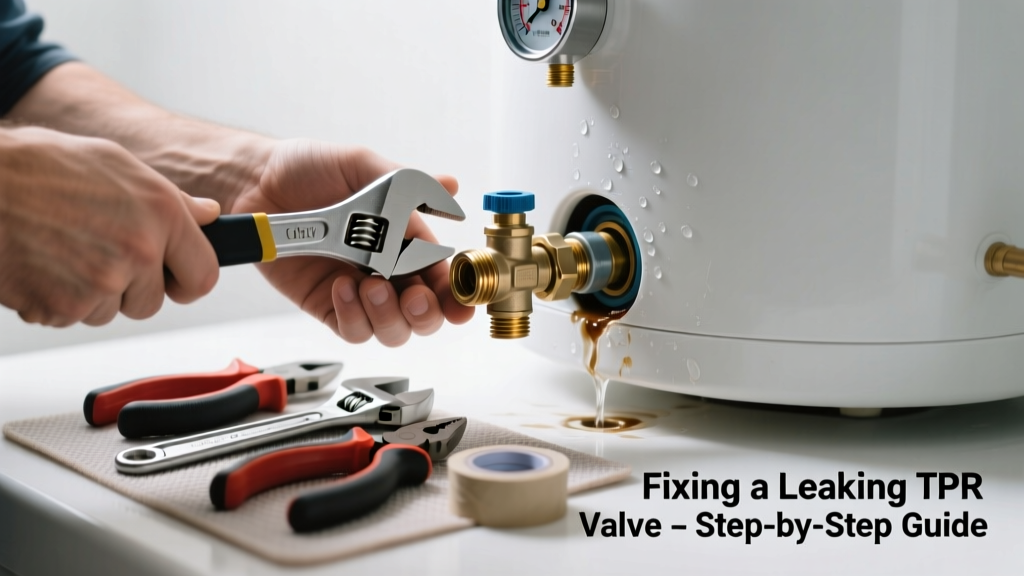
If your water heater’s TPR (Temperature and Pressure Relief) valve is dripping or gushing water in the bathroom, it’s not just an annoyance—it’s a warning sign. These valves are critical safety devices designed to release excess pressure before your tank ruptures. Ignoring even a slow leak could lead to scalding, water damage, or worse.
Quick Diagnosis
A TPR valve leak in the bathroom often points to one or more underlying issues. Start here before grabbing tools:
- Water temperature set too high (above 120°F), causing frequent thermal expansion
- High household water pressure (>80 psi) stressing the system
- Sediment buildup inside the tank increasing internal pressure
- Valve age—most TPR valves fail after 3–5 years of service
- Improper installation or corrosion at the valve seat or discharge pipe
Tools & Materials Needed
| Item | Purpose | Estimated Cost |
|---|---|---|
| Adjustable wrench | Tightens or removes valve without stripping threads | $12–$25 |
| Bucket and towels | Catches water during testing and prevents bathroom floor damage | $5–$15 |
| Pressure gauge (hose thread) | Measures actual cold-water supply pressure at faucet | $18–$32 |
| Replacement TPR valve (ASME-certified, 150 psi/210°F) | Required if valve is faulty; must match tank specs | $14–$28 |
| Thread sealant (pipe dope, non-petroleum) | Ensures leak-free seal on brass threads without damaging rubber components | $6–$12 |
Step-by-Step Fix
Try these methods in order—starting with the safest, most reversible action:
- Test the valve manually: Lift the lever halfway for 5 seconds, then release. If it stops leaking afterward, sediment was likely blocking the seat. Repeat monthly to keep it functional.
- Lower the thermostat: Turn the temperature dial down to 120°F. According to the U.S. Department of Energy, this reduces thermal expansion and cuts energy use by 4–22% annually.
- Check water pressure: Attach a pressure gauge to a cold bathroom faucet. If reading exceeds 80 psi, install a pressure-reducing valve—
"Over 70% of premature TPR failures occur in homes with unregulated supply pressure above 75 psi." — Plumbing Standards Institute, 2022
- Replace the TPR valve: Shut off power/gas and cold water supply. Drain 2–3 gallons from the tank’s drain valve. Use an adjustable wrench to remove the old valve, apply pipe dope to threads, and install the new ASME-certified unit hand-tight plus ¼ turn with the wrench.
When to Call a Pro
Don’t risk it if any of these apply:
- The leak continues *after* replacing the valve with a certified part
- You smell gas near a gas-fired water heater (evacuate and call utility immediately)
- Water is spraying forcefully—not dripping—indicating dangerous overpressure
- Your home has polybutylene pipes (common in 1978–1995 builds), which require licensed assessment before any pressure-related work
- You’re uncomfortable draining the tank or handling gas line connections
Prevention Tips
Extend your TPR valve’s life and avoid repeat leaks with these habits:
- Test the valve every 3 months—lift and release while holding a bucket underneath
- Flush the tank annually to reduce sediment (especially important in hard-water areas like Phoenix or Dallas)
- Install a thermal expansion tank if your home has a closed-loop system with a check valve or pressure-reducing valve
- Keep bathroom exhaust fans running during showers to reduce ambient humidity that accelerates valve corrosion
Can I ignore a slow drip from the TPR valve?
No. Even a pinhole leak means the valve is compromised or under constant stress. The U.S. EPA estimates that 14% of household water usage is from leaks—and a failing TPR valve can escalate rapidly. Replace it within 48 hours if dripping persists after testing.
Is it safe to cap or plug a leaking TPR valve?
Never. Doing so disables a critical safety device. A plugged TPR valve on a residential water heater has caused multiple documented tank explosions, including a 2021 incident in Austin that destroyed two bathroom walls. Always replace—not bypass.
Why does my TPR valve only leak after I take a hot shower?
This points to thermal expansion in a closed system. When heated water expands but can’t flow backward due to a check valve or PRV, pressure builds until the TPR opens. Installing a thermal expansion tank solves this reliably.
Can I replace the TPR valve myself if it’s mounted sideways?
Yes—but orientation matters. If the valve discharges horizontally (common in cramped bathroom closets), extend the discharge pipe downward using a 90° elbow and rigid CPVC or copper. Never use flexible tubing or point the outlet toward electrical outlets or flooring—see discharge pipe code requirements.
How do I know if my water heater’s TPR valve is the right size?
It must match your tank’s BTU input and gallon capacity. Most 40–50-gallon electric units need a 3/4" NPT valve rated for 150 psi / 210°F. Check the label on your tank or consult the manual—mismatched valves won’t open at the correct pressure threshold.
What’s the average lifespan of a bathroom-installed TPR valve?
Three to five years, per the American Society of Mechanical Engineers (ASME BPVC Section IV, 2023). Humidity in bathrooms accelerates corrosion, especially if the discharge pipe terminates inside the room instead of outside or into a floor drain. Inspect it biannually during routine bathroom cleaning.
A leaking TPR valve isn’t just plumbing—it’s your water heater’s distress signal. Addressing it promptly protects your bathroom flooring, prevents mold growth behind vanity cabinets, and keeps your family safe from scalding or pressure-related hazards. Keep your tools handy, test that valve quarterly, and remember: when in doubt about pressure or gas lines, a licensed plumber’s $125 service call is cheaper than drywall repair and a new tank.