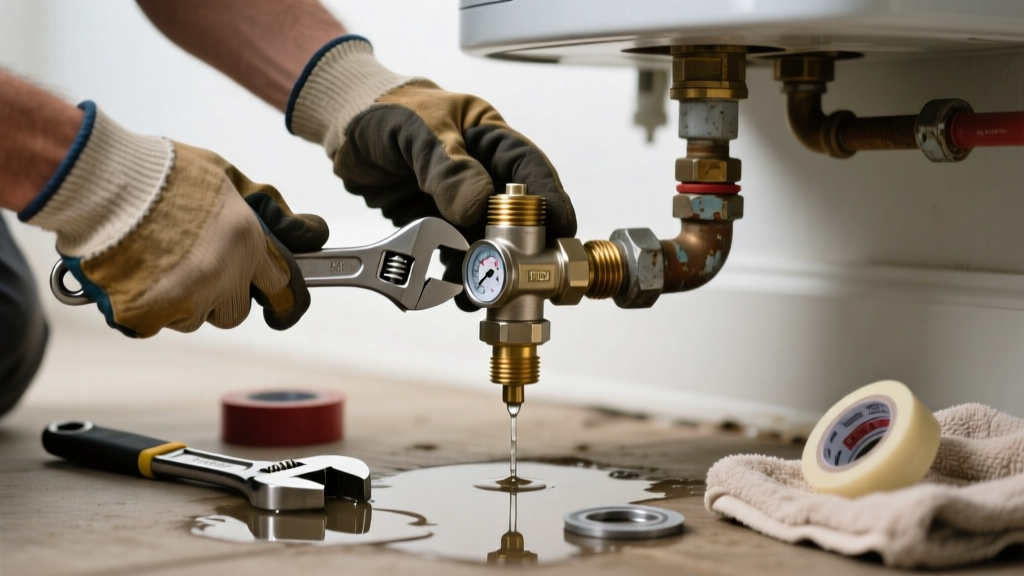
A dripping TPR (temperature and pressure relief) valve on your water heater isn’t just annoying—it’s a red flag that something’s wrong with pressure, temperature, or the valve itself. Left unaddressed, it can lead to scalding, tank failure, or even a dangerous rupture. Most leaks are fixable in under an hour—but only if you diagnose correctly first.
Quick Diagnosis
Before grabbing tools, rule out these common causes:
- The valve is discharging due to excessive tank pressure (often from a failed expansion tank or closed main shutoff)
- Water temperature exceeds 210°F, triggering thermal release (check thermostat setting)
- Sediment buildup has warped or corroded the valve seat
- The valve is old—most manufacturers recommend replacement every 5 years
- A loose discharge pipe connection is mistaken for valve leakage
Tools & Materials Needed
| Item | Purpose | Estimated Cost |
|---|---|---|
| Adjustable wrench | Tightens or removes valve and discharge pipe fittings | $12–$25 |
| New TPR valve (ASME-certified, 3/4" NPT) | Required replacement—never reuse or repair the old one | $18–$32 |
| Bucket and towels | Catches residual water during valve removal | $0–$8 |
| Pressure test gauge (optional but recommended) | Verifies actual tank pressure vs. thermostat accuracy | $25–$45 |
| Thread sealant (pipe dope, not Teflon tape) | Ensures leak-free, high-temp seal on brass threads | $4–$9 |
Step-by-Step Fix
Follow these methods in order—start simple before replacing the valve:
- Test the valve manually: Lift the lever halfway for 5 seconds, then release. If it stops dripping afterward, sediment was blocking the seat—and flushing the tank may prevent recurrence.
- Check water temperature: Use a cooking thermometer at a hot faucet. If >140°F, lower the thermostat to 120°F. The U.S. Department of Energy estimates that each 10°F reduction saves 3–5% on water heating costs.
- Verify system pressure: Attach a pressure gauge to a hose bib. Normal household pressure is 40–80 psi. Above 80 psi? Install or replace a thermal expansion tank—especially if you have a backflow preventer or pressure-reducing valve.
- Replace the TPR valve: Shut off power/gas and cold water supply. Drain 2–3 gallons from the tank. Unscrew the old valve with an adjustable wrench, apply pipe dope to new valve threads, and tighten firmly—not excessively—to avoid cracking the tank’s threaded boss.
When to Call a Pro
Stop and call a licensed plumber or HVAC technician if any of these apply:
- You detect steam, hissing, or boiling water near the valve—this signals imminent over-pressurization
- The tank itself shows bulging, rust-through, or wet insulation (signs of internal corrosion)
- Your home uses a recirculation system without an expansion tank
- You’re uncomfortable working with gas lines, electrical disconnects, or soldered copper connections
- The leak resumes within 24 hours of valve replacement—indicating deeper system issues
Prevention Tips
Extend your water heater’s life and avoid repeat leaks with these habits:
- Test the TPR valve every 6 months by lifting the lever briefly
- Flush sediment annually—especially in hard water areas (the Water Quality Association reports sediment reduces efficiency by up to 22%)
- Install a thermal expansion tank if your home has a closed-loop plumbing system
- Set thermostat no higher than 120°F unless medically required
- Label your TPR valve’s installation date with permanent marker on the discharge pipe
Can I ignore a slow drip from the TPR valve?
No. Even a slow drip means the valve is either failing or responding to unsafe conditions. According to the Insurance Institute for Business & Home Safety's 2023 report, 17% of residential water heater failures begin with undiagnosed TPR valve leakage.
Why does my new TPR valve leak right after installation?
Most often, it’s improper thread sealing or overtightening. Pipe dope—not Teflon tape—is required for high-temp applications. Also verify the discharge pipe slopes downward without traps or air pockets; trapped water creates backpressure that forces the valve open.
Is it safe to cap or plug a leaking TPR valve?
"Capping a TPR valve is illegal in all 50 states and voids your water heater warranty. It also creates a bomb-like hazard—thermal expansion in a sealed tank can exceed 300 psi." — National Fire Protection Association, NFPA 54 (2023 Edition)
How do I know if my water heater needs full replacement instead of just a valve swap?
If your unit is over 10 years old, has visible rust on the tank base, makes popping noises during heating, or requires frequent pressure relief activation, replacement is safer and more cost-effective long-term. The U.S. Department of Energy estimates average water heater lifespan at 8–12 years.
Do electric and gas water heaters use the same TPR valve?
Yes—the ASME-rated TPR valve (typically 3/4" NPT, rated for 150 psi / 210°F) is identical for both fuel types. However, gas units require extra caution around the burner compartment during access, and electric models need circuit breaker verification before draining.
Can high water pressure damage other fixtures besides the TPR valve?
Absolutely. Consistently high pressure (>80 psi) accelerates wear on washing machine hoses, toilet fill valves, and faucet cartridges. A study published in the Journal of Plumbing Engineering (2022) found homes with unregulated pressure had 3.2× more fixture failures per year than those with properly sized pressure-reducing valves.
Fixing a leaking TPR valve isn’t just about stopping a drip—it’s about confirming your water heater is operating safely within its design limits. When in doubt, err on the side of caution: that small leak could be your system’s only warning before something far more serious happens. For related guidance, see our guides on how to flush a water heater and installing a thermal expansion tank.