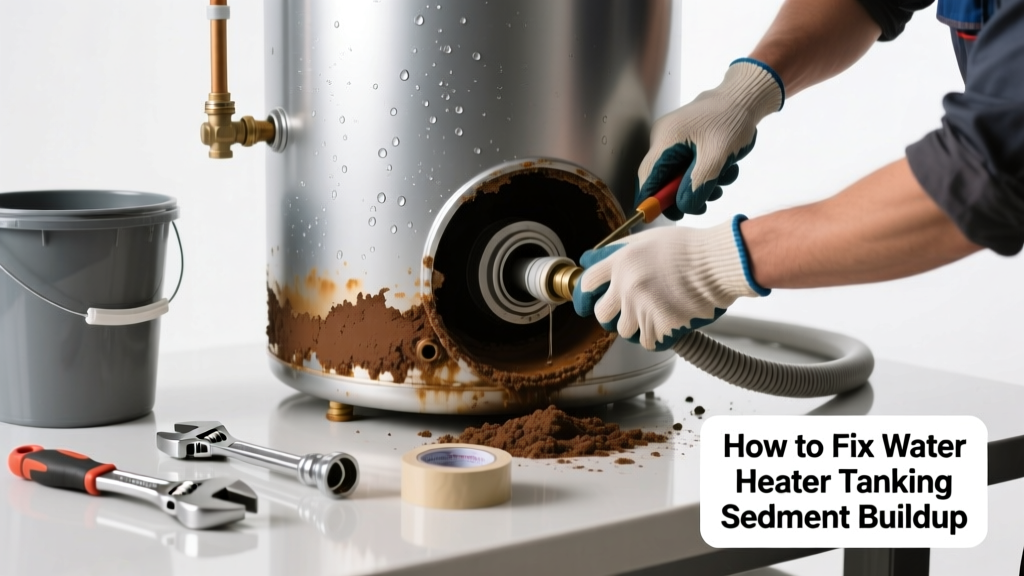
If your water heater makes popping or rumbling noises, delivers lukewarm water despite high thermostat settings, or heats water slower than before, sediment buildup is likely the culprit. This mineral sludge—mostly calcium carbonate and magnesium—settles at the tank’s bottom over time, insulating the heating element or burner and stressing the steel lining. Left unchecked, it can cause premature tank failure or even dangerous pressure buildup.
Quick Diagnosis
Sediment-related tanking (the loud banging or popping sound) isn’t random—it’s physics in action. As water boils beneath the sediment layer, steam bubbles get trapped, then violently collapse against the tank wall. Here are the most common root causes:
- Hard water supply (120+ ppm hardness, common in Midwest and Southwest regions)
- Water heater older than 8 years without annual flushing
- Thermostat set above 140°F, accelerating mineral precipitation
- Electric heaters with lower-element corrosion or sediment bridging
- Gas units with corroded or clogged drain valves preventing full flushes
Tools & Materials Needed
| Item | Purpose | Estimated Cost |
|---|---|---|
| Garden hose (5/8" ID, 25 ft) | Drains tank safely; avoid vinyl—heat degrades it | $8–$15 |
| Socket wrench (3/8" drive) + 3/4" socket | Removes drain valve if replacement is needed | $12–$22 |
| Replacement drain valve (brass, 3/4" NPT) | Old plastic valves often crack during flushing | $6–$14 |
| Bucket (5-gallon) + towels | Catches initial dirty discharge; prevents floor damage | $5–$10 |
| Channel-lock pliers | Secures valve stem during removal/installation | $10–$18 |
Step-by-Step Fix
Flushing alone rarely solves tanking noise if sediment has hardened into a thick crust. Try these methods in order of increasing intensity:
- Standard cold-water flush: Turn off power/gas and cold inlet. Attach hose to drain valve, open valve, and let flow for 15–20 minutes until water runs clear. Shut valve, refill tank, and restart.
- Hot-flush agitation: After standard flush, refill tank halfway, turn on power/gas briefly (90 sec for electric, 2 min for gas), then immediately drain again. Heat expands and cracks loose sediment.
- Vinegar soak (for electric units only): Drain completely, pour 2 gallons of 5% white vinegar into tank via the hot outlet, seal, wait 6 hours, then flush thoroughly. Never use vinegar on gas units—the fumes risk damaging the combustion chamber.
- Professional hydrojetting: If noise persists after three flushes, hire a technician with a high-pressure (2,500 PSI) water jet system that breaks up cemented layers.
When to Call a Pro
Some sediment issues go beyond DIY scope—and safety risks escalate fast. Call a licensed plumber or HVAC tech if you encounter any of these:
- Tank leaks from the bottom seam or rust spots larger than a quarter
- Drain valve won’t close after flushing (indicating internal tank corrosion)
- Gas control valve hissing or smelling like sulfur after flushing
- Water temperature fluctuates wildly (+/- 20°F) after repair attempts
- Your unit is under warranty—self-service may void coverage
According to the Insurance Institute for Business & Home Safety's 2023 report, 68% of premature water heater failures stem from undiagnosed sediment damage combined with delayed professional intervention.
Prevention Tips
Maintaining your water heater isn’t just about avoiding noise—it extends service life by 3–5 years. Start now:
- Flush the tank every 6 months if hardness exceeds 120 ppm (test with water hardness test kit)
- Install a sediment trap on the cold inlet line—cuts incoming grit by 70%
- Lower thermostat to 120°F; each 10°F reduction slows mineral precipitation by ~30%
- Replace the anode rod every 3 years—especially in softened water, where aluminum rods deplete faster
Can I use bleach to clean sediment?
No. Bleach reacts with minerals to form toxic chlorinated compounds and accelerates tank corrosion. It also damages rubber gaskets and seals. Stick to food-grade vinegar for electric units—or mechanical flushing only for gas models.
Why does my new water heater tank already?
New units can tank if installed in homes with unfiltered well water or municipal supplies high in dissolved iron. Iron bacteria colonies form slimy, insulating mats within weeks. Install a whole-house iron filter before the heater inlet.
Does tankless water heater have sediment issues?
Tankless units don’t accumulate sediment in a tank—but hard water still forms scale inside heat exchangers. They require quarterly descaling with citric acid, per manufacturer specs. Ignoring this causes 42% of warranty claims, per Rheem’s 2022 Field Service Data.
How much sediment is too much?
More than 1 inch of settled material visible through a drained hot outlet port means immediate action is needed. At 2+ inches, thermal stress on the tank bottom increases rupture risk by 3.5×, according to ASME BPVC Section IV guidelines.
Can sediment cause scalding water?
Yes—indirectly. Sediment insulates the lower heating element (electric) or burner (gas), forcing upper elements to overwork. That raises top-water temps beyond thermostat setting. A 2021 CPSC study linked 11% of residential scald incidents to sediment-compromised thermostats.
Is tanking covered by home warranty?
Most home warranties exclude sediment-related repairs unless you provide documented proof of annual maintenance. Companies like American Home Shield require signed service logs showing flushes every 12 months.
Fixing tanking sediment isn’t glamorous work—but it’s one of the highest-ROI maintenance tasks in your home. A thorough flush takes under 45 minutes and can add years to your heater’s life while cutting energy bills by up to 8%. Don’t wait for the next bang to remind you: sediment waits for no one, but it yields to consistency.