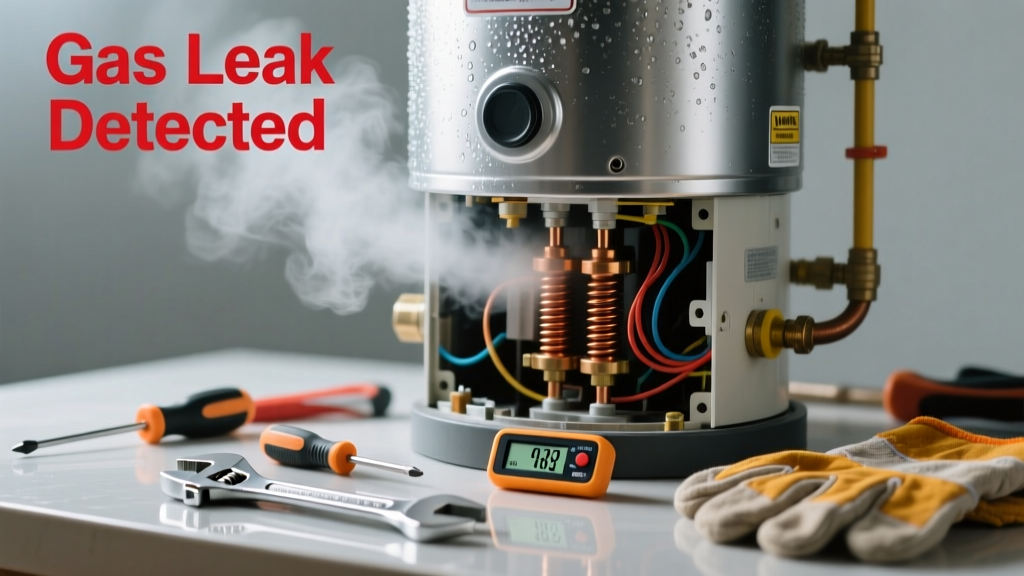
If you catch a sharp, rotten-egg odor near your gas water heater—and it’s not producing hot water—stop using it immediately. That smell usually means hydrogen sulfide in the water or, more dangerously, a gas leak. Either way, this isn’t something to ignore or delay.
Quick Diagnosis
Start by ruling out life-threatening causes before assuming it’s just a smelly tank. Here are the most common root issues:
- A cracked or corroded anode rod releasing sulfur compounds into heated water
- Gas line connection leak (check for hissing, soapy-bubble test at fittings)
- Faulty thermocouple or gas control valve failing to ignite the burner
- Blocked flue or vent causing incomplete combustion and odor backdraft
- Bacterial growth in warm, stagnant water inside the tank (especially after long disuse)
Tools & Materials Needed
| Item | Purpose | Estimated Cost |
|---|---|---|
| Combustible gas detector | Confirms presence of natural gas or propane leaks (critical safety step) | $45–$120 |
| Adjustable wrench | Tightens gas line fittings and drain valve connections | $12–$28 |
| Anode rod replacement kit (aluminum-zinc) | Replaces corroded rod causing sulfur odor | $22–$38 |
| Propane torch & leak detection solution | Used only if resealing gas connections; solution reveals bubbles at leaks | $15–$40 |
| Bucket & garden hose | Drains tank safely during anode rod replacement | $5–$15 |
Step-by-Step Fix
Follow these methods in order—starting with the safest and most likely cause. Never skip the gas leak check.
- Shut off gas and power: Turn gas valve to "OFF" and disconnect power at the breaker (for hybrid or electric-ignition models). Wait 5 minutes before proceeding.
- Test for gas leaks: Apply leak detection solution to all gas line joints—including the union nut, flex connector, and control valve inlet. Bubbles = active leak. If found, stop and call a pro immediately.
- Flush the tank and replace the anode rod: Drain 3–5 gallons, then remove the hex-head anode rod (usually on top or side). Replace with an aluminum-zinc rod—this reduces sulfur odor without sacrificing protection. According to the American Water Works Association’s 2022 corrosion study, aluminum-zinc rods cut H₂S production by up to 70% in sulfate-rich water supplies.
- Clean the burner assembly: With gas off, remove the access panel and use a soft brush and compressed air to clear dust, spider webs, or rust flakes from the burner tube and orifice. Reinstall and test ignition.
- Disinfect with hydrogen peroxide: If bacterial odor persists, pour 1 pint of 3% hydrogen peroxide into the cold inlet after draining. Let sit 2 hours, then flush thoroughly before relighting.
When to Call a Pro
Some signs mean you’ve hit the limit of safe DIY work. Call a licensed plumber or HVAC technician right away if:
- You detect gas with a detector—even faint readings above 10 ppm
- The gas control valve clicks but won’t stay lit after holding the knob for 60 seconds
- You see soot buildup around the flue collar or hear loud popping sounds during ignition
- Your water heater is over 10 years old and has never had its vent inspected
"A single unlit pilot or delayed ignition can produce carbon monoxide levels exceeding 1,000 ppm in under 90 seconds—well above the EPA’s 9 ppm 8-hour exposure limit." — U.S. Consumer Product Safety Commission, Gas Appliance Safety Bulletin, 2023
Prevention Tips
Maintain your water heater year-round to avoid repeat issues:
- Drain 2 gallons every 6 months to reduce sediment and bacterial habitat
- Replace the anode rod every 3–5 years (sooner in hard-water areas)
- Install a whole-house water filter with activated carbon to reduce sulfate content
- Set thermostat to 120°F—higher temps accelerate sulfur reactions and scale buildup
Can I smell gas but not have a leak?
Yes—but don’t assume it’s safe. A faint ‘rotten egg’ scent may come from sulfate-reducing bacteria reacting with magnesium anodes, especially in wells or softened water. However, always verify with a gas detector first. Natural gas suppliers add mercaptan to make leaks detectable at concentrations as low as 1/500th of the lower explosive limit.
Why does my water heater smell like gas only when it’s heating?
This points strongly to bacterial activity activated by heat—not a gas leak. The warmth accelerates hydrogen sulfide production where anaerobic bacteria thrive in sediment or on the anode surface. Flushing and anode replacement typically resolve it within 48 hours.
Is it safe to relight the pilot myself?
Only if the unit has a standing pilot (not electronic ignition) and you’ve confirmed no gas leak. Follow the manufacturer’s lighting sequence exactly—most require holding the gas control knob for 30–60 seconds after ignition to heat the thermocouple. Skip this if the thermocouple is visibly bent, corroded, or over 5 years old.
What’s the difference between sulfur smell and actual gas leak odor?
Real natural gas smells sharper, more chemical, and lingers even when the heater is off. Sulfur odor tends to be intermittent, strongest at hot water taps, and fades after flushing. But again: never rely on smell alone. Use a certified combustible gas detector—it’s the only reliable method.
How often should I test my gas water heater’s venting?
Annually—especially before winter. A blocked flue can cause flame rollout, carbon monoxide spillage, and acidic condensate corrosion. Inspect the draft hood and roof cap for bird nests, leaves, or ice dams. For direct-vent units, check both intake and exhaust pipes for obstructions.
Will replacing the anode rod void my warranty?
No—most major brands (Rheem, AO Smith, Bradford White) explicitly permit anode replacement as routine maintenance. In fact, skipping it may void coverage if internal tank corrosion is cited as the failure cause. Keep your receipt and note the date of replacement in your maintenance log.
A gas-smelling water heater isn’t just inconvenient—it’s a potential hazard waiting to escalate. Most cases stem from simple, fixable causes like a spent anode or dirty burner, but the margin for error is narrow. Treat every whiff as urgent until proven otherwise, and never hesitate to walk away and call a pro when uncertainty creeps in. Your safety isn’t negotiable—and neither is consistent hot water once the issue is resolved. For related troubleshooting, see our guides on pilot light won’t stay lit and leaking from the bottom.