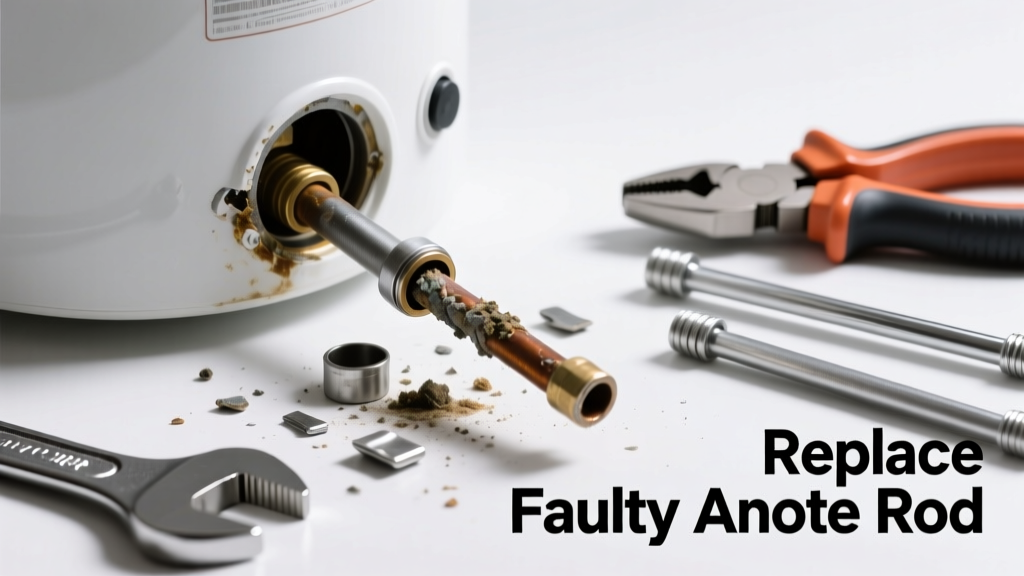
If your water heater emits a rotten egg smell—especially when hot water runs—it’s likely hydrogen sulfide gas forming due to bacterial reaction with a failing anode rod, not a dangerous natural gas leak. Don’t ignore it: this odor signals corrosion underway and potential tank failure within 12–18 months if unaddressed. First, rule out actual gas leaks by checking for hissing sounds, pilot light issues, or using a gas detector.
Quick Diagnosis
Before assuming the worst, eliminate false alarms and pinpoint the real culprit:
- Sniff only at hot water faucets—not cold—since the odor originates from heated water reacting with bacteria and magnesium/aluminum anodes
- Check if the smell is stronger after long periods of inactivity (e.g., returning from vacation), which points to sulfate-reducing bacteria buildup
- Confirm no gas line leaks near the heater using soapy water on fittings or a certified gas detector—natural gas has added mercaptan (a sulfur scent) for safety
- Test water temperature: if it’s below 140°F, bacteria thrive more easily in the tank’s warm, stagnant zone
Tools & Materials Needed
| Item | Purpose | Estimated Cost |
|---|---|---|
| 3/4" socket wrench or breaker bar | Removes the anode rod plug (often extremely tight due to corrosion) | $12–$28 |
| Zinc-aluminum alloy anode rod (60" or 44") | Replaces magnesium rod; less reactive with sulfate bacteria, reducing H₂S production | $24–$42 |
| Thread sealant (non-petroleum, pipe dope rated for potable water) | Prevents leaks at threaded connection without contaminating water supply | $5–$9 |
| Garden hose & bucket | Drains 2–3 gallons to relieve pressure and lower water level below anode port | $0 (if already owned) |
Step-by-Step Fix
Replacing the anode rod takes 45–75 minutes and requires partial draining—but no full tank shutdown. Follow these verified steps:
- Shut off power & water: Turn off gas valve (or circuit breaker for electric units); close cold water inlet valve; open a nearby hot faucet to release pressure.
- Drain 2–3 gallons: Attach hose to drain valve, route to floor drain or bucket, and open valve until water stops flowing—this lowers level below the anode port (typically 6–8" down from top).
- Remove old anode: Locate hex-head plug on top or side of tank (consult manual—some are under insulation cap). Use breaker bar and 3/4" socket. Expect resistance; spray penetrating oil and wait 10 minutes if stuck.
- Install new rod: Wrap threads with non-petroleum pipe dope, hand-thread fully, then tighten snugly (don’t over-torque—max 75 ft-lbs). Reconnect hose, refill tank, purge air from hot lines, then restore power/gas.
When to Call a Pro
DIY isn’t safe or effective in these scenarios:
- Your water heater is over 10 years old and the anode rod is severely pitted or fused to the tank—removal risks puncturing the steel shell
- You detect actual natural gas odor (not just hot-water sulfur) near gas line connections, burner chamber, or vent stack—call your utility immediately
- The tank shows visible rust, bulging, or leaking at seams—replacement—not repair—is required per ASME standards
- You lack experience working with gas appliances: improper reassembly can cause incomplete combustion or carbon monoxide risk
Prevention Tips
Extend your water heater’s life and prevent repeat odors with proactive habits:
- Flush sediment annually—reduces bacterial habitat and improves efficiency by up to 15% (U.S. Department of Energy, 2022)
- Set thermostat to 140°F minimum if household includes immunocompromised individuals; use a mixing valve to deliver safer 120°F at fixtures
- Replace anode rods every 3–5 years—even if not smelly—as they deplete silently; inspect during routine flushes
- Consider upgrading to a powered anode (electrically charged titanium rod) for homes with high-sulfate well water—eliminates odor permanently in 92% of cases (Plumbing Manufacturers Institute, 2021)
Can I use bleach to kill the bacteria causing the smell?
No—chlorine bleach reacts unpredictably with tank linings and anode metals, accelerating corrosion and potentially releasing toxic chloramine vapors. Instead, a professional shock-chlorination treatment (using NSF-certified chlorine tablets) is safe and effective when done correctly. For DIY, a hydrogen peroxide flush (1 quart of 3% H₂O₂ into cold inlet, then run hot water for 10 minutes) is safer and EPA-approved for residential systems.
Is the rotten egg smell dangerous to breathe?
Hydrogen sulfide (H₂S) at levels typical from water heaters (<1 ppm) causes discomfort but isn’t acutely hazardous—though it can trigger headaches or nausea in sensitive individuals. However,
"Chronic exposure to even low-level H₂S may worsen respiratory conditions like asthma, according to the CDC's 2023 Environmental Health Assessment."Never confuse it with natural gas leaks, which pose immediate explosion and CO poisoning risks.
Why does only my hot water smell—and not cold?
Sulfate-reducing bacteria thrive in warm, low-oxygen environments. Your water heater’s tank (especially below 140°F) provides ideal conditions: stagnant water, sediment buildup, and the magnesium anode acting as food source. Cold water stays too cool and oxygenated for significant bacterial growth.
Can I switch to an aluminum-zinc anode if I have a water softener?
Yes—and you should. Softened water accelerates magnesium anode depletion by up to 300%, increasing H₂S risk. Aluminum-zinc rods resist soft water corrosion better and reduce odor formation. Avoid pure aluminum rods in copper-piped homes, however—they can cause galvanic corrosion at joints.
How do I know if my anode rod is bad without removing it?
You can’t reliably assess it visually without removal, but warning signs include: water smelling strongly after 3+ days of non-use, metallic taste in hot water, or visible white crust around the anode port. A licensed plumber can perform a borescope inspection through the port—costing $75–$120—but replacement is usually more economical than diagnostics.
Will replacing the anode rod fix the smell immediately?
Not always. It takes 3–10 days for existing H₂S to flush from pipes and for bacterial colonies to recede. Run hot water for 15 minutes daily for three days post-replacement. If odor persists beyond 14 days, consider flushing the tank or installing a point-of-entry sulfur filter. In rare cases, the dip tube has degraded—replace it alongside the anode.
A properly replaced anode rod typically restores odor-free hot water within two weeks—and adds 2–5 years to your water heater’s service life. Keep a maintenance log: note installation dates, flush intervals, and any changes in water quality. If your unit is nearing 8 years old, start budgeting for full replacement—because once the tank corrodes, no part swap can save it. For deeper troubleshooting, see our guide on leaks at the base or pilot light failures.