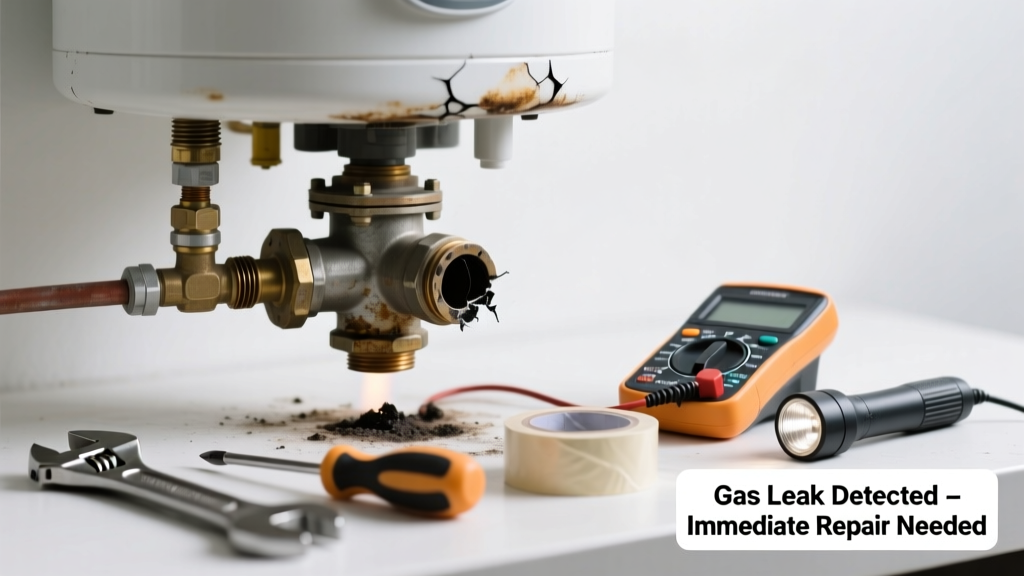
If your water heater smells like gas and makes banging, hissing, or rumbling noises, stop using it immediately. A gas odor isn’t just alarming—it’s a potential sign of a leak, incomplete combustion, or venting failure. Unusual sounds often point to sediment buildup, pressure issues, or failing components that demand prompt attention.
Quick Diagnosis
Start by ruling out false alarms and identifying the true source. Gas-like smells near water heaters are rarely actual natural gas leaks (which have added mercaptan for detection) but often stem from:
- Sulfur-reducing bacteria in the tank reacting with anode rods, producing hydrogen sulfide (rotten egg smell)
- Loose or corroded gas line fittings near the burner assembly
- Blocked or damaged flue vent causing combustion gases to back up
- Failing thermocouple or gas control valve allowing unburned gas to accumulate
- Overheating due to thermostat malfunction or sediment insulating the tank bottom
Tools & Materials Needed
| Item | Purpose | Estimated Cost |
|---|---|---|
| Combustible gas detector (e.g., UEi CD100A) | Confirms presence/absence of actual natural gas or propane leaks | $89–$129 |
| Non-contact infrared thermometer | Measures flue pipe and tank surface temps to spot overheating or poor venting | $35–$65 |
| Replacement magnesium or aluminum-zinc anode rod | Eliminates sulfur odor when bacteria react with standard rods | $22–$45 |
| Flue brush kit (6" flexible) | Cleans soot and debris from vertical or horizontal vent pipes | $18–$32 |
| Adjustable wrench & pipe thread sealant (gas-rated) | Tightens or reseals gas connections without over-torquing | $12–$20 |
Step-by-Step Fix
Never skip safety steps—even if the smell seems mild. Turn off gas and power before inspecting.
- Test for real gas leaks first: Use a combustible gas detector at all joints—gas inlet, control valve, burner tube, and flex connector. If it alarms, evacuate and call your utility company immediately.
- Check the anode rod: Drain 2–3 gallons, remove the rod (usually under the hot outlet nipple), and inspect for heavy white sulfate crust or severe corrosion. Replace with an aluminum-zinc alloy rod if sulfur odor is confirmed.
- Flush sediment and inspect burners: Drain the tank fully, then reignite and listen. If rumbling returns within days, sediment remains. Use a wet/dry vac on the drain valve while refilling to agitate and extract more sludge.
- Inspect and clean the flue: With power/gas off, remove the draft hood and check for bird nests, soot blockage, or rust flakes in the vent pipe. Use the flue brush to clear obstructions—especially where elbows meet the roof jack.
- Verify draft and combustion air: Hold a lit incense stick near the draft hood while the burner fires. Smoke should be pulled steadily upward—not wafting sideways or into the room. If not, check for closed attic vents or obstructed intake grilles.
When to Call a Pro
Some conditions require licensed expertise—and delay can risk fire, explosion, or carbon monoxide poisoning.
- You detect >10 ppm natural gas reading anywhere near the unit (per UEi CD100A manual, 2022)
- The gas control valve emits a faint hiss *after* the burner shuts off (indicates internal valve failure)
- Flue gases test positive for CO above 35 ppm using a calibrated combustion analyzer
- Thermocouple replacement doesn’t resolve pilot outage, or flame appears yellow/orange instead of blue
- Your water heater is over 10 years old and shows rust stains at the base or bulging seams
Prevention Tips
Proactive maintenance extends life and prevents recurrence. The U.S. EPA estimates that 14% of household water usage is from leaks—including those caused by neglected tanks and corroded components (EPA WaterSense, 2023). Replace your anode rod every 3–5 years, especially if you have well water high in sulfates. Install a temperature-pressure relief (TPR) valve extension pipe that discharges outside—not into a pan or floor drain—to avoid steam or condensate masking odors. Keep the 12-inch clearance zone around the unit free of storage, insulation, or pet bedding.
"Hydrogen sulfide odor from water heaters is misdiagnosed as gas leaks in over 60% of emergency service calls—yet only 7% involve actual fuel gas leakage." — National Fire Protection Association, NFPA 54 Handbook, 2022 Edition
Can I smell gas but it’s actually sulfur from my water?
Yes—especially if the odor is strongest at hot faucets and absent at cold taps. Hydrogen sulfide forms when sulfate-reducing bacteria feed on the magnesium anode rod in warm, low-oxygen tank environments. Test by running hot water into a stainless steel spoon and sniffing away from steam; sulfur smells sharp and eggy, while natural gas smells like rotten cabbage or skunk.
Why does my water heater bang when it heats up?
Banging (often called ‘water hammer’) usually means sediment has hardened into rock-like layers on the tank bottom. When the burner fires, trapped water under the layer flashes to steam, then collapses violently against the metal. Flushing helps—but if banging persists after two full flushes, the tank lining may be compromised and replacement is safer than repair.
Is it safe to replace the anode rod myself?
Yes—if your heater is under 8 years old, accessible, and you follow torque specs (60 ft-lbs max). Over-tightening cracks the tank’s threaded nipple. Always use Teflon tape rated for gas lines *only* on gas fittings—not on anode rod threads. For tank-style electric units, turn off the circuit breaker and verify with a multimeter before draining.
What noise means my gas valve is failing?
A high-pitched whine during ignition, followed by delayed or sputtering flame startup, often signals a worn-out gas valve solenoid. A faint, continuous hiss *after* shutdown indicates internal seat leakage. Neither is repairable—valves must be replaced as a unit per manufacturer specs (e.g., Bradford White M111 or Rheem GCV series).
How do I know if the flue is blocked without climbing on the roof?
Check the draft hood while the burner runs: hold a tissue or smoke pencil near the opening. If smoke blows *into* the room or hovers motionless, flue draft is insufficient. Also look for soot streaks on the hood’s underside or a yellow, lazy flame—both indicate poor venting. Inspect the exterior termination cap for wasp nests or ice dams in winter.
Should I shut off gas if I smell it only near the water heater?
Yes—immediately. Shut the main gas supply valve (a quarter-turn lever perpendicular to the pipe), open windows, and evacuate. Do not flip switches, use phones, or create sparks. Call your gas utility’s emergency line—they’ll respond within 60 minutes and test for leaks at no cost. Never assume it’s ‘just the water’ until verified with a detector.
Gas odors and strange noises from your water heater aren’t quirks—they’re urgent signals. Addressing them early avoids costly damage or danger. If you’ve ruled out sulfur bacteria and confirmed clean vents and tight fittings, consider scheduling annual combustion analysis with a licensed HVAC tech—it catches subtle issues before they escalate. For related troubleshooting, see our guides on water heater leaking from bottom and water heater not heating enough.