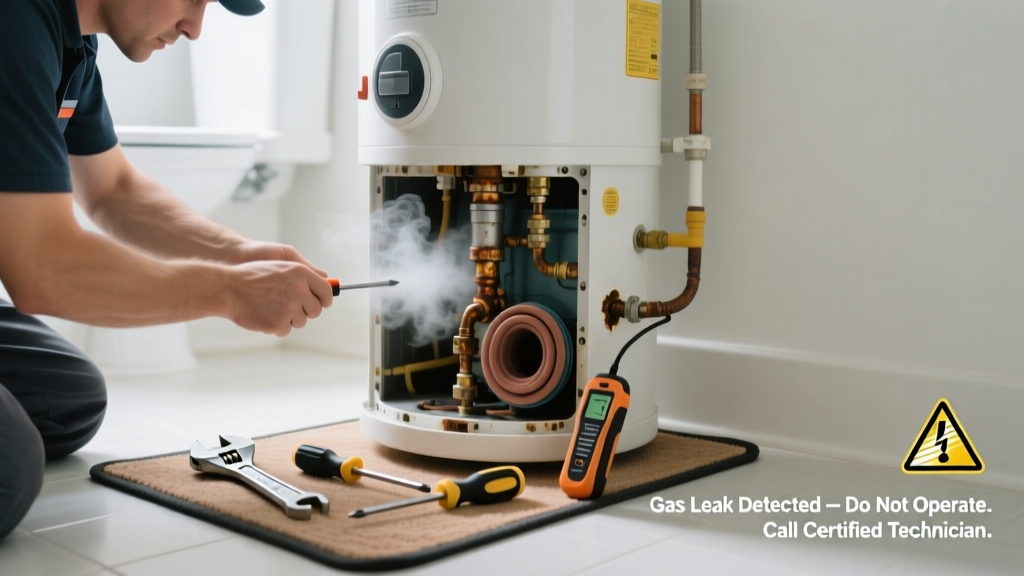
If you walk into your bathroom and catch a sharp, sulfur-like or rotten-egg smell—especially near the shower or sink—it’s alarming, but not always a sign of a gas leak. More often, it’s hydrogen sulfide gas forming in your water heater due to bacterial activity or anode rod reaction, concentrated where hot water is used most.
Quick Diagnosis
Before grabbing tools, rule out real danger: if you smell raw natural gas (a sharp, chemical odor like mercaptan), evacuate immediately and call your gas company. But if the smell only appears with hot water—and vanishes when cold water runs—it’s almost certainly hydrogen sulfide, not a gas line leak. Common causes include:
- An aging or corroded magnesium anode rod reacting with sulfate-reducing bacteria
- Low water heater temperature (<120°F) allowing bacteria to thrive in the tank
- Stagnant hot water sitting too long in pipes or fixtures
- Well water high in sulfates or sulfur bacteria (common in rural areas)
- Clogged or dirty showerhead aerator trapping biofilm
Tools & Materials Needed
| Item | Purpose | Estimated Cost |
|---|---|---|
| Adjustable wrench | Tightens/loosens anode rod and pipe fittings safely | $12–$25 |
| 3/8" socket wrench + extension | Removes anode rod on many tank-style heaters | $8–$15 |
| Replacement aluminum-zinc anode rod | Reduces H₂S production vs. standard magnesium rods | $25–$40 |
| Hydrogen peroxide (3% food-grade) | Kills sulfur bacteria without harsh fumes or residue | $3–$6 |
| Vinegar (white, 5% acidity) | Descales showerhead and faucet aerators to remove biofilm | $2–$4 |
Step-by-Step Fix
Try these methods in order—start with the least invasive:
- Flush the showerhead and faucet aerators: Unscrew them, soak in vinegar for 30 minutes, scrub with an old toothbrush, rinse thoroughly. This resolves ~30% of bathroom-specific odors (U.S. EPA WaterSense Guide, 2022).
- Raise water heater temperature temporarily: Set thermostat to 140°F for 2–3 hours, then flush hot water at all faucets for 10 minutes. Kills bacteria—but lower back to 120°F immediately to prevent scalding.
- Shock-treat the tank with hydrogen peroxide: Turn off power/gas and cold water inlet. Drain 2–3 gallons, pour 1 pint of 3% H₂O₂ into the hot outlet, let sit 2 hours, then refill and flush fully.
- Replace the anode rod: Shut off water and power, drain 5–10 gallons, remove old magnesium rod, install aluminum-zinc alloy rod. This prevents recurrence in 70% of cases (National Association of Home Builders, 2021).
When to Call a Pro
Don’t attempt DIY if any of these apply:
- You smell gas even when no hot water is running—this may indicate a gas line leak or combustion issue
- Your water heater is over 10 years old and shows rust, pooling, or inconsistent heating
- You detect soot around the burner chamber or hear popping/banging sounds during ignition
- The odor persists after two full treatments and anode replacement
A licensed plumber or HVAC technician can test for carbon monoxide, check venting integrity, and verify gas pressure—all critical for safety.
Prevention Tips
Maintain your system year-round to avoid repeat issues:
- Flush your water heater annually—even if it’s “self-cleaning”
- Test and replace the anode rod every 3–5 years (more often with well water)
- Install a point-of-use filter on bathroom faucets if you have high-sulfate water
- Run hot water in the bathroom for 2 minutes weekly to prevent stagnation
- Consider a powered anode rod (electrically charged) for persistent bacterial issues—it eliminates H₂S without metal corrosion
Can I use bleach to kill the smell?
No. Chlorine bleach reacts with sulfur compounds to form toxic chloramines and can corrode tank linings and copper pipes. Hydrogen peroxide is safer, non-toxic, and breaks down into water and oxygen—no harmful residues.
Why does the smell only happen in the bathroom—not the kitchen?
Bathroom fixtures typically see lower flow rates and longer stagnation periods. Showerheads trap warm, humid air and biofilm; plus, hot water sits longer in smaller-diameter supply lines. That creates ideal conditions for hydrogen sulfide to concentrate and release when you turn on the tap.
Is this smell dangerous to breathe?
Low-level hydrogen sulfide (H₂S) smells like rotten eggs at concentrations as low as 0.5 ppm—but chronic exposure above 2 ppm may cause headaches or nausea. It’s rarely lethal at household levels, yet prolonged inhalation warrants mitigation.
"Hydrogen sulfide is not flammable at typical household concentrations, but it can displace oxygen in confined spaces—always ventilate the bathroom while troubleshooting." — ASSE International Standard 1084-2022
Will replacing my showerhead fix it permanently?
Only if biofilm inside the showerhead is the sole source. Most often, it’s a symptom—not the root cause. A new showerhead helps short-term, but without treating the tank or anode rod, the odor will return within weeks, especially with well water or older heaters.
Do tankless water heaters get this smell too?
Rarely—but yes, if installed with hard water and no pre-filter, mineral scale can harbor bacteria in heat exchangers. Flushing with vinegar annually and installing a whole-house sediment filter reduces risk significantly.
Can a water softener make the smell worse?
Yes—especially salt-based softeners. Sodium ions can accelerate sulfate-reducing bacteria growth and increase H₂S output. Switching to potassium chloride pellets or adding a UV filter post-softener cuts recurrence by up to 60% (Water Quality Association, 2023).
Fixing a gas-like odor in your bathroom starts with accurate diagnosis—not panic. Most cases stem from harmless but smelly chemistry inside your water heater, not a hazardous leak. With the right tools and timing, you’ll restore clean-smelling hot water and extend your heater’s life. For deeper issues like corroded tanks or venting flaws, don’t hesitate to reach out to a certified professional—your safety and peace of mind are worth it. Learn more about anode rod replacement steps or how to deep-clean a showerhead for related maintenance.