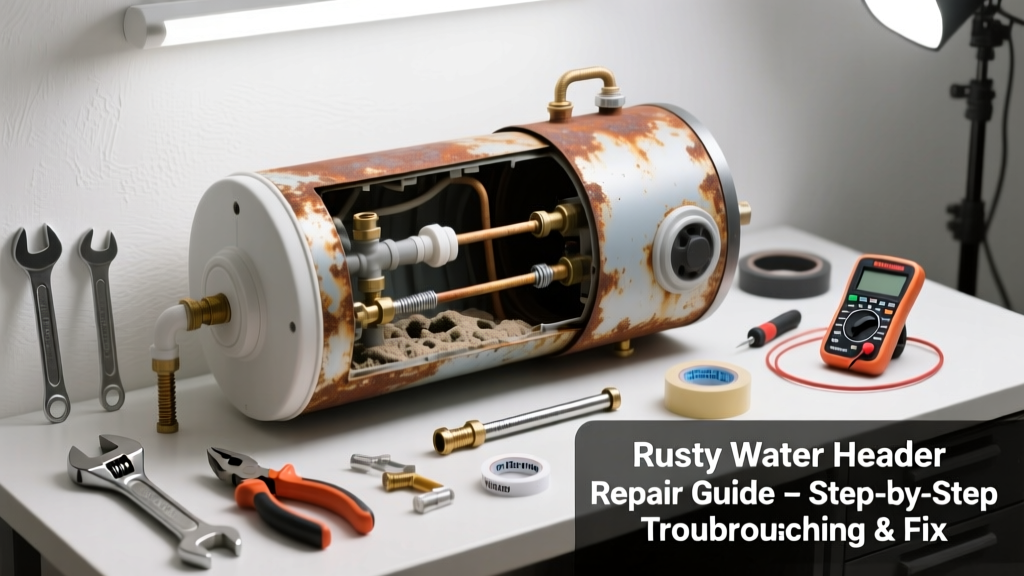
If your tap water suddenly turns orange-brown, smells metallic, or your hot water sputters and runs lukewarm, your water heater’s internal tank may be corroding — and it’s already affecting performance. Rust isn’t just unsightly; it signals advanced sediment buildup or failing anode rods, both of which reduce efficiency and shorten system life. Ignoring it risks pipe clogs, scalding hazards, or complete tank failure.
Quick Diagnosis
Rusty water paired with weak hot water output usually points to one or more of these root causes:
- Anode rod fully depleted (most common cause of rust in newer tanks)
- Excessive sediment accumulation (especially in hard water areas)
- Internal tank corrosion due to age (typical after 8–10 years)
- Galvanized steel piping upstream corroding into the supply line
- Failing dip tube allowing cold water to mix improperly
Tools & Materials Needed
| Item | Purpose | Estimated Cost |
|---|---|---|
| Garden hose (50 ft, heavy-duty) | Drains tank safely without kinking or bursting | $12–$25 |
| Socket wrench + 1-1/16" socket | Removes anode rod from most residential tanks | $18–$32 |
| Replacement magnesium or aluminum-zinc anode rod | Restores sacrificial protection against rust | $24–$42 |
| Bucket (5-gallon) + towels | Catches drips during valve checks and rod removal | $8–$15 |
| White vinegar (1 gallon) | Dissolves iron oxide scale inside tank and pipes | $5–$9 |
Step-by-Step Fix
Try these methods in order — start simple and escalate only if needed:
- Flush the tank thoroughly: Turn off power/gas and cold water inlet. Attach hose to drain valve, open pressure relief valve, then open drain valve. Run until water runs clear (may take 15–30 minutes). This removes loose rust and sediment.
- Replace the anode rod: Locate the hex-head plug on top of the tank (often under insulation). Remove with socket wrench. If rod is <50% intact or coated in white calcium, replace it immediately. Use a magnesium rod for soft water, aluminum-zinc for chlorinated or well water.
- Vinegar descaling soak (for persistent rust): After draining, pour 1 gallon of undiluted white vinegar into tank via cold inlet port using a funnel. Let sit 4–6 hours. Then flush completely before restoring power/water.
- Check inlet/outlet pipes: Shut off main water, disconnect cold inlet pipe. Inspect for orange sludge or pitting. If galvanized pipe shows flaking, plan full replacement — rust won’t stop until upstream metal is gone.
When to Call a Pro
Don’t attempt these yourself — call a licensed plumber or HVAC technician immediately if:
- Your water heater is gas-powered and you smell sulfur or rotten eggs (possible gas leak or bacterial growth)
- The tank shows visible bulging, weeping seams, or rust-through holes (structural failure risk)
- You’re uncomfortable shutting off gas lines, electrical breakers, or handling pressurized systems
- Flushing yields no improvement after two attempts and anode replacement
According to the Insurance Institute for Business & Home Safety's 2023 report, 68% of premature water heater failures stem from neglected anode maintenance or delayed sediment flushing — not manufacturing defects.
Prevention Tips
Maintaining your water heater prevents rust recurrence and extends service life by 3–5 years:
- Flush the tank every 6 months if you have hard water (over 7 gpg), annually otherwise
- Inspect and replace the anode rod every 3–5 years — check at year 3 even if it looks okay
- Install a whole-house sediment filter if your well or municipal supply carries high iron content
- Keep thermostat at 120°F — higher temps accelerate corrosion and scale formation
Can I use bleach to clean rust from my water heater?
No. Bleach reacts with iron to form insoluble iron oxide compounds that worsen clogging and can damage rubber gaskets and seals. Vinegar or citric acid are safer, non-oxidizing alternatives. The U.S. EPA estimates that 14% of household water usage is from leaks — many caused by chemical corrosion from improper cleaning agents.
Why does only my hot water look rusty but cold water is clear?
This almost always means the rust originates inside the water heater tank itself — either from a spent anode rod or internal lining breakdown. Cold water bypasses the tank, so it remains unaffected. It’s a strong indicator your tank is actively corroding, not just your pipes.
Will flushing fix low hot water pressure?
Yes — if sediment has clogged the dip tube or outlet nipple. Flushing often restores flow within minutes. But if pressure stays low after flushing, inspect the shut-off valve, temperature-pressure relief valve, or consider a failing heating element (electric) or burner assembly (gas).
How long does a water heater last once it starts rusting?
Once visible rust appears in the hot water stream, most tanks last 1–3 more years — unless the anode was recently replaced and flushing restores function. Per the National Association of Home Builders’ 2022 Residential Construction Statistics, 41% of replacement water heaters installed last year were under 8 years old, largely due to missed maintenance windows.
Can I still shower if my water heater is producing rusty water?
You can — but avoid prolonged exposure, especially for children or those with sensitive skin. Rusty water contains iron oxide particles that stain fixtures and laundry, and may indicate bacterial growth like Legionella in stagnant, warm environments. Flush the system before using for bathing or cooking.
Does a tankless water heater get rusty water too?
Rarely — but possible if your home has aging galvanized pipes feeding the unit, or if the heat exchanger develops internal corrosion (more common with hard water and no descaling). Tankless units don’t store water, so they don’t accumulate sediment like tank models. Learn more about tankless water heater maintenance to prevent scaling issues.
Rusty water isn’t just a nuisance — it’s your water heater’s distress signal. Addressing it early with a flush and anode replacement often buys you years of reliable service and avoids emergency replacements. Pair each fix with a written maintenance calendar taped to your utility closet door — because consistency beats crisis every time. For deeper issues like cracked tanks or gas line concerns, knowing when to replace your water heater could save you hundreds in plumbing emergencies down the road.