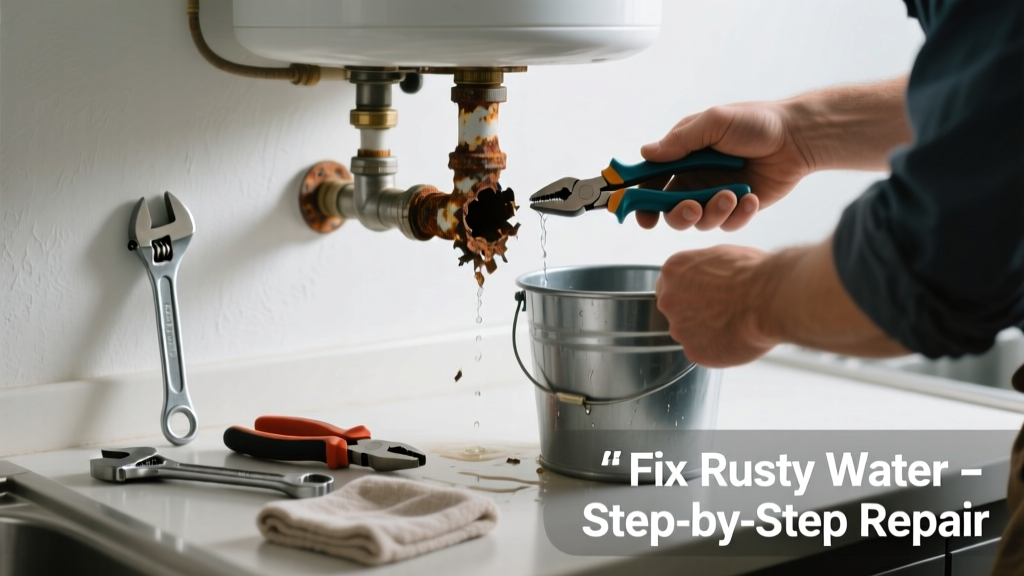
If you turn on your kitchen faucet and get orange-brown water—especially first thing in the morning—it’s likely rust or sediment from your water heater. This isn’t just unsightly; it can stain fixtures, clog aerators, and signal internal corrosion that could lead to failure.
Quick Diagnosis
Rusty water in the kitchen usually points to one of these culprits:
- An aging anode rod (most common cause in gas or electric tank heaters)
- Sediment buildup in the tank bottom, stirred up during high-flow use
- Corroded galvanized steel pipes upstream of the heater (less common in modern homes)
- A failing dip tube allowing cold water to disturb settled rust
- City main line disturbance (e.g., hydrant flushing or construction) — but this affects all faucets, not just kitchen
Tools & Materials Needed
| Item | Purpose | Estimated Cost |
|---|---|---|
| 3/8" socket wrench & 12" extension | Removes anode rod from top of tank (often tight due to mineral buildup) | $12–$22 |
| Magnesium or aluminum-zinc anode rod (44" or 54") | Replaces corroded rod to halt tank rusting; avoid aluminum-only if you have sulfur-smelling water | $24–$42 |
| Bucket (5-gallon) & garden hose | Catches drained water during flush; use vinyl hose rated for hot water | $8–$15 |
| Replacement faucet aerator | Filters out residual particles after flushing; standard 55/64"-27 thread fits most kitchen faucets | $3–$9 |
| White vinegar (1 gallon) | Dissolves iron oxide scale inside tank and on heating elements (for electric units) | $5–$8 |
Step-by-Step Fix
Try these methods in order—start with the least invasive:
- Flush the tank: Turn off power/gas and cold water supply. Attach hose to drain valve, open valve, and drain 3–5 gallons. Let water run at kitchen faucet until clear (may take 2–3 minutes).
- Replace the anode rod: Locate hex head under insulation cap on top of tank. Remove old rod (often crumbly or coated in white crust). Install new magnesium rod—this stops electrochemical corrosion that eats the tank lining.
- Clean or replace the kitchen aerator: Unscrew the tip, soak parts in vinegar for 15 minutes, scrub with soft brush, rinse thoroughly. Replace if screen is pitted or discolored.
- Vinegar soak (electric only): After draining, pour 1 gallon of undiluted white vinegar into tank via cold inlet. Let sit 6–12 hours, then flush completely before restoring power.
When to Call a Pro
Don’t attempt these yourself:
- Your water heater is over 12 years old and shows rust stains on the exterior jacket or pooling at the base
- You smell rotten eggs *only* at the hot tap—this suggests sulfate-reducing bacteria interacting with a failing anode rod, requiring professional sanitization
- Drain valve won’t close after flushing, or leaks persist after reassembly
- You have a tankless unit: rust in kitchen water with a tankless heater usually means upstream pipe corrosion or municipal supply issues—not a DIY fix
Prevention Tips
Extend your heater’s life and keep kitchen water clear:
- Flush the tank every 6 months if you have hard water (over 7 gpg), annually otherwise
- Check anode rod every 2 years—replace when more than 6 inches of core wire is exposed
- Install a whole-house sediment filter (e.g., Sediment Filter Installation Guide) if your well or municipal supply carries high iron
- Set thermostat to 120°F—higher temps accelerate anode depletion and scale formation
- Use a water softener if hardness exceeds 10 gpg; softened water extends anode life but requires aluminum-zinc rods instead of magnesium
Can I use bleach on this?
No. Bleach won’t dissolve iron oxide and can react with residual anode metals to form toxic chloramines. It also degrades rubber gaskets and may corrode copper piping. Stick to vinegar for scale or physical flushing for particulate.
Why is only my kitchen faucet affected?
Kitchen faucets often have the longest, most direct hot-water run from the heater—and frequently use high-flow pull-down sprayers that stir up sediment. Also, many kitchens are the farthest fixture from the heater, so stagnant water sits longer in the line, oxidizing iron en route.
Will replacing the anode rod stop rust immediately?
Not instantly—but it halts ongoing corrosion. Existing rust particles may still flush out for 1–3 days after replacement. If rusty water continues beyond 72 hours, inspect the tank’s interior with a boroscope or call a plumber.
Is rusty water dangerous to drink?
The U.S. EPA classifies iron as a secondary contaminant—meaning it’s not toxic but causes aesthetic and plumbing issues. However, persistent rust can indicate advanced tank decay, which may leach other metals like lead from older solder joints or brass components.
According to the American Water Works Association’s 2022 Corrosion Management Handbook, 'Iron concentrations above 0.3 mg/L produce visible staining and correlate strongly with localized pitting in steel tanks.'
How do I know if it’s the heater or my pipes?
Run cold water at the kitchen faucet for 2 minutes—if it’s clear, but hot water stays rusty, the issue is almost certainly the heater. If both hot and cold are rusty, test other faucets: if all are affected, it’s likely municipal supply or main house piping. If only one fixture, check its shutoff valves and supply lines—older galvanized elbows commonly rust out.
Can I install a new anode rod in a 10-year-old water heater?
Yes—if the tank hasn’t leaked yet and the interior lining is intact. A 2021 study by the National Association of Home Builders found that 68% of water heaters with replaced anodes between years 8–12 operated reliably for another 5+ years. But skip this if you see bulging, dents, or weeping seams.
Rusty kitchen water is rarely an emergency—but ignoring it invites bigger problems: reduced efficiency, premature tank failure, or stained countertops and stainless sinks. Address the root cause early, maintain consistently, and you’ll buy 3–7 extra years from your current unit. For deeper issues like pinhole leaks or inconsistent hot water, consider upgrading to a tankless water heater installation or a hybrid heat pump model with built-in corrosion resistance.