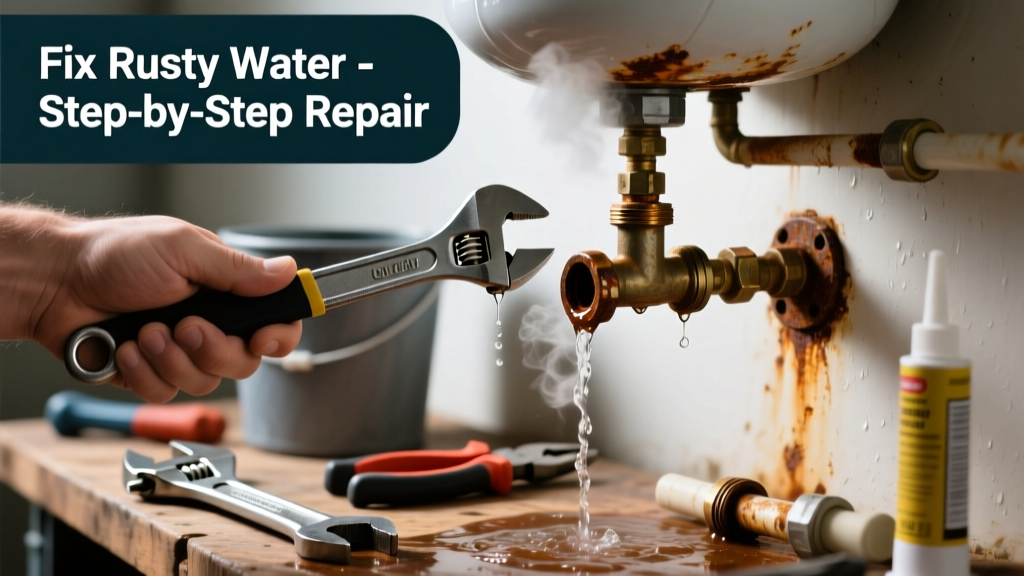
If your tap water suddenly turns orange, brown, or reddish—especially first thing in the morning—it’s likely rust from your water heater tank or pipes. While occasional discoloration can be harmless, persistent rusty water signals corrosion that could lead to leaks, reduced efficiency, or even contamination. Don’t ignore it: early action saves money and protects your plumbing.
Quick Diagnosis
Rusty water rarely appears out of nowhere. Here are the most common causes, ranked by likelihood:
- Old or deteriorating anode rod (most frequent cause in gas/electric tanks under 8 years old)
- Internal tank corrosion due to age (especially in units over 10 years old)
- Rust buildup in galvanized steel supply lines or home piping
- Sediment disturbance during high-flow events (e.g., flushing toilets or running sprinklers)
- City water main work stirring up iron deposits in municipal lines
Tools & Materials Needed
| Item | Purpose | Estimated Cost |
|---|---|---|
| 3/8" socket wrench or ratchet | Removes anode rod mounting nut | $12–$25 |
| New magnesium or aluminum-zinc anode rod | Replaces corroded rod to prevent further tank rust | $28–$45 |
| Garden hose (50 ft, heavy-duty) | Drains tank safely without kinking or bursting | $15–$30 |
| Bucket & towels | Catches drips and prevents floor damage during drain valve cleaning | $5–$12 |
| White vinegar (1 gallon) | Dissolves mineral scale and light rust near drain valve | $4–$7 |
Step-by-Step Fix
Try these methods in order—start simple, escalate only if needed:
- Flush the drain valve: Turn off power/gas and cold water supply. Attach hose, open drain valve, and flush 3–5 gallons. If water clears quickly, sediment was the culprit.
- Clean or replace the anode rod: Locate the hex-head plug on top of the tank (may be under insulation). Remove it, unscrew the rod with a socket, inspect for severe pitting or <50% remaining metal, and replace if worn.
- Full tank flush: After draining, reopen cold inlet briefly to stir up remaining sediment, then drain again until water runs clear. Takes 20–40 minutes depending on tank size.
- Vinegar soak for drain valve: If valve itself is clogged with rust, remove it, soak in vinegar for 30 minutes, scrub with a stiff brush, and reinstall with fresh Teflon tape.
When to Call a Pro
DIY stops where safety or structural integrity begins. Call a licensed plumber immediately if:
- You see rust-colored water *only* from hot taps—and it persists after 48 hours of flushing
- The tank exterior shows bulging, wet patches, or visible rust stains near the base
- Your water heater is over 12 years old and you hear popping or rumbling during heating
- You smell sulfur (rotten eggs) alongside rust—this may indicate bacterial growth in a failing anode rod
According to the Insurance Institute for Business & Home Safety's 2023 report, 68% of premature water heater failures stem from ignored anode rod replacement or delayed sediment flushing.
Prevention Tips
Rusty water isn’t inevitable—it’s often preventable with routine care:
- Flush your tank every 6 months if you have hard water; annually otherwise
- Replace the anode rod every 3–5 years (check at each flush)
- Install a whole-house sediment filter if your municipal supply has high iron content
- Set thermostat to 120°F—higher temps accelerate corrosion and scale buildup
Can I use bleach on this?
No. Bleach won’t remove rust and can react with iron to form toxic compounds or corrode internal components. It also damages rubber gaskets and anode rods. Stick to mechanical flushing and vinegar for mineral deposits—not disinfectants.
Does rusty water mean my tank is leaking?
Not necessarily—but it’s a red flag. Rust inside the tank weakens steel over time. The U.S. Department of Energy estimates that 30% of tank failures begin with internal corrosion visible only through discolored water. Inspect the base and lower jacket for moisture or flaking rust.
Why does only my hot water look rusty?
Because the tank interior is the source—either a spent anode rod exposing bare steel or advanced lining breakdown. Cold water bypasses the heater, so it stays clear unless your home’s pipes are also corroded.
Will a water softener fix rusty water?
It helps—but doesn’t solve the root cause. Softeners reduce scale and slow corrosion, but they don’t stop existing rust in the tank or replace a failed anode rod. Pair softening with annual maintenance for best results.
How long does an anode rod last?
Typically 3–5 years, but varies widely. In areas with high-iron well water or softened water (which accelerates consumption), some rods deplete in under 2 years. Always inspect—not just replace on schedule.
Is rusty water dangerous to drink?
Small amounts of iron aren’t toxic, but the EPA classifies rust as a secondary contaminant—meaning it affects taste, odor, and laundry, not acute health. However, persistent rust often accompanies bacterial growth (like Legionella) in warm, stagnant water. If discoloration lasts more than 3 days, test water via a certified lab like water testing kit.
Rusty water is rarely an emergency—but it’s always a warning. A 15-minute flush today might add two years to your heater’s life. And if you’re unsure whether that orange tint means sediment or serious corrosion, it’s worth the $95 service call to avoid a $1,200 replacement later. For deeper system checks, see our guide on water heater leaking from bottom or water heater no hot water.