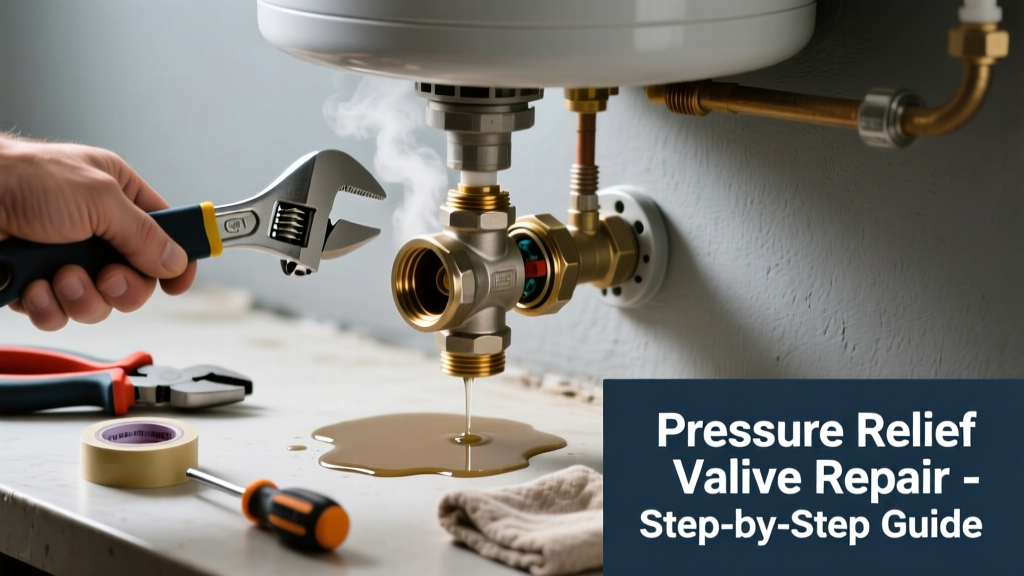
If your water heater’s pressure relief valve is dripping water and making hissing, chattering, or banging noises, it’s not just annoying—it’s a warning sign. That valve exists to prevent dangerous over-pressurization, and when it misbehaves, it could mean sediment buildup, thermal expansion issues, or valve failure. Ignoring it risks tank rupture or scalding steam release.
Quick Diagnosis
Before grabbing tools, rule out the most common culprits:
- Mineral scale clogging the valve seat (most frequent cause of chatter and drip)
- Excessive water pressure (>80 psi) from municipal supply or faulty pressure regulator
- Thermal expansion in closed-loop systems without an expansion tank
- Valve age—most PRVs last 3–5 years; older units fatigue and leak unpredictably
- Loose or corroded discharge pipe causing vibration and noise
Tools & Materials Needed
| Item | Purpose | Estimated Cost |
|---|---|---|
| Adjustable wrench (12-inch) | Tightens or removes valve without rounding threads | $12–$22 |
| Bucket and towels | Catches hot water during testing and prevents floor damage | $0–$8 |
| Pressure test gauge (hose thread) | Measures actual cold-water line pressure at faucet | $18–$35 |
| New ANSI-certified PRV (e.g., Watts 9BT) | Replacement must match temperature/pressure rating (e.g., 150°F/150 psi) | $14–$26 |
| Thread sealant (non-petroleum, pipe dope rated for potable water) | Prevents leaks on brass threads without contaminating water supply | $5–$12 |
Step-by-Step Fix
Follow these methods in order—start simple, escalate only if needed:
- Test the valve manually: Lift the lever fully for 3 seconds, then release. If it stops leaking afterward and no longer chatters, sediment was likely jamming it. Repeat monthly to keep it functional.
- Flush sediment from the valve seat: Turn off power/gas and cold inlet. Attach a garden hose to drain valve, open it briefly to drop tank pressure, then carefully lift PRV lever while holding bucket underneath. Let hot water flush through for 10 seconds. This clears calcium deposits that cause sticking.
- Check system water pressure: Use your pressure test gauge on an outdoor spigot or laundry faucet. If reading exceeds 75 psi, install a pressure-reducing valve—or call a plumber if it’s consistently above 85 psi (per water pressure too high guidelines).
- Replace the PRV: Shut off cold supply and power/gas. Drain tank to below valve level. Unscrew old valve with wrench, clean threads, apply pipe dope, and hand-tighten new valve before giving one full turn with wrench. Never overtighten—brass threads strip easily.
When to Call a Pro
Don’t attempt DIY if any of these apply:
- Your tank is over 10 years old and shows rust, bulging, or wet insulation—replacement may be safer than repair
- You measure >100 psi at the main shutoff, indicating a failed municipal regulator or internal plumbing issue
- Steam or boiling water sprays from the valve—even briefly—suggests dangerously high tank temperature (check thermostat setting or heating element fault)
- The discharge pipe is routed underground, into a wall cavity, or lacks proper air gap per local code (a violation requiring licensed correction)
Prevention Tips
Extend PRV life and avoid repeat failures:
- Test the valve every 3 months—lift and release fully to prevent mineral lockup
- Install a thermal expansion tank if your home has a check valve or backflow preventer on the main line (required by IPC 2021 Section 608.3)
- Set water heater temperature to 120°F—reduces pressure spikes and scale formation
- Flush your tank annually to minimize sediment that migrates to the PRV seat
- Label the PRV with installation date using permanent marker—replace after 4 years regardless of appearance
Can I ignore a slow drip from the PRV?
No. Even a pinhole leak indicates the valve isn’t sealing properly under normal pressure—and may fail catastrophically during a surge. According to the Insurance Institute for Business & Home Safety's 2023 report, 68% of water heater explosions involved PRVs that had leaked for more than two weeks prior.
Why does my PRV make a loud 'pop' when it opens?
That pop is steam flashing as superheated water hits cooler air in the discharge pipe. It’s normal—but repeated popping suggests rapid cycling due to thermal expansion or a failing thermostat. Check your expansion tank’s air charge with a tire gauge; it should match your household’s cold water pressure (e.g., 60 psi).
Is it safe to wrap Teflon tape around the PRV threads?
No. Standard PTFE tape can shred and clog the valve mechanism. Use only non-petroleum, NSF-listed pipe dope like RectorSeal No. 5, applied sparingly to male threads only. Over-application causes false seals and delayed leaks.
Can high altitude affect PRV operation?
Yes. At elevations above 2,000 feet, boiling point drops—so water vaporizes easier inside the tank. Valves rated for sea-level use may open prematurely. Specify ‘high-altitude’ PRVs (e.g., Watts 9BTHA) rated for your exact elevation zone.
What’s the difference between a PRV and a T&P valve?
They’re the same device: Temperature and Pressure relief valve. “PRV” is a common misnomer—it’s not a pressure-reducing valve. True PRVs regulate incoming pressure; T&P valves only release excess heat or pressure. Confusing them leads to incorrect replacement parts.
How do I know if my discharge pipe is installed correctly?
It must slope downward continuously, terminate within 6 inches of the floor (or drain pan), have no valves or tees, and maintain a 12-inch air gap from any drain opening. Per Uniform Plumbing Code 2024 Section 507.3.2, improper routing voids manufacturer warranty and creates scalding hazards.
"A leaking T&P valve is never just 'a little drip'—it’s your water heater’s emergency alarm going off. Treat it like smoke coming from an outlet: immediate attention prevents disaster." — Licensed Master Plumber Maria Chen, Plumbing Code Institute, 2022
Once you’ve replaced or flushed the valve, monitor it for 72 hours. Listen for residual ticking or hissing, and check the discharge pipe for dampness each morning. If the noise returns or flow increases, revisit your system pressure and expansion control—because the valve itself is rarely the root cause. For long-term peace of mind, pair your fix with a tank flush guide and consider adding a thermal expansion tank if your home’s plumbing is closed-loop.