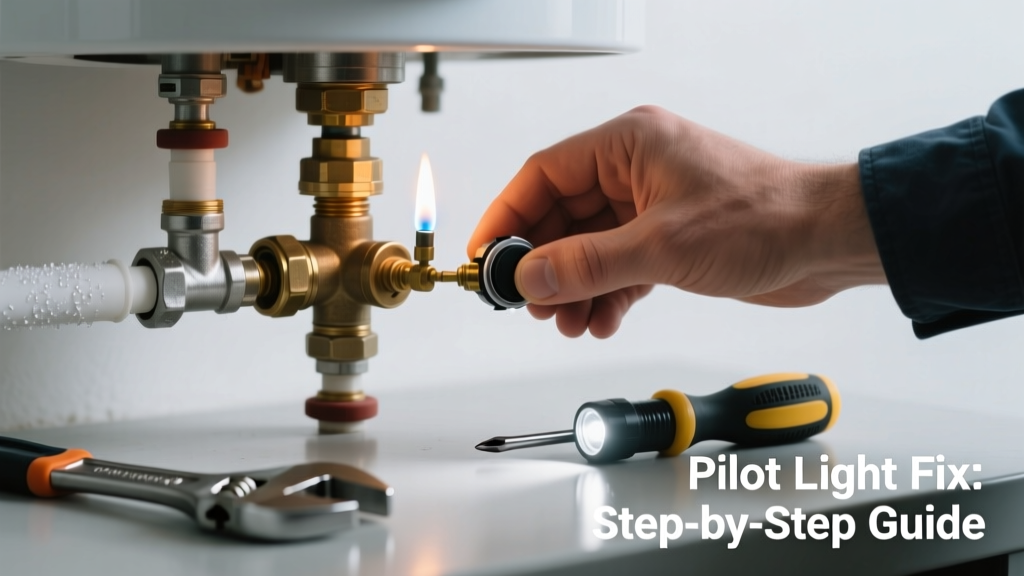
Waking up to icy showers and a cold water heater is frustrating—but a pilot light that won’t stay lit is often fixable in under 30 minutes if you know what to check. Most issues stem from simple causes like dust buildup, thermocouple wear, or low gas pressure—not a failing unit. Before you assume it’s time for a $1,200 replacement, try these proven troubleshooting steps.
Quick Diagnosis
Start here to narrow down the root cause without guesswork:
- Pilot ignites but goes out within seconds (thermocouple failure or misalignment)
- No flame at all—even when pressing the ignition button (gas supply shut off or clogged orifice)
- Pilot lights but burner won’t fire (faulty gas control valve or thermostat)
- Faint yellow or flickering flame (dirty pilot tube or air intake blockage)
- Gas smell near the heater (immediate shutdown required—do not attempt repair)
Tools & Materials Needed
| Item | Purpose | Estimated Cost |
|---|---|---|
| Long-reach butane lighter or fireplace match | Safe ignition without leaning over the heater | $3–$8 |
| Wire brush or stiff toothbrush | Cleans corrosion and debris from pilot orifice and thermocouple tip | $2–$5 |
| Adjustable wrench | Tightens thermocouple connection and loosens gas line fittings if needed | $12–$25 |
| Multimeter (optional, for continuity test) | Verifies thermocouple voltage output (should read 25–35 mV when heated) | $15–$40 |
Step-by-Step Fix
Follow this sequence—stop if you detect gas odor or hear hissing:
- Turn off gas and power: Rotate gas valve to "OFF" and switch off electricity at the breaker (for electric-ignition models).
- Clean the pilot assembly: Remove access panel, use wire brush to gently scrub pilot orifice, thermocouple tip, and burner ports. Blow out debris with compressed air or a straw.
- Check thermocouple alignment: Ensure the copper tube sits centered in the pilot flame’s blue inner cone—not touching the burner. Tighten nut snugly (¼ turn past hand-tight) with wrench.
- Relight using manufacturer’s method: Press and hold gas control knob in "PILOT" position for 60 seconds after flame ignites, then release and verify it stays lit. If not, repeat—holding longer rarely helps.
- Test voltage (if equipped): With multimeter on DC mV scale, connect leads to thermocouple wires. Heat pilot for 60 sec: reading below 20 mV means replacement is needed (thermocouple replacement guide).
When to Call a Pro
Don’t risk carbon monoxide exposure or gas leaks—call a licensed plumber or HVAC technician immediately if:
- You smell rotten eggs (mercaptan additive in natural gas) before or during troubleshooting
- The gas control valve is corroded, leaking, or makes clicking noises without ignition
- Your water heater is over 10 years old and has repeated pilot failures
- You measure less than 15 mV at the thermocouple *and* replacing it doesn’t restore function
According to the U.S. Consumer Product Safety Commission’s 2022 Gas Appliance Incident Report, 37% of residential gas water heater incidents involved improper pilot light maintenance or DIY attempts without gas shutoff verification.
Prevention Tips
Extend your heater’s life and avoid repeat failures with these habits:
- Inspect and clean the pilot assembly every 6 months—especially in dusty basements or garages
- Replace the thermocouple every 3–5 years, even if working (they degrade silently)
- Ensure proper ventilation: keep 12+ inches clearance around heater and inspect flue for bird nests or soot buildup
- Install a carbon monoxide detector within 10 feet of the heater—required by IRC 2021 code for all fuel-burning appliances
Why does my pilot light go out every few days?
This points to either a failing thermocouple (most common), weak gas pressure from a partially closed valve or regulator issue, or drafts from nearby vents or doorways disrupting flame stability. Check for open basement windows or HVAC returns near the heater—draft-related fixes often resolve this pattern.
Can I bypass the thermocouple to keep the pilot lit?
No—bypassing disables the safety shutoff designed to cut gas flow if flame is lost. Doing so risks uncontrolled gas release and explosion. The thermocouple isn’t optional; it’s mandated by ANSI Z21.10.1 standards and voids insurance coverage if tampered with.
Is it safe to relight the pilot myself?
Yes—if your heater is less than 15 years old, has no visible rust or leaks, and you follow the manual’s instructions precisely. Never force valves, use matches near gas lines, or ignore persistent gas odors. Always verify gas shutoff is functional before starting.
What’s the difference between a standing pilot and electronic ignition?
Standing pilots use a continuous small flame (like older models); electronic ignition uses spark ignition only when hot water is demanded (common in newer units). If your heater has no red “PILOT” knob, it likely uses electronic ignition—and pilot-light troubleshooting won’t apply. See our electronic ignition troubleshooting guide.
How long should I hold the pilot button down?
Hold for exactly 60 seconds after the flame catches—no more, no less. Holding longer won’t improve thermocouple heating, and releasing too soon prevents the bimetallic safety valve from sealing. If it still won’t stay lit after three full attempts, the thermocouple or gas valve needs replacement.
Does a pilot light use a lot of gas?
A standing pilot consumes about 700–1,000 BTU/hour—roughly $8–$12 per year at average U.S. gas rates, according to the American Gas Association’s 2023 Residential Energy Consumption Survey. Newer direct-vent or tankless units eliminate this cost entirely.
Most pilot light failures are quick wins—not red flags. But if you’ve replaced the thermocouple twice in one year, suspect gas pressure issues or venting problems that need professional diagnosis. Keep your lighter and brush handy, but don’t hesitate to call a certified technician when safety or system integrity is in question—your peace of mind and family’s safety are worth far more than a $20 part.