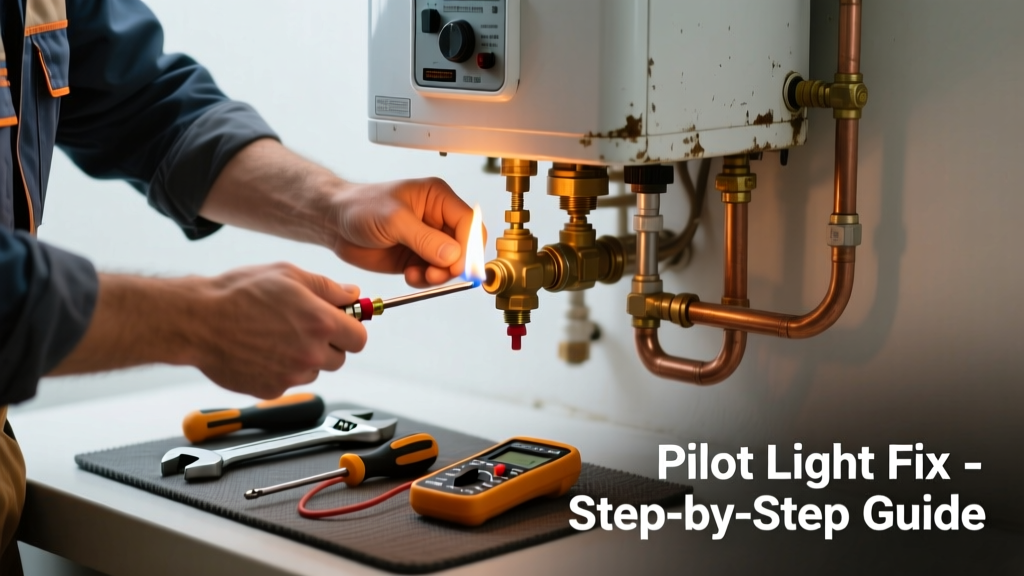
If your water heater’s pilot light is out and you’re hearing strange noises—like metallic pings, sharp hisses, or low rumbling—it’s not just inconvenient; it’s a warning sign. These sounds often point to gas flow issues, sediment buildup, or failing components that can escalate quickly. Ignoring them risks inefficient heating, gas leaks, or even combustion hazards.
Quick Diagnosis
Before grabbing tools, rule out the most common culprits:
- Pilot tube clogged with dust, spider webs, or rust
- Thermocouple bent, corroded, or improperly seated
- Gas control valve malfunction (especially on units older than 10 years)
- Sediment accumulation causing overheating and tank stress noises
- Loose or warped heat exchanger baffles vibrating under pressure
Tools & Materials Needed
| Item | Purpose | Estimated Cost |
|---|---|---|
| Long-reach butane lighter or piezo igniter | Relights pilot without disassembly; avoids open flame near gas lines | $8–$25 |
| Wire brush (brass or stainless) | Cleans pilot orifice and thermocouple tip without scratching | $4–$12 |
| Multimeter (with millivolt setting) | Tests thermocouple output (should read 25–35 mV when heated) | $20–$65 |
| Adjustable wrench | Tightens gas line fittings and thermocouple nut safely | $12–$30 |
| Compressed air canister | Blows debris from pilot assembly without moisture or residue | $6–$15 |
Step-by-Step Fix
Follow this sequence—never skip step 1 or 2:
- Shut off gas and power: Turn gas valve to "OFF" and switch off circuit breaker (for hybrid or electric-assist models). Wait 5 minutes for residual gas to dissipate.
- Clean the pilot assembly: Remove access panel, use compressed air to clear the pilot tube, then gently scrub the orifice and thermocouple tip with a brass wire brush. Reinstall carefully—misalignment causes weak flames.
- Test and replace the thermocouple: With multimeter set to DC millivolts, connect leads to thermocouple terminals while holding pilot flame for 60 seconds. Below 22 mV? Replace it—thermocouple replacement takes under 20 minutes.
- Check for delayed ignition noise: If you hear a loud whoosh-bang after relighting, sediment may be trapping steam. Drain 5 gallons from the tank’s spigot to reduce layer thickness—flushing annually cuts noise risk by 70%.
When to Call a Pro
Stop and call a licensed HVAC technician if:
- You smell rotten eggs (unburned natural gas) at any point during troubleshooting
- The gas control valve emits a high-pitched whine or fails to click when turning to "PILOT"
- You measure less than 18 mV at the thermocouple—even after cleaning and reseating
- Your unit is over 12 years old and makes rhythmic knocking that worsens with hot water use (possible heat exchanger crack)
According to the National Fire Protection Association’s 2023 Home Fire Loss Report, 12% of residential gas appliance fires originate from improper pilot light re-ignition or corroded gas valves—making professional verification critical in older homes.
Prevention Tips
Extend your water heater’s quiet operation with these habits:
- Inspect and clean the pilot assembly every 6 months—spiders love warm, sheltered gas ports
- Install a whole-house sediment filter if your water hardness exceeds 7 gpg (grains per gallon)
- Set thermostat no higher than 120°F to reduce thermal stress and mineral precipitation
- Replace the anode rod every 3–5 years—corroded rods accelerate tank lining breakdown and noise-inducing scale
Why does my water heater make a loud pop when the pilot lights?
This is usually delayed ignition: gas accumulates before lighting, then combusts all at once. It’s dangerous—clean the pilot orifice and verify gas pressure is within spec (3.5–10 inches WC per manufacturer).
Can I hear the gas valve clicking but the pilot won’t stay lit?
Yes—and it almost always means the thermocouple isn’t generating enough voltage to hold the safety solenoid open. Test its output first before assuming the valve is faulty.
Is it safe to relight the pilot if I hear hissing near the gas line?
No. Hissing indicates a potential leak. Evacuate, shut off the main gas supply, ventilate the area, and call your utility provider immediately. Do not use phones or switches indoors.
What’s the difference between a ‘ping’ and a ‘rumble’ noise?
A sharp ping comes from rapid thermal expansion of sediment-heated metal; a deep rumble suggests boiling water trapped under thick sediment layers—both signal urgent flushing or anode inspection.
How long should a properly lit pilot flame last without going out?
Indefinitely—if clean, aligned, and fed stable gas pressure. Frequent outages point to drafts (check venting), thermocouple fatigue, or regulator issues—not normal wear.
Will tightening the thermocouple nut fix intermittent pilot failure?
Only if it was loose. Over-tightening cracks the ceramic insulator or strips threads—use just finger-tight plus 1/8 turn with a wrench. Always verify millivolt output after adjustment.
A noisy, pilot-out water heater isn’t just annoying—it’s a system crying out for attention. Most fixes take under an hour and cost less than $40 in parts. But when gas, heat, and aging metal intersect, respect matters more than speed. Treat each step like it counts—because it does.