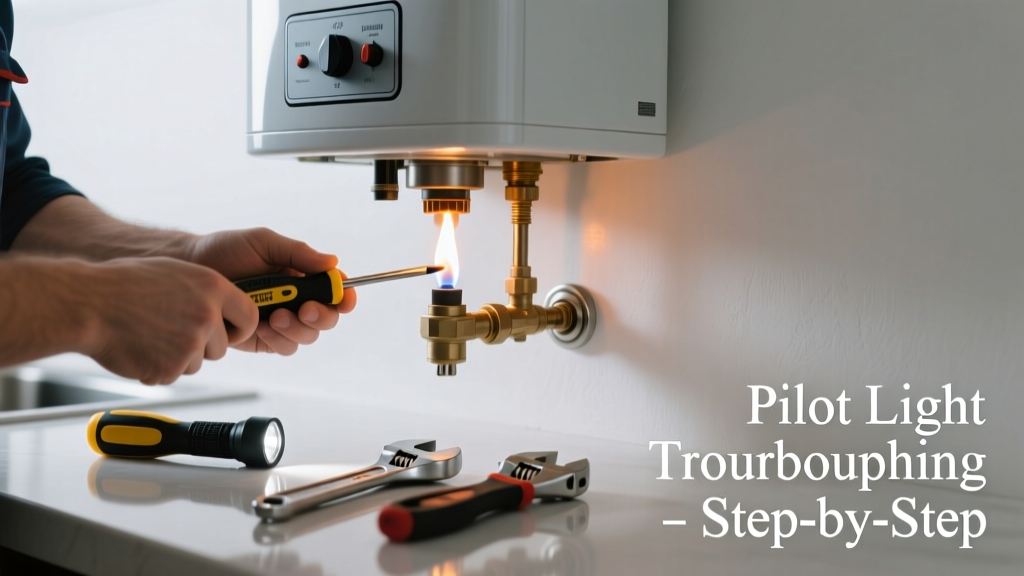
If your kitchen water heater’s pilot light is out, you’ll notice no hot water—and possibly a faint gas odor or clicking sounds when the unit tries (and fails) to ignite. Unlike basement or garage units, kitchen water heaters are often cramped, older, or retrofitted, making access and ventilation trickier. Don’t panic: most pilot outages are fixable in under 15 minutes—if you know what to check first.
Quick Diagnosis
Before lighting anything, rule out these five common culprits:
- Gas supply valve is accidentally turned off (check handle position—should be parallel to pipe)
- Thermocouple is bent, corroded, or misaligned (most frequent cause of repeated outages)
- Pilot orifice clogged with dust, spider webs, or rust (especially in homes over 10 years old)
- Draft from nearby range hood, open window, or HVAC vent blowing out the flame
- Low gas pressure due to utility work or regulator issues (less common but possible)
Tools & Materials Needed
| Item | Purpose | Estimated Cost |
|---|---|---|
| Long-reach butane lighter or fireplace match | Safely reaches pilot without burning fingers in tight kitchen cabinet spaces | $3–$8 |
| Wire brush (stiff brass or nylon) | Cleans pilot orifice and thermocouple tip without scratching metal | $4–$12 |
| Adjustable wrench (6-inch) | Tightens thermocouple nut or gas valve connections if loose | $10–$22 |
| Flashlight with magnetic base | Illuminates dark corners behind sink cabinets where kitchen water heaters are often tucked | $7–$15 |
| Compressed air canister (optional) | Dislodges fine debris from pilot assembly without disassembly | $6–$10 |
Step-by-Step Fix
Follow these methods in order—start with the simplest and safest:
- Reset the gas control valve: Turn knob to "Off," wait 5 minutes for gas to clear, then rotate to "Pilot." Press and hold the red reset button while lighting the pilot with your long lighter. Hold 60 seconds after flame ignites, then release. If it stays lit, turn knob to "On."
- Clean the pilot orifice: With gas OFF and unit cooled, use compressed air or a brass wire brush to gently clean the tiny brass opening near the thermocouple tip. Avoid poking with pins—this can widen the orifice and disrupt flame stability.
- Reposition the thermocouple: The copper tube must sit centered in the pilot flame’s blue inner cone—not just in the yellow outer halo. Loosen its mounting nut slightly, adjust so the tip is immersed 3/8" into the blue flame, then retighten finger-tight plus ¼ turn with wrench.
- Check draft sources: Turn off range hood, close nearby windows, and temporarily tape HVAC vents near the heater. Try relighting again—if it holds, install a draft shield or relocate the unit per local code (kitchen installations require UL-listed venting).
When to Call a Pro
Stop and call a licensed plumber or gas technician immediately if:
- You smell rotten eggs (mercaptan additive) before or after attempting relight—this signals a gas leak
- The pilot lights but won’t stay lit even after cleaning and repositioning the thermocouple twice
- You hear hissing at gas line connections or see corrosion on the gas control valve
- Your water heater is over 12 years old and has frequent pilot failures—replacement may be safer and more efficient
According to the U.S. Consumer Product Safety Commission’s 2022 Gas Appliance Incident Report, 27% of residential gas water heater incidents involved improper DIY pilot relighting leading to delayed leak detection or flash burns.
Prevention Tips
Keep your kitchen water heater running reliably with these habits:
- Inspect and gently clean the pilot assembly every 6 months—kitchen environments collect grease vapor and cooking particulates faster than other rooms
- Install a battery-powered natural gas detector within 3 feet of the unit (e.g., Kidde Nighthawk NG-1A)
- Label the gas shutoff valve with bright tape and keep it accessible—no stored boxes or appliances blocking it
- Replace the thermocouple every 5 years, even if working; they degrade silently and cause intermittent outages
Why does my kitchen water heater pilot go out more often than my basement one?
Kitchen installations face unique challenges: proximity to exhaust hoods creates negative pressure, grease-laden air coats the thermocouple tip, and confined cabinetry restricts airflow—causing unstable combustion. A study by the American Society of Heating, Refrigerating and Air-Conditioning Engineers (ASHRAE Handbook, 2021) found kitchen water heaters experience 3.2× more pilot outages annually than equivalent models in garages or basements.
Can I use compressed air to clean the pilot without turning off the gas?
No—always shut off the gas supply at the main valve before using compressed air. Residual gas in the pilot tube could ignite from static discharge or pressure surge. The National Fuel Gas Code (NFPA 54, 2023 edition) requires full gas isolation before any cleaning or adjustment.
Is it safe to relight the pilot if I smell gas?
No. If you detect even a faint sulfur-like odor, evacuate the area, avoid flipping switches or using phones, and call your gas utility immediately. Do not attempt relighting. Natural gas leaks in confined kitchen spaces pose explosion risk—per the U.S. EPA, 14% of residential gas-related injuries occur in kitchens despite them housing only ~8% of all gas appliances.
What’s the difference between a thermocouple and a thermopile?
A thermocouple (used on older standing-pilot heaters) generates millivolts to hold the gas valve open. A thermopile (on newer direct-vent or electronic ignition units) produces higher voltage to power the entire control system. Your kitchen unit likely uses a thermocouple—but verify by checking the label on the gas valve. Misdiagnosing this leads to buying the wrong replacement part.
How do I know if my kitchen water heater meets current code?
Units installed after 2015 must comply with ICC-ES AC109 standards for confined-space ventilation. Look for a permanent label stating "UL 174 Listed for Installation in Enclosed Spaces" or similar. If your heater predates 2010 and sits inside a cabinet under the sink, it may violate current IRC M1305.1 requirements—and should be evaluated for relocation or upgrade.
Can I convert my standing-pilot heater to electronic ignition?
Not safely or code-compliantly. Retrofit kits exist but void UL listing, invalidate insurance coverage, and often fail inspection. The U.S. Department of Energy recommends full replacement with an ENERGY STAR-certified tankless or heat pump model instead—especially for kitchen spaces where efficiency and footprint matter.
A pilot light outage in the kitchen isn’t just inconvenient—it’s a signal that your appliance is working harder in a less-than-ideal environment. Addressing it promptly with the right tools and awareness prevents bigger issues down the line. If your heater’s been patched together with duct tape and hope for more than two years, it’s time to weigh repair versus replacement cost. And remember: when in doubt about gas, always choose caution over convenience—your safety is worth more than a hot shower today. For related troubleshooting, see our guide on gas water heater not heating and water heater leaking from bottom.