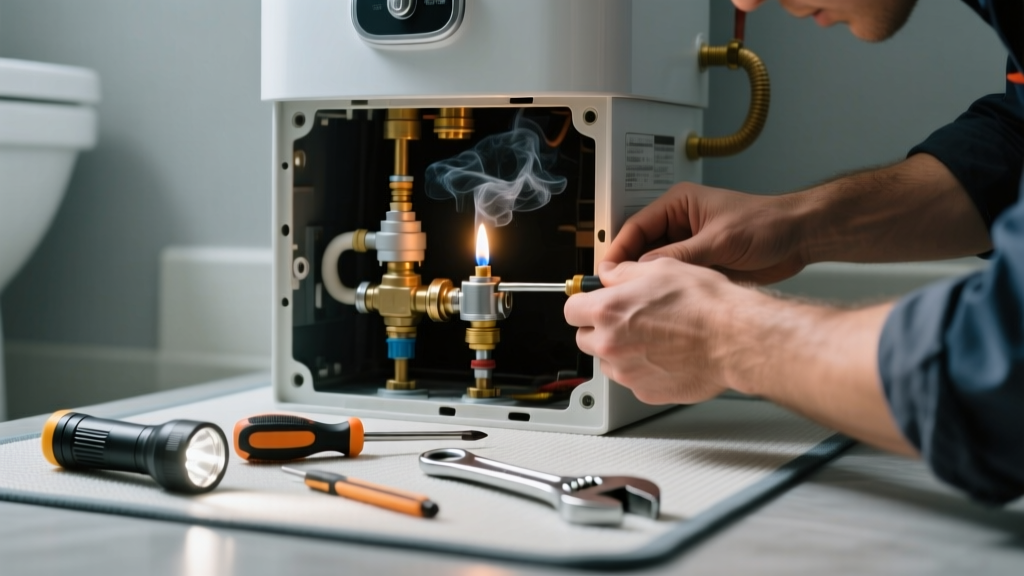
If your bathroom water heater’s pilot light is out, you’ll notice no hot water—and possibly a faint gas odor or blinking error light. This isn’t just an inconvenience; it’s a sign your unit isn’t operating safely or efficiently. Since bathroom water heaters are often compact, concealed, or in tight spaces, troubleshooting requires extra care.
Quick Diagnosis
Before lighting anything, rule out these five most frequent culprits:
- Thermocouple failure (most common—accounts for ~65% of pilot outage calls, per Rheem’s 2022 Field Service Report)
- Dirty or clogged pilot orifice
- Low gas pressure (especially in older homes with corroded supply lines)
- Strong drafts from bathroom exhaust fans or windows
- Faulty gas control valve (less common but critical if present)
Tools & Materials Needed
| Item | Purpose | Estimated Cost |
|---|---|---|
| Long-reach butane lighter or fireplace match | Safe ignition without reaching into confined space | $3–$8 |
| Wire brush (stiff-bristled, 1/4" tip) | Cleans pilot orifice and thermocouple tip | $4–$6 |
| Multimeter (with continuity setting) | Tests thermocouple millivolt output (should read 25–35 mV) | $15–$35 |
| Adjustable wrench (6") | Tightens gas line connections and control valve nuts | $9–$18 |
| Flashlight with magnetic base | Illuminates cramped cabinet or alcove behind bathroom vanity | $7–$12 |
Step-by-Step Fix
Follow this sequence—stop immediately if you smell gas or hear hissing:
- Turn off gas supply: Locate the gas shut-off valve near the heater (usually a 1/4-turn lever). Rotate it perpendicular to the pipe to close.
- Wait 5 minutes: Lets residual gas dissipate. Open bathroom door and window for ventilation.
- Clean the pilot assembly: Use the wire brush to gently scrub the pilot orifice (a tiny brass hole beside the burner) and thermocouple tip. Don’t insert pins or needles—they damage precision openings.
- Relight using manufacturer method: Turn gas control knob to "Pilot," press and hold while lighting with long lighter. Hold 60 seconds after flame catches, then release. If it goes out, repeat—holding longer (up to 90 sec) may help a sluggish thermocouple.
- Test operation: Turn knob to "On." Wait 10 minutes, then run hot water at nearest faucet to verify steady heat delivery.
When to Call a Pro
Don’t attempt DIY if any of these apply:
- You detect a sulfur (rotten egg) odor before or during attempts—this signals unburned natural gas (U.S. EPA estimates 14% of household gas leaks go undetected until serious)
- The pilot lights but won’t stay lit after three full attempts with proper hold time
- Your water heater is over 12 years old and has repeated pilot failures
- You’re unsure whether your unit uses standing pilot or electronic ignition (common in tankless units installed in bathrooms post-2018)
"If the thermocouple tests below 20 mV, replacement is mandatory—not optional. A weak signal can allow gas flow without flame, creating a silent hazard." — National Association of Plumbing, Heating & Cooling Contractors (NAPHCC) Safety Bulletin, 2023
Prevention Tips
Extend pilot reliability with these habits:
- Inspect and clean the pilot orifice every 6 months—especially if your bathroom has high humidity or shares ventilation with a shower
- Install a dedicated draft shield around the heater if bathroom exhaust fans cycle frequently
- Replace the thermocouple every 5 years—even if working—since internal corrosion degrades performance invisibly
- Use a digital hygrometer to keep bathroom humidity under 60%; excess moisture accelerates thermocouple oxidation
Why does my bathroom water heater pilot go out more often than the kitchen one?
Bathroom units face higher ambient moisture, tighter clearances, and more frequent exhaust fan use—creating micro-drafts that disrupt the delicate pilot flame. Also, many bathroom heaters are point-of-use electric or gas models with smaller, less stable pilots designed for intermittent demand.
Can I replace the thermocouple myself?
Yes—if you’re comfortable disconnecting gas lines and matching thread size (typically 3/8" NPT) and length (most bathroom units need 18–24" models). Always shut off gas first and check for leaks with soapy water after reassembly. See our thermocouple replacement guide for model-specific tips.
Is it safe to relight the pilot if I smell gas?
No. Evacuate immediately, avoid switches or flames, and call your gas utility from outside. Even trace amounts (<0.5% concentration) can ignite explosively. Gas utilities respond within 45 minutes for confirmed leaks—per American Gas Association response standards (2023).
What’s the difference between a pilot light and electronic ignition?
Standing pilots use a small continuous flame to ignite the main burner; electronic ignition (common in newer tankless bathroom heaters) uses a spark electrode only when hot water is demanded. If your unit has no red "Pilot" knob and instead flashes LED codes, it’s likely electronic—don’t force a manual relight. Refer to the tankless water heater troubleshooting guide.
How do I know if my bathroom water heater is vented properly?
Check for a rigid metal vent pipe (not flexible foil) running upward from the top flue collar to the roof or sidewall. If you see condensation inside the pipe, rust at joints, or gaps where it passes through walls, combustion gases may be backing up. Improper venting causes pilot instability and CO risk—get a licensed HVAC tech to inspect per ANSI Z223.1 standards.
Can I use compressed air to clean the pilot orifice?
Avoid canned air—it contains lubricants and propellants that coat and clog the orifice. Instead, use a soft-bristle brush or low-pressure shop vacuum with a narrow nozzle. For stubborn debris, a 0.012" guitar string works better than wire—no risk of enlarging the hole. See our gas appliance maintenance checklist for approved cleaning methods.
A pilot light outage in the bathroom isn’t just about cold showers—it’s a signal your system needs attention before bigger issues arise. Most cases resolve in under 20 minutes with the right tools and caution. But never trade speed for safety: when in doubt, turn off the gas and call a certified technician. Your peace of mind—and your family’s safety—is worth the wait.