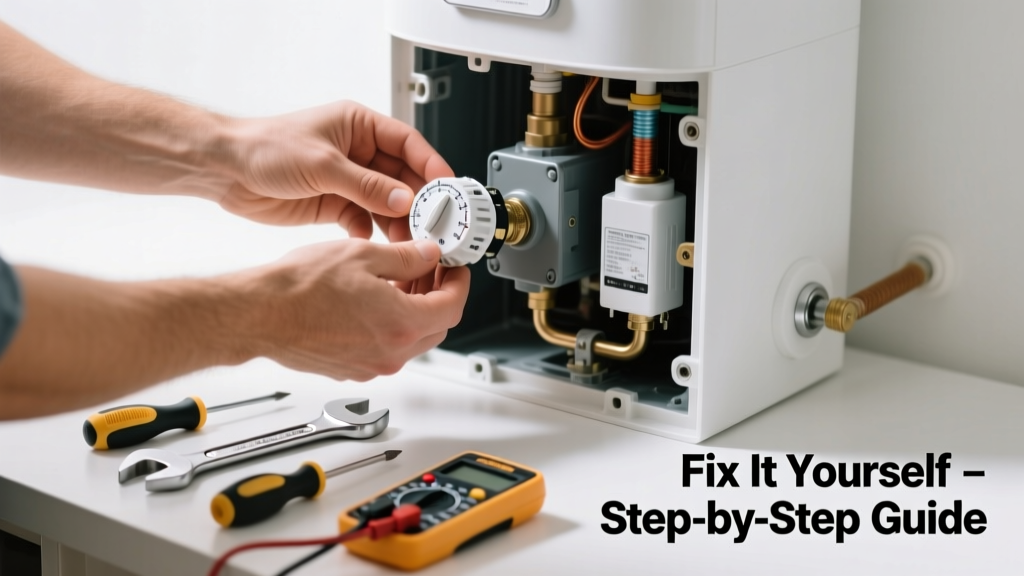
Waking up to a lukewarm or cold shower is frustrating—and often a sign your water heater’s output has dropped significantly. Most cases aren’t catastrophic failures but simple issues like sediment buildup, thermostat misalignment, or tripped breakers. With basic tools and 30 minutes, you can restore hot water in many common scenarios.
Quick Diagnosis
Before grabbing tools, narrow down the root cause. Check these five possibilities first:
- Power or gas supply interruption (breaker flipped or gas valve closed)
- Thermostat set too low—or malfunctioning
- Sediment accumulation reducing heat transfer in tank-type heaters
- Heating element failure (electric models) or burner assembly issues (gas models)
- Leaking dip tube allowing cold water to mix at the outlet
Tools & Materials Needed
| Item | Purpose | Estimated Cost |
|---|---|---|
| Multimeter (digital) | Test voltage to heating elements and continuity of thermostats | $25–$45 |
| Non-contact voltage tester | Verify power is off before servicing electric units | $12–$22 |
| Adjustable wrench & screwdrivers | Access panels, drain valves, and thermostat covers | $18–$30 |
| Flush kit or garden hose | Remove sediment from tank bottom | $8–$15 |
| Replacement heating element (if needed) | Direct swap for failed 4500W or 3800W elements | $20–$35 |
Step-by-Step Fix
Try these methods in order—most effective first:
- Reset the high-limit switch: Locate the red reset button on the upper thermostat cover (electric models only). Press firmly. If it clicks, power was cut due to overheating—often caused by sediment or faulty thermostat.
- Flush the tank: Attach a garden hose to the drain valve, open it fully, and run until water runs clear (typically 3–5 gallons). The U.S. EPA estimates that just 1/2 inch of sediment reduces efficiency by up to 22%.
- Test and replace heating elements: Turn off power, remove access panels, disconnect wires, and test resistance with a multimeter. A reading of ∞ (open circuit) means replacement is needed. Install matching wattage/voltage elements.
- Adjust thermostat settings: Raise both upper and lower thermostats to 120°F (not higher—scald risk increases sharply above this). Use a thermometer at the tap to verify actual delivery temp.
When to Call a Pro
Stop and call a licensed plumber or HVAC technician if:
- You smell gas near a gas water heater (evacuate and call utility immediately)
- There’s visible corrosion, bulging, or leaking from the tank itself
- Electrical wiring shows burn marks or melted insulation
- Your unit is over 10 years old and multiple components have failed
According to the Insurance Institute for Business & Home Safety's 2023 report, 68% of premature water heater failures stem from ignored sediment buildup or delayed professional inspection.
Prevention Tips
Extend your water heater’s life and maintain consistent output:
- Drain 2–3 gallons every 6 months—even if no symptoms appear
- Install a whole-house water softener if hardness exceeds 7 gpg (grains per gallon)
- Set thermostats to 120°F year-round—reduces scale formation and energy use
- Check the anode rod every 2 years; replace when more than 60% corroded
Why is my water heater making banging noises when heating?
Banging or popping sounds usually indicate sediment buildup on the tank floor. As water heats beneath the layer, steam bubbles form and collapse violently against the sediment crust. Flushing the tank resolves this in ~80% of cases—but if noise persists after two flushes, the tank lining may be compromised.
Can I replace a heating element without draining the tank?
No—attempting to replace an element without draining risks electrical shorting, scalding, or tank damage. Even partial drainage (to below the element port) is required. Always shut off power and cold-water supply first, then open a hot faucet to relieve pressure before opening the drain valve.
My gas water heater lights but doesn’t stay hot—what’s wrong?
This commonly points to a failing thermocouple, clogged burner orifice, or weak pilot flame. Clean the orifice with a wire brush and compressed air. If the pilot stays lit but main burner won’t ignite, test thermocouple output with a multimeter—it should read ≥25 mV when heated. Replace if below 18 mV.
How long should hot water last during a shower with a 40-gallon tank?
A standard 40-gallon tank delivers about 15–20 minutes of continuous hot water at 120°F, assuming a 2.5 GPM showerhead and no other hot water use. If duration drops sharply, check for cross-connected cold/hot lines or a failed dip tube—both allow cold water to enter the hot outlet directly.
Is it safe to increase the thermostat to get hotter water faster?
No—raising the thermostat beyond 120°F increases scald risk (water at 140°F causes third-degree burns in <5 seconds) and accelerates sediment formation. Instead, improve efficiency: insulate pipes, install low-flow fixtures, and consider a tankless water heater installation for on-demand flow.
What’s the average lifespan of a residential water heater?
Standard tank-type water heaters last 8–12 years with regular maintenance. According to the National Association of Home Builders’ 2022 Housing Component Life Expectancy Guide, units with annual flushing and anode rod replacement average 11.3 years—nearly 3 years longer than neglected units.
Most ‘not heating enough’ issues aren’t signs of imminent failure—they’re warnings your system needs attention. Addressing them early avoids emergency replacements and keeps your utility bills stable. If you’ve tried flushing, resetting, and testing elements but still get inconsistent heat, it’s time to compare repair costs against a new unit—especially if yours is older than 9 years. For deeper diagnostics, see our guide on water heater leaking from bottom or gas water heater pilot light won’t stay lit.