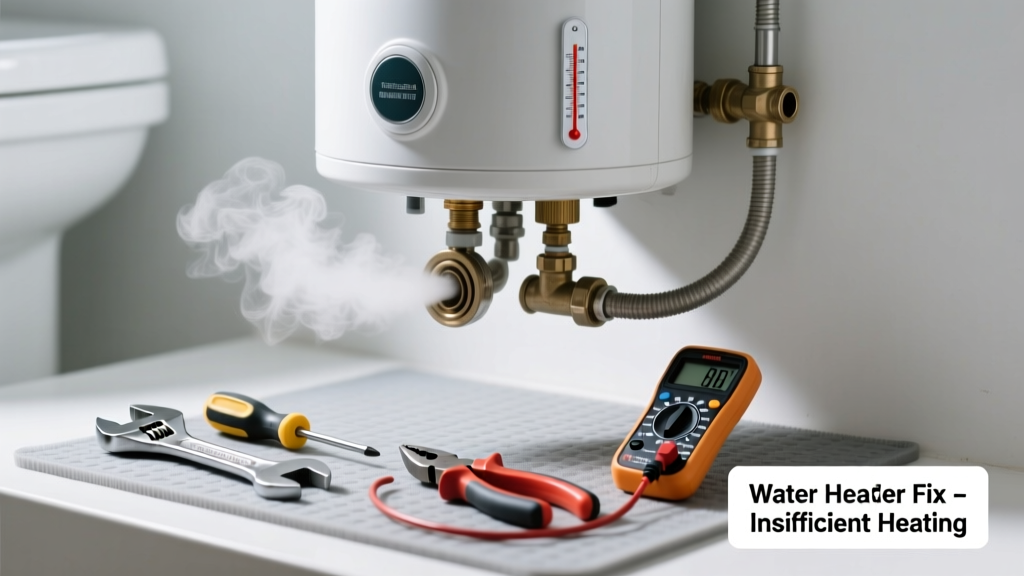
Waking up to a lukewarm shower—or worse, cold water—when the rest of your house has hot water is frustrating and confusing. If only your bathroom faucet or shower isn’t delivering enough heat, the issue likely isn’t the water heater itself, but something localized between the tank and that fixture. Let’s narrow it down and fix it right.
Quick Diagnosis
Before grabbing tools, rule out these five most common culprits:
- Mineral buildup clogging the showerhead, faucet aerator, or mixing valve
- A faulty or partially closed shut-off valve under the sink or near the tub
- Thermostatic mixing valve (TMV) failure—common in newer bathrooms for scald protection
- Cross-connected cold water line feeding the hot side (especially after recent plumbing work)
- Hot water line undersized or excessively long between heater and bathroom (rare, but possible in retrofits)
Tools & Materials Needed
| Item | Purpose | Estimated Cost |
|---|---|---|
| Adjustable wrench | Tightening/loosening compression nuts and valve stems | $12–$25 |
| Needle-nose pliers | Removing small aerators, retaining clips, and valve cartridges | $8–$18 |
| Vinegar soak container (small jar or plastic bag) | Descaling mineral deposits from showerheads and aerators | $0–$5 (reusable) |
| Replacement thermostatic cartridge (if applicable) | Fixes failed TMVs—match brand (e.g., Moen, Delta, Kohler) | $25–$65 |
| Infrared thermometer (optional but helpful) | Measuring actual pipe surface temp at various points | $20–$45 |
Step-by-Step Fix
Try these methods in order—they’re ranked by likelihood and ease:
- Test and clean the showerhead and faucet aerator. Unscrew both, soak in white vinegar for 30 minutes, scrub with an old toothbrush, rinse thoroughly, and reinstall. According to the U.S. EPA, 14% of household water usage is wasted due to leaks and flow restrictions—including clogged fixtures.
- Check all local shut-off valves. Locate valves under the sink, behind the shower access panel, and near the tub spout. Ensure handles are fully parallel to pipes (open position). Turn each off and on twice to dislodge debris.
- Inspect the thermostatic mixing valve (TMV). If your bathroom has anti-scald protection (common in homes built after 2006), remove the handle and trim to expose the cartridge. Look for discoloration, warping, or grit inside. Replace if damaged—many fail between 7–10 years.
- Verify hot/cold line separation. Run hot water at the bathroom sink while feeling the hot and cold supply lines behind it. If the cold line warms significantly, you likely have a cross-connection—often caused by a failed single-handle cartridge.
When to Call a Pro
Stop and call a licensed plumber if you encounter any of these:
- Hot water line temperature reads below 105°F at the heater’s outlet (use infrared thermometer)—points to heater malfunction, not fixture issue
- You smell gas near the water heater (immediate evacuation and call gas company)
- Signs of corrosion, bulging, or leaking on the tank or pressure relief valve
- You discover soldered copper joints needing repair or suspect improper backflow preventer installation
"In homes with thermostatic mixing valves, over 68% of 'low hot water' complaints in bathrooms trace to cartridge failure—not heater output," says the Plumbing-Heating-Cooling Contractors Association's 2022 Field Service Survey.
Prevention Tips
Extend the life of your bathroom’s hot water delivery with these habits:
- Soak showerheads and aerators in vinegar every 6 months—even if flow seems fine
- Install a whole-house sediment filter if you have hard water (tested >7 gpg)
- Label all shut-off valves with permanent marker: “HOT” or “COLD” and “OPEN/CLOSED”
- Set water heater temperature to 120°F—hot enough for comfort, low enough to reduce scale and scald risk
Why does my bathroom get less hot water than the kitchen?
This usually means restricted flow or mixed lines specific to the bathroom branch. Kitchen fixtures often connect directly to the main hot line, while bathrooms may run through longer, narrower, or shared piping—and many include mandatory TMVs that degrade over time.
Can I adjust the thermostatic mixing valve myself?
Yes—if you know the brand and model. Most allow temperature calibration via a set screw or rotational limiter behind the handle. But don’t force it: overtightening cracks ceramic components. Always consult the manufacturer’s PDF manual—Moens and Delta have free step-by-step videos online.
Will flushing the water heater help this problem?
Unlikely—unless sediment has blocked the hot outlet nipple (rare). Flushing improves overall heater efficiency and lifespan, but annual flushing won’t fix localized bathroom flow issues. Focus first on the fixture and its immediate supply path.
Is low hot water pressure the same as low temperature?
No. Low pressure means weak flow (e.g., dribbling shower); low temperature means water feels cool despite strong flow. They can coexist—but require different fixes. A clogged aerator causes low pressure; a failed TMV causes low temperature with normal pressure.
How do I know if my shower valve is single-handle or two-handle?
Two-handle: separate hot and cold knobs, usually labeled. Single-handle: one lever or knob controlling both. Single-handle valves almost always contain a cartridge that can wear out or cross-connect lines—making them the #1 suspect when only one bathroom is affected.
Can a bad dip tube cause this issue?
No. A failed dip tube sends cold water straight into the hot outlet, lowering temperature *throughout the house*, not just one bathroom. If only your bathroom is affected, the dip tube isn’t the culprit.
Fixing bathroom-specific hot water issues is rarely about the heater itself—it’s about tracing the path from tank to tap and spotting where things go sideways. With the right diagnostic mindset and a few basic tools, most of these problems take under an hour to resolve. And once fixed, simple maintenance keeps them from coming back—so your morning shower stays reliably warm, year after year.