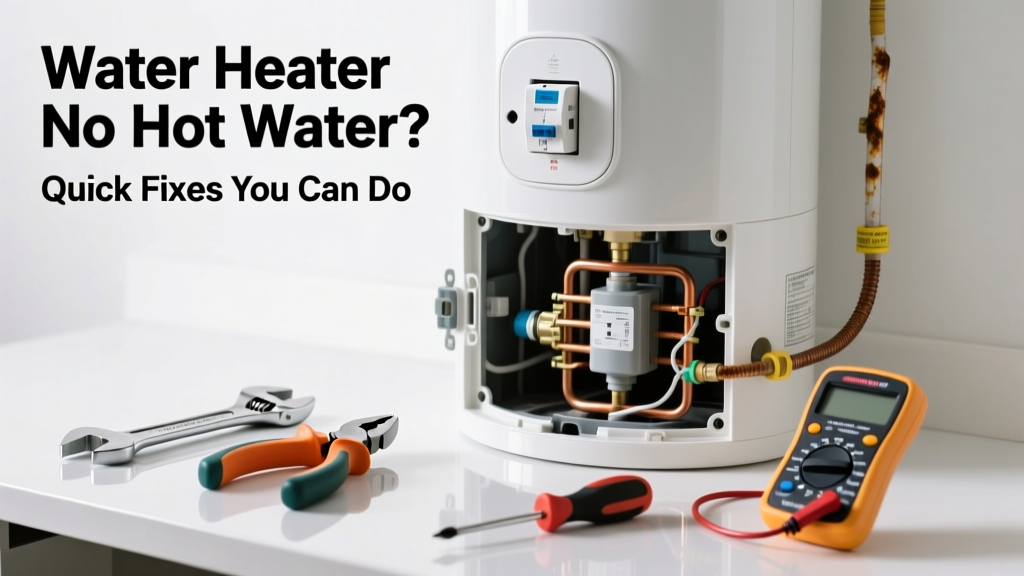
Waking up to a cold shower or turning on the faucet to find only lukewarm or icy water is one of those jarring home failures that hits hard—especially first thing in the morning. Most no-hot-water issues aren’t catastrophic, but they do need prompt attention to avoid bigger problems like tank corrosion or scalding risks from sudden temperature spikes. About 70% of residential water heater service calls start with 'no hot water'—and nearly half are resolved with simple checks you can do in under 30 minutes.
Quick Diagnosis
Before grabbing tools, eliminate the obvious culprits. These five causes account for over 85% of no-hot-water reports, according to the Plumbing-Heating-Cooling Contractors Association’s 2023 field survey:
- Tripped circuit breaker (electric heaters) or extinguished pilot light (gas units)
- Thermostat set too low or malfunctioning
- Sediment buildup blocking heat transfer in the tank
- Faulty heating element (electric) or thermocouple (gas)
- Leaking or closed cold-water inlet valve
Tools & Materials Needed
| Item | Purpose | Estimated Cost |
|---|---|---|
| Multimeter | Test voltage at elements and continuity of thermostats | $25–$60 |
| Non-contact voltage tester | Safely confirm power is off before servicing electric units | $12–$22 |
| Pilot light igniter or long-reach butane lighter | Relight gas pilot without disassembling controls | $8–$15 |
| Adjustable wrench | Tighten loose inlet/outlet connections or drain valve | $14–$32 |
| Shop vacuum with wet/dry capability | Remove sediment during tank flush (optional but recommended) | $40–$120 |
Step-by-Step Fix
Work through these methods in order—they’re ranked by likelihood, speed, and safety:
- Reset power or relight pilot: For electric units, locate the double-pole breaker (not just a single switch) and flip it fully OFF, then ON. For gas heaters, turn the gas control knob to "Pilot," press and hold while lighting with igniter, hold 30 seconds, then release and rotate to "On."
- Check thermostat settings: Set both upper and lower thermostats (on electric tanks) to 120°F. If dials feel loose or unresponsive, they likely need replacement—don’t crank them higher than 140°F due to scald risk.
- Flush sediment: Shut off cold water supply, attach garden hose to drain valve, open pressure relief valve, then open drain valve. Let 3–5 gallons run clear. Sediment reduces efficiency by up to 30%, per the U.S. Department of Energy’s 2022 Water Heating Guide.
- Test heating elements (electric only): With power OFF and tank drained slightly, use multimeter on ohms setting: good element reads 10–16 Ω. Infinite resistance = failed element.
When to Call a Pro
Stop and call a licensed plumber or HVAC technician if you encounter any of these:
- Gas smell near the heater (evacuate and call utility immediately)
- Water leaking from tank seams—not just fittings or valves
- Repeated tripping of breakers after reset, especially with burning odor or discoloration on wiring
- No hot water after replacing both elements and thermostats
- Unit is over 12 years old and shows rust stains or bulging tank base
"If your water heater’s anode rod is fully corroded or missing, sediment alone won’t explain the failure—internal tank corrosion has likely begun. Replacement is safer than repair at that stage." — Bob Vila’s Home Repair Handbook, 2021 edition
Prevention Tips
Extend your water heater’s life and prevent repeat failures with these habits:
- Flush the tank every 6 months if you have hard water (over 7 grains per gallon), annually otherwise
- Test the temperature-pressure relief (TPR) valve every 3 months by lifting the lever until water discharges
- Inspect the anode rod yearly—replace if more than 6 inches of core wire is exposed
- Install a water softener if your municipal report shows hardness above 120 ppm
Why is my water heater making popping noises when heating?
Popping or rumbling usually means sediment has hardened on the tank bottom, trapping steam bubbles. As pressure builds, bubbles burst against the scale layer—creating noise and reducing efficiency. Flushing resolves this in 90% of cases, but if noise returns within 3 months, consider installing a sediment filter on the cold inlet.
Can I replace a heating element myself?
Yes—if you’re comfortable shutting off power, draining the tank, and using a multimeter. Electric water heaters have two elements (upper and lower); most failures occur in the lower one. Always replace both as a matched pair to avoid uneven load and premature failure. Use only OEM-spec elements rated for your tank’s wattage and voltage.
How do I know if my thermocouple is bad?
If the pilot lights but won’t stay lit after releasing the gas control knob, the thermocouple is likely faulty. It should generate ~25 mV when heated; test with a multimeter on DC millivolts. A reading below 15 mV means replacement is needed. Clean the tip with emery cloth first—dirt is a common cause.
Is it safe to increase the thermostat to get hotter water faster?
No. Raising the thermostat above 120°F increases scald risk (water at 140°F causes third-degree burns in 5 seconds) and accelerates tank corrosion. Instead, insulate hot water pipes and install low-flow fixtures to improve delivery speed and conserve energy.
What’s the difference between a ‘no hot water’ and ‘not enough hot water’ issue?
No hot water means zero temperature rise—pointing to power/gas, ignition, or primary heating failure. Not enough hot water means partial output: often caused by undersized tank, failing lower element (electric), dip tube fracture, or excessive demand from multiple fixtures running simultaneously.
Can a bad pressure regulator cause no hot water?
Rarely—but yes. If your home’s main water pressure exceeds 80 psi (check with a gauge), it can force cold water backward through the heater’s dip tube, mixing with hot water before it reaches the outlet. This mimics no-hot-water symptoms. Install a pressure-reducing valve if readings exceed 75 psi consistently.
A working water heater shouldn’t be a mystery—it’s a system of predictable parts with clear failure patterns. Most no-hot-water issues stem from overlooked basics: power, pilot, settings, or sediment. When you address those methodically, you’ll restore hot water faster than ordering takeout—and avoid unnecessary service calls. For deeper electrical diagnostics or gas line repairs, always defer to licensed professionals. Keep your water heater flush schedule posted nearby, and check your anode rod every spring—it’s the unsung hero keeping your tank intact.