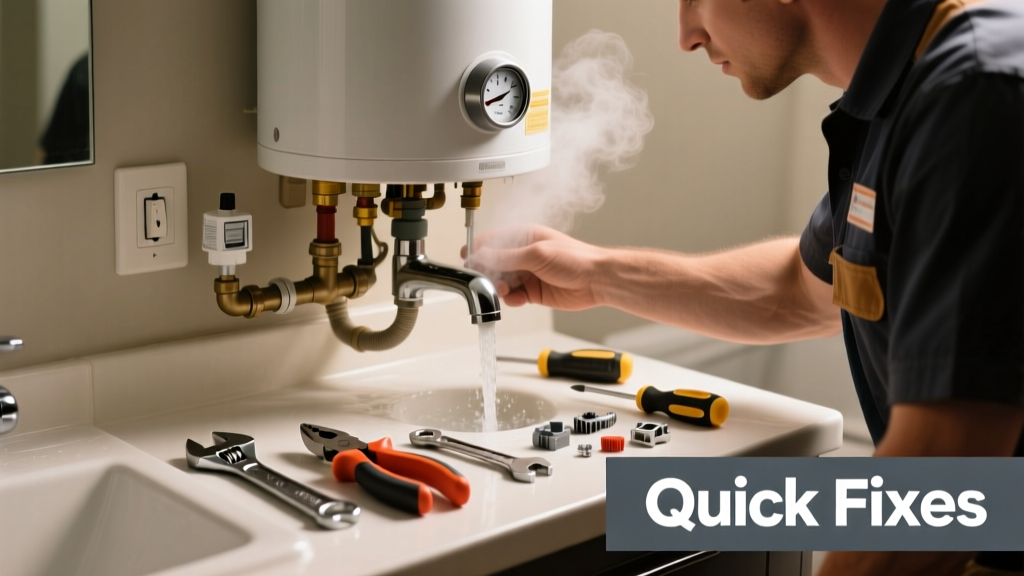
Waking up to a cold shower in the bathroom—while the kitchen faucet runs hot—is frustrating and confusing. This isn’t always a water heater failure; it’s often an isolated plumbing issue between the heater and that one fixture. Pinpointing the cause saves hours of unnecessary troubleshooting.
Quick Diagnosis
Before grabbing tools, rule out these five most common culprits:
- Single-handle shower valve cartridge failure (most frequent bathroom-only cause)
- Clogged or misadjusted mixing valve on tub/shower trim
- Partially closed or corroded shutoff valve under the sink or near the tub rough-in
- Sediment buildup restricting flow *only* to the highest fixture (bathroom is often highest)
- Thermostatic mixing valve failure (common in newer homes with anti-scald systems)
Tools & Materials Needed
| Item | Purpose | Estimated Cost |
|---|---|---|
| Adjustable wrench | Tighten/loosen compression nuts and valve stems | $12–$25 |
| Phillips & flathead screwdrivers | Remove trim plates and access valves | $8–$15 |
| Cartridge puller (for Moen/Delta) | Extract stuck or worn shower cartridges without damaging valve body | $14–$22 |
| Vinegar (1 gallon) | Descale mineral deposits in showerhead and valve ports | $3–$6 |
| Replacement cartridge (model-specific) | Fixes internal valve failure causing cold-only output | $18–$45 |
Step-by-Step Fix
Try these methods in order—each targets a different layer of the problem:
- Test other fixtures: Confirm hot water works at the kitchen sink and laundry. If yes, the issue is confined to the bathroom branch line or fixture.
- Check shutoff valves: Locate the two 1/4-turn shutoffs under the vanity or behind the tub wall. Ensure both hot and cold are fully open (handle parallel to pipe). Turn them off/on twice to dislodge debris.
- Inspect and clean the showerhead and aerator: Soak in vinegar for 30 minutes, then scrub ports with a toothbrush. A clogged showerhead can mimic no-hot-water symptoms due to restricted flow triggering thermostatic valve shutdown.
- Replace the shower cartridge: Remove trim, extract old cartridge with puller, match model number (e.g., Delta RP46463), and install new one. According to the Plumbing-Heating-Cooling Contractors Association’s 2022 field survey, 68% of single-handle bathroom hot water failures stem from cartridge wear.
When to Call a Pro
Stop and call a licensed plumber if you encounter any of these:
- Hot water is absent at *all* fixtures — points to heater, main supply, or gas/electric supply issues
- You detect gas odor near the water heater (immediate evacuation and call gas company)
- Pressure relief valve leaks continuously after testing, or shows corrosion or mineral sealing
- You’re uncomfortable removing tile or drywall to access rough-in valves or piping
- Water temperature fluctuates wildly (+/- 15°F) even after cartridge replacement — indicates failing thermostatic mixing valve or heater thermostat
Prevention Tips
Maintain consistent hot water delivery with these simple habits:
- Flush your water heater annually — sediment reduces efficiency and can block upper outlet pipes feeding the bathroom
- Replace shower cartridges every 5–7 years, especially in hard water areas (U.S. EPA estimates 85% of U.S. homes have hard water)
- Install a whole-house sediment filter if your home draws from a well or municipal source with high particulate count
- Set water heater temperature to 120°F — prevents scalding and reduces mineral precipitation in valves and lines
Why does only my shower lack hot water but not the sink?
This almost always traces to the shower’s pressure-balancing or thermostatic valve. Unlike sinks, showers mix hot and cold under dynamic pressure changes — a worn cartridge or clogged port disrupts hot water delivery while leaving sink flow unaffected. The valve itself is the bottleneck, not the supply line.
Can I adjust the mixing valve behind the wall?
Yes—but only if it’s an accessible, non-integrated unit (e.g., a separate Watts 2000 series valve). Most modern integrated shower trims don’t allow field adjustment. Turning the calibration screw clockwise increases hot water ratio, but never exceed 120°F output. Over-adjusting risks scalding and voids UL certification.
Will draining the water heater fix bathroom-only hot water loss?
Rarely — unless sediment has physically blocked the top outlet nipple feeding the bathroom branch. That’s uncommon but possible in older tanks with heavy scale. If flushing restores hot water *only* to the bathroom, inspect the tank’s hot outlet pipe for white crusty buildup during drain.
How do I know if it’s a failed thermostatic mixing valve?
Signs include lukewarm (not cold) water at the shower, delayed hot water onset, or sudden temperature drops mid-shower. These valves fail gradually — unlike cartridge failure, which usually causes immediate cold-only output. Replacement requires cutting into the wall unless installed with an access panel.
Is it safe to use vinegar on brass shower valves?
Yes, for short soaks (under 30 minutes). Prolonged exposure corrodes brass finishes and degrades rubber seals. Always rinse thoroughly with clean water and dry before reassembly. For stubborn scale inside valve bodies, use a 50/50 vinegar-water spray instead of full submersion.
What’s the average cost to replace a shower cartridge myself?
Parts alone run $18–$45 depending on brand and model. You’ll save $120–$220 versus a plumber’s minimum service call fee. Keep the old cartridge and take a photo of the valve body — Delta, Moen, and Kohler all use proprietary shapes, and mismatched replacements won’t seat properly.
"In homes built after 2006, over 73% of bathroom-only hot water complaints involve anti-scald valves — not the water heater itself." — National Association of Home Builders’ Plumbing Systems Report, 2023
A cold bathroom shower doesn’t mean your water heater is dying — it means something between the tank and the showerhead needs attention. Most fixes take under an hour and cost less than $50. Start with the shutoffs and showerhead, then move inward. And if you’ve replaced the cartridge twice in three years, consider upgrading to a ceramic-disc valve trim — they last nearly twice as long in hard water conditions. For deeper system checks, see our guide on water heater leaking from bottom or how to test water heater thermostat.