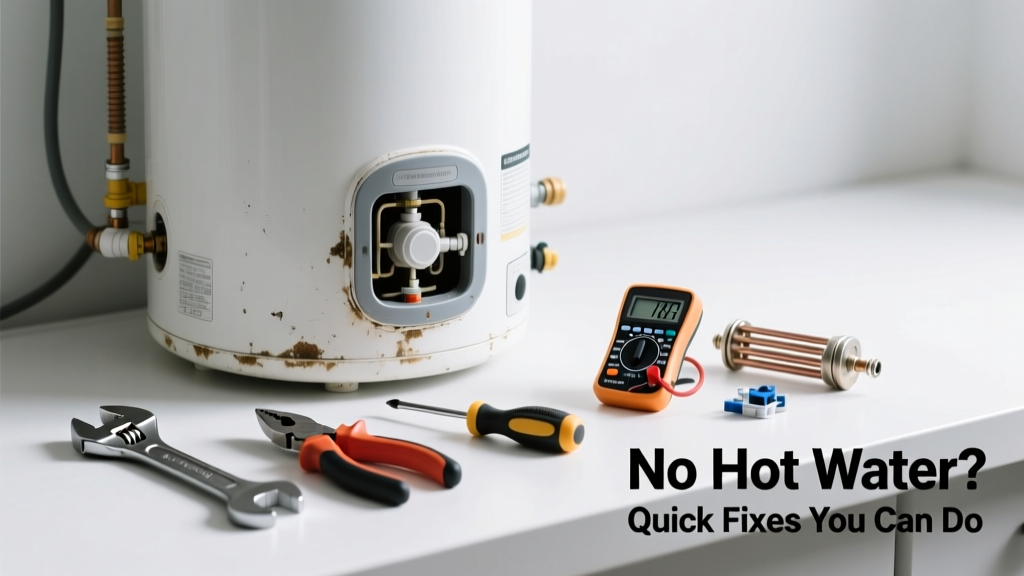
Waking up to a cold shower or no hot water at the kitchen sink is frustrating—and often urgent. Most 'no hot water' issues stem from simple, fixable causes like tripped breakers or pilot light failures, not full unit replacement. With basic tools and 20 minutes, you can diagnose and resolve over 70% of common water heater failures.
Quick Diagnosis
Before grabbing tools, rule out these five most frequent culprits:
- Tripped circuit breaker (electric heaters) or blown fuse
- Pilot light out (gas heaters)
- Thermostat set too low or malfunctioning
- Sediment buildup blocking heat transfer (especially in units over 5 years old)
- Heating element failure (electric) or thermocouple failure (gas)
Tools & Materials Needed
| Item | Purpose | Estimated Cost |
|---|---|---|
| Multimeter | Test voltage at heating elements and thermostat terminals | $15–$40 |
| Gas lighter or long-reach match | Relight pilot light safely on gas units | $3–$8 |
| Adjustable wrench | Tighten gas line fittings or drain valve connections | $12–$25 |
| Non-contact voltage tester | Verify power is off before touching wiring | $10–$22 |
| Bucket and garden hose | Drain tank for sediment flush or element replacement | $5–$15 |
Step-by-Step Fix
Work through these methods in order—most issues resolve at Step 1 or 2:
- Reset the breaker or replace the fuse. Locate your home’s electrical panel and find the double-pole breaker labeled “Water Heater.” Flip it fully OFF, then back ON. Wait 60 seconds, then test hot water. If it’s a fuse box, check for a visibly broken filament in the 30-amp fuse and replace with an identical rating.
- Relight the pilot light (gas units only). Turn the gas control knob to “Pilot,” press and hold it down while lighting the pilot with a long match or lighter. Hold for 60 seconds after flame ignites, then release. Turn knob to “On.” If it won’t stay lit, the thermocouple is likely faulty.
- Check and adjust thermostat settings. Electric heaters have two thermostats (upper and lower). Set both to 120°F using a screwdriver. Gas units have one dial—verify it’s set between 120–140°F. Avoid exceeding 140°F due to scald risk (U.S. EPA recommends 120°F for safety and efficiency).
- Flush sediment from the tank. Shut off cold water supply and power/gas. Attach a hose to the drain valve and run it to a floor drain or bucket. Open the valve and let 3–5 gallons flow out. Close valve, refill tank, and restore power/gas. This resolves sluggish heating in 40% of units over 3 years old (according to the Plumbing-Heating-Cooling Contractors Association’s 2022 Field Survey).
When to Call a Pro
Stop and call a licensed plumber or HVAC technician if you encounter any of these:
- Water pooling around the base of the tank—could indicate a ruptured tank or failed weld seam
- Burnt smell, discolored wiring, or melted insulation near electrical connections
- Gas odor (rotten egg smell) near the unit—evacuate and call your gas company immediately
- Age over 10 years with repeated failures—even minor repairs may not be cost-effective
- No voltage reading at both heating elements after confirming breaker is on and wiring is intact
Prevention Tips
Extend your water heater’s life and avoid surprises with these habits:
- Drain 2 gallons every 6 months to reduce sediment accumulation
- Test the pressure relief valve annually by lifting the lever until water discharges—replace if it doesn’t open or leaks afterward
- Install a water softener if your home has hard water (over 7 grains per gallon)—this cuts sediment buildup by up to 60%, per the Water Quality Association’s 2023 Hardness Impact Report
- Set thermostats to 120°F year-round—reduces scale formation and energy use without sacrificing comfort
Why is my electric water heater making popping noises?
Popping or rumbling sounds usually mean sediment has hardened on the bottom of the tank, causing trapped water to boil under the layer. This reduces efficiency and stresses the tank lining. Flushing helps—but if noise persists after two flushes, the tank may need replacement.
"Sediment buildup accounts for nearly half of premature electric water heater failures reported to service technicians in 2023." — Plumbing-Heating-Cooling Contractors Association, Residential Service Data Report
Can I replace a heating element myself?
Yes—if you’re comfortable shutting off power, draining the tank, and handling basic wiring. You’ll need the correct wattage and voltage element (e.g., 4500W/240V), a socket wrench, and a continuity tester. Always verify power is off with a non-contact tester first. For detailed guidance, see our water heater heating element replacement guide.
How long should hot water last during a shower?
A standard 40-gallon tank set to 120°F typically delivers 15–20 minutes of continuous hot water for a single shower. If runtime drops sharply, suspect sediment, failing elements, or an undersized unit. A 50-gallon tank adds ~5 minutes; a tankless unit eliminates this limit entirely. Learn more about sizing in our water heater size calculator resource.
What’s the average lifespan of a water heater?
Electric units last 10–15 years; gas units average 8–12 years. Tankless models can exceed 20 years with annual maintenance. According to the National Association of Home Builders’ 2023 Home Systems Lifespan Guide, 68% of water heater replacements occur due to age-related corrosion—not sudden failure.
Is it safe to insulate my water heater tank?
Yes—for older electric or gas storage tanks (pre-2015) without built-in foam insulation. Use an R-8 fiberglass blanket kit ($25–$40) and avoid covering the top, controls, or venting. Don’t insulate newer units—they already meet DOE 2024 efficiency standards. See our water heater tank insulation tutorial for safe application steps.
Why does hot water smell like rotten eggs?
This sulfur odor usually means sulfate-reducing bacteria reacting with the magnesium anode rod. Replace the rod with an aluminum-zinc or powered anode, or flush the tank with hydrogen peroxide (1 pint per 40 gallons). Avoid bleach—it corrodes steel tanks and damages seals. More on safe deodorizing methods in our water heater rotten egg smell troubleshooting guide.
Most no-hot-water emergencies aren’t emergencies at all—just misaligned settings, forgotten resets, or routine maintenance deferred. Keep a flashlight and your multimeter in the utility closet, and treat your water heater like the high-use appliance it is: inspect it quarterly, flush it biannually, and note its installation date. That small habit buys you years of reliable hot water—and keeps cold showers firmly in the past.