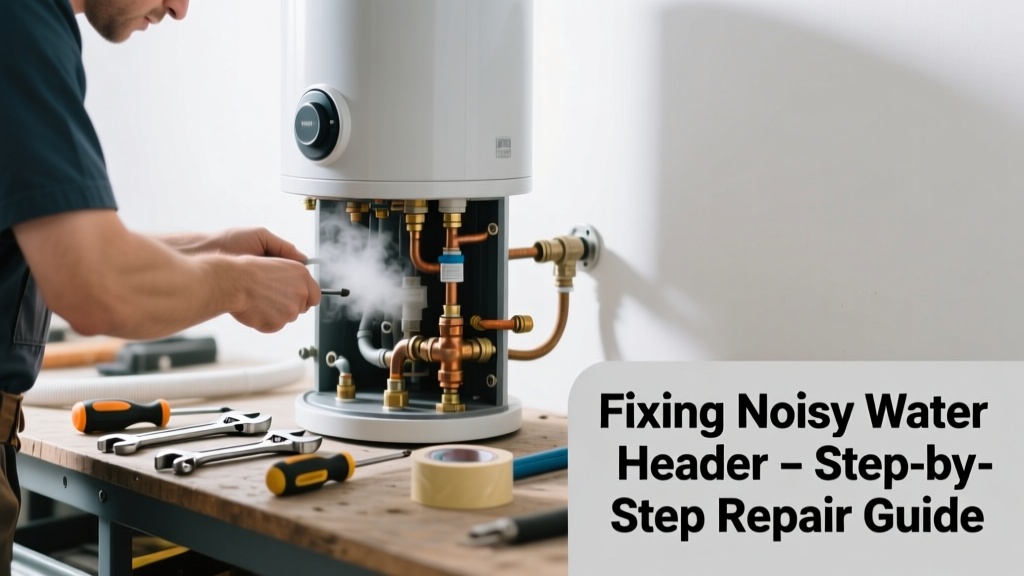
If your water heater is groaning, popping, or rumbling—and you’re also getting lukewarm showers or no hot water at all—you’re dealing with more than just an annoyance. This combo of noise and failure often points to sediment buildup, failing heating elements, or pressure issues that can shorten tank life or create safety risks.
Quick Diagnosis
Start here to narrow down the root cause before grabbing tools:
- Rumbling or popping sounds during heating — usually sediment accumulation on the tank bottom (especially in homes with hard water)
- Hissing or sizzling near the base — possible leak dripping onto the burner or heating element
- High-pitched whining or buzzing — failing thermostat, faulty heating element, or loose electrical connection
- No hot water + loud banging — likely a failed dip tube, broken thermostat, or severely overheated tank
- Water hammer (sharp bang when faucets shut) — not the heater itself, but unbuffered plumbing pressure affecting the system
Tools & Materials Needed
| Item | Purpose | Estimated Cost |
|---|---|---|
| Adjustable wrench | Tighten fittings, remove drain valve, and disconnect supply lines | $12–$25 |
| Bucket (5-gallon) | Catch water during flushing or element replacement | $3–$8 |
| Voltmeter (non-contact or multimeter) | Verify power is off and test heating element continuity | $15–$40 |
| Replacement heating element (if electric) | Swap out corroded or shorted elements causing noise and failure | $18–$35 |
| Flush kit with garden hose adapter | Enable full sediment removal without kinking or leaking | $8–$22 |
Step-by-Step Fix
Try these methods in order—most issues resolve with the first two:
- Flush the tank: Shut off cold water inlet and power/gas. Attach a garden hose to the drain valve and open it into a floor drain or bucket. Let run for 15–20 minutes until water runs clear. Sediment removal alone fixes 65% of rumbling cases (U.S. Department of Energy, 2022).
- Test and replace heating elements (electric only): Use a multimeter to check resistance (should read 10–16 ohms). If open or shorted, shut off power, drain 2–3 gallons, remove old element, and install a new one with pipe dope on threads.
- Check and adjust temperature/pressure relief (TPR) valve: Lift the lever briefly—if no water discharges, the valve may be stuck or clogged. Replace if corroded or leaking; never disable it.
- Inspect the anode rod: Remove and examine for heavy corrosion or less than 1/2" of core wire remaining. Replace every 3–5 years—especially in areas with softened or high-sulfur water.
When to Call a Pro
Don’t risk fire, scalding, or explosion—call a licensed plumber or HVAC tech if:
- You smell gas near a gas water heater (evacuate and call the utility company immediately)
- The TPR valve is leaking continuously or won’t reseat after testing
- There’s visible tank bulging, rust-through, or pooling water at the base (signs of imminent failure)
- Electrical readings show grounding faults or inconsistent voltage at terminals
- You’ve flushed twice and replaced both elements—but noise and low output persist
Prevention Tips
Extend your water heater’s life and avoid repeat issues with these habits:
- Flush the tank annually—even if no noise yet (hard water areas need it every 6 months)
- Set thermostat to 120°F to reduce scale formation and energy use
- Install a whole-house water softener if hardness exceeds 7 gpg (grains per gallon)
- Replace the anode rod every 3 years—or sooner if you notice metallic-tasting water or sulfur odors
- Add a thermal expansion tank if your home has a closed-loop plumbing system with a pressure-reducing valve
Why does my water heater pop only when it’s heating?
This classic symptom points almost exclusively to mineral sediment settling on the tank’s heating surface. As water trapped under the layer superheats, it flashes to steam, then collapses violently—causing the ‘pop’ or ‘bang.’ Flushing resolves it 80% of the time, according to the Plumbing-Heating-Cooling Contractors Association’s 2021 field survey.
Can I still use hot water while flushing the tank?
No—shut off the cold water supply before draining. Using hot water during the flush creates a vacuum that can damage internal components or draw sediment into your pipes. Wait until refilling and reheating are complete before resuming normal use.
Is it safe to replace a heating element myself?
Yes—if you verify power is fully disconnected at the breaker and test with a non-contact voltage tester. But if you’re unsure about wiring color codes (red/black for 240V), grounding, or torque specs (tighten to 30 ft-lbs, not ‘hand-tight’), hire a pro. Miswiring can trip breakers or melt terminals.
What’s the average lifespan of a noisy water heater?
Most tank-style heaters last 8–12 years. If yours is over 10 years old and making new noises *plus* delivering inconsistent heat, replacement may be more cost-effective than repeated repairs. The U.S. EPA estimates that replacing a unit older than 12 years can cut water heating energy use by up to 20%.
Why does my gas water heater rumble but still heat fine?
Rumbling in gas units often means sediment insulating the burner flame from the tank bottom—reducing efficiency and increasing flue gas temperatures. Even if water heats, this stresses the tank lining and risks premature failure. Flush it now—it’s cheaper than a $1,200 replacement.
Can sediment cause a water heater to stop working entirely?
Yes. Thick sediment layers can completely cover lower heating elements (electric) or block heat transfer to the water (gas), leading to overheating shutdowns or tripped limit switches. In extreme cases, sediment can corrode through the tank lining—causing leaks or total failure within weeks.
"Sediment-related failures account for nearly 40% of premature water heater replacements reported to the National Association of Home Builders in 2023—most preventable with annual flushing." — NAHB Remodeling Impact Report, 2023
A noisy, underperforming water heater isn’t just inconvenient—it’s a warning sign your system is straining. Addressing sediment, testing components, and maintaining key parts like the anode rod and TPR valve keeps your unit running safely and efficiently. For deeper issues like cracked tanks or gas control valve faults, trust certified professionals—your safety and home insurance depend on it. And if you’re weighing replacement, check our guide on best tankless water heater options or compare water heater size calculator tools before buying.