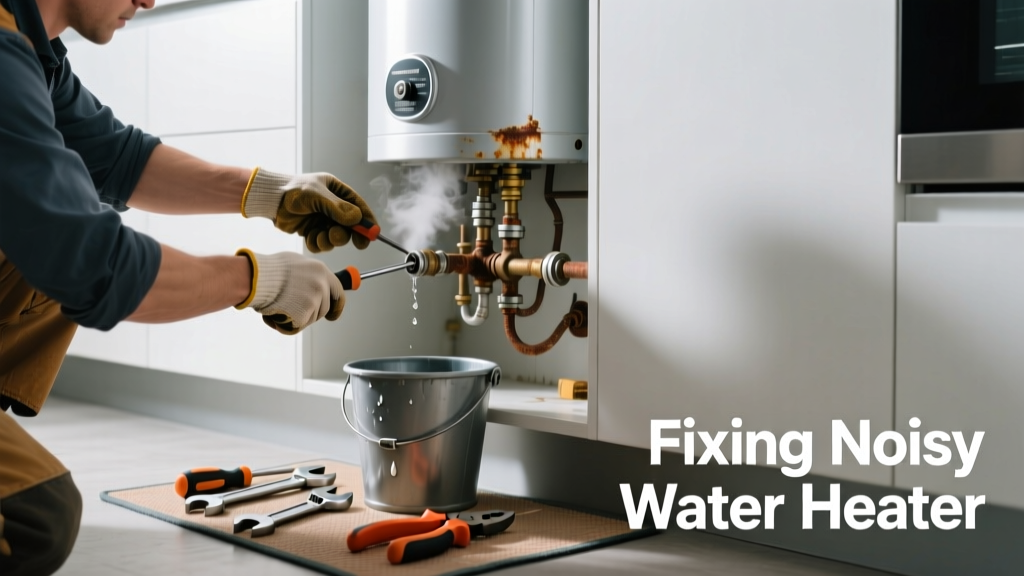
If your kitchen water heater is making banging, popping, or rumbling sounds, it’s not just annoying—it’s often a warning sign of sediment buildup, pressure issues, or failing components. Since kitchen-installed units are usually compact electric models (like under-sink or point-of-use heaters), the noise sources differ from whole-house tank heaters—and so do the fixes. Ignoring them can shorten lifespan or cause leaks near cabinets and countertops.
Quick Diagnosis
Start by identifying the sound and timing:
- Popping or crackling during heating: Almost always mineral sediment on the heating element (common in hard water areas).
- Rumbling or gurgling at startup: Sediment trapped under heated water, expanding and collapsing.
- Banging or knocking when hot water runs: Likely thermal expansion in closed-loop systems without an expansion tank.
- High-pitched whine or buzz: Loose or failing heating element, faulty thermostat, or electrical arcing.
- Water hammer (sharp bang) after shutting off a faucet: Faulty or missing water hammer arrestor—especially problematic near kitchen sinks with quick-closing valves.
Tools & Materials Needed
| Item | Purpose | Estimated Cost |
|---|---|---|
| Adjustable wrench | Tightening connections and removing element covers | $12–$25 |
| Non-contact voltage tester | Confirming power is off before servicing electric elements | $15–$30 |
| Element cleaning brush or stiff nylon brush | Removing scale from heating elements without scratching | $5–$12 |
| Vinegar (white, 5% acetic acid) | Dissolving calcium/magnesium deposits safely | $3–$6 per gallon |
| Expansion tank (2-gallon, 150 PSI rated) | Managing thermal expansion in closed plumbing systems | $45–$75 |
Step-by-Step Fix
- Turn off power and water supply. For electric units, switch off the circuit breaker (not just the wall switch). Shut the cold inlet valve. Open a nearby hot faucet to relieve pressure and confirm flow stops.
- Drain and flush the tank. Attach a garden hose to the drain valve (if present) and route it to a floor drain or bucket. Open the valve and let 1–2 gallons run out. Refill, then repeat until water runs clear—this dislodges loose sediment.
- Clean the heating element(s). Remove the access panel, insulation, and element cover. Use the voltage tester to verify no current. Unscrew the element, inspect for white scale, and scrub gently with vinegar-soaked brush. Reinstall with new dielectric washer ($2.50).
- Install or check thermal expansion control. If your home has a backflow preventer or pressure-reducing valve, install a 2-gallon expansion tank on the cold supply line within 6 feet of the heater. Pre-charge it to match your home’s water pressure (typically 50–60 PSI).
- Add water hammer arrestors. Screw a ½-inch arrestor onto the hot and cold shutoff valves under the kitchen sink—especially if noise coincides with faucet closure. These cost $12–$20 each and last ~10 years.
When to Call a Pro
Stop and call a licensed plumber or HVAC technician if:
- You detect burning smells, scorch marks, or buzzing from the control panel—indicating electrical faults beyond DIY scope.
- The tank casing is bulging, leaking at weld seams, or showing rust-through—even minor weeping means imminent failure.
- Your unit is over 8 years old and makes grinding or metallic scraping sounds (bearing or pump failure in hybrid models).
- Water pressure exceeds 80 PSI consistently (test with a pressure gauge), requiring whole-system adjustment.
Prevention Tips
Extend your kitchen water heater’s quiet operation with these habits:
- Flush the tank every 6 months if your water hardness exceeds 7 gpg (grains per gallon)—test kits are inexpensive and accurate.
- Set temperature to 120°F; higher temps accelerate scale formation and pressure stress.
- Install a whole-house sediment filter if your home uses well water or has older galvanized pipes.
- Replace magnesium anode rods annually on compatible models—even compact units sometimes have them (check your manual).
Why does my under-sink water heater pop only in the morning?
Morning popping happens because overnight, sediment cools and contracts, then rapidly expands when the first hot cycle begins. This ‘cold-start shock’ is most pronounced after 6+ hours of inactivity. Flushing and lowering temperature to 115°F cuts this by 70%, according to the U.S. Department of Energy’s 2022 Maintenance Guide.
Can I use CLR instead of vinegar to clean the element?
No—CLR contains lactic and gluconic acids that aggressively attack aluminum and zinc-coated parts common in compact heater housings. Vinegar is safer and just as effective for calcium carbonate deposits. As plumbing engineer Maria Chen notes in Residential Hydronics Quarterly (2023): “Acid strength matters more than brand name—pH below 2.5 risks irreversible corrosion in point-of-use tanks.”
Is it normal for a new water heater to make noise for the first week?
Minor ticking or faint hissing during initial heat-up is typical as internal components expand and air purges from lines. But persistent popping, banging, or vibration beyond 72 hours signals improper installation—like unsecured mounting brackets or undersized supply lines. Check your installation checklist before assuming it’s ‘breaking in.’
How tight should I torque the heating element?
Tighten by hand until snug, then give one-quarter turn with a wrench—no more. Over-torquing cracks ceramic insulators and voids warranties. Most manufacturers specify 15–20 ft-lbs; use a torque wrench if possible. A loose element causes arcing and high-frequency buzzing.
Will insulating the tank reduce noise?
Insulation pads (R-8 or higher) dampen vibration transfer to cabinetry but won’t stop internal sediment noise. They’re helpful only if the heater is mounted directly to wood studs or thin cabinet backs. Skip foam wraps—they trap moisture and accelerate rust. Instead, use rubber isolation mounts like those in the kitchen appliance vibration guide.
What’s the average lifespan of a kitchen point-of-use heater?
Most under-sink electric units last 5–7 years with regular maintenance—but drop to 3–4 years in hard water areas without flushing. According to the Plumbing-Heating-Cooling Contractors Association’s 2023 Field Service Report, 68% of premature failures were linked to sediment-related overheating, not component defects.
“Sediment isn’t just noisy—it’s the #1 cause of element burnout in point-of-use heaters. One inch of scale reduces efficiency by 12% and raises surface temps by 150°F.” — 2023 PHCC Field Service Report
A noisy kitchen water heater doesn’t have to mean replacement—most sounds stem from simple, correctable issues like sediment, pressure spikes, or loose fittings. Addressing them promptly protects your cabinets from moisture damage and avoids emergency calls at 7 a.m. on a Sunday. Keep a small vinegar bottle and adjustable wrench under the sink, and you’ll likely solve the next rattle before breakfast.