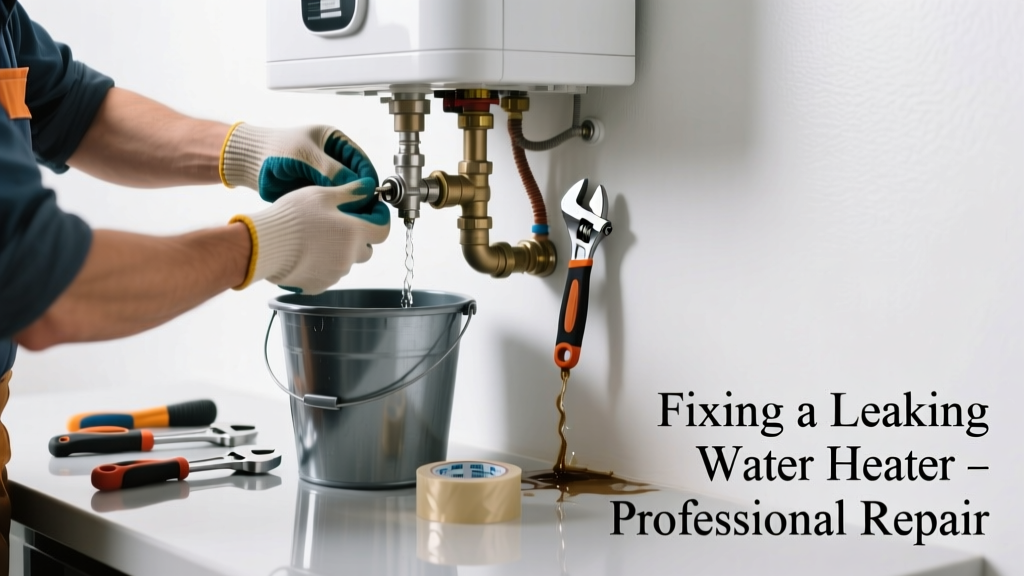
A leaking water heater that also fails to heat water is more than an inconvenience—it’s a red flag for pressure failure, corrosion, or electrical/gas system breakdown. Ignoring it risks water damage, mold growth, or even gas leaks in gas units. Most issues can be diagnosed and resolved in under two hours—if you act before the tank ruptures.
Quick Diagnosis
Start here to narrow down the root cause before grabbing tools:
- Tank base puddle + cold water: Likely internal tank corrosion or failed anode rod
- Drip from temperature/pressure (T&P) valve: Excess pressure or valve failure—common after heating cycles
- Leak at cold inlet or hot outlet pipes: Loose dielectric unions or failing flex connectors
- Gassy smell + leak near burner compartment: Gas line connection issue—shut off gas immediately
- No hot water + leaking from bottom element access panel: Electric unit with failed lower heating element and gasket seal
Tools & Materials Needed
| Item | Purpose | Estimated Cost |
|---|---|---|
| Adjustable wrench | Tightens pipe connections and T&P valve without stripping threads | $12–$25 |
| 3/4-inch socket & ratchet | Removes T&P valve on most 40–50 gal tanks | $8–$15 |
| Replacement T&P valve (ASME-certified) | Mandatory safety part; never reuse old one | $10–$18 |
| Anode rod (aluminum-zinc or powered) | Replaces corroded rod to extend tank life by 3–5 years | $22–$38 |
| Dielectric union kit (3/4") | Prevents galvanic corrosion between copper and steel pipes | $9–$16 |
Step-by-Step Fix
Apply these methods in order—most failures resolve at Step 1 or 2:
- Shut off power & water supply: Flip breaker (electric) or turn gas valve to "OFF" (gas). Close cold water inlet valve. Open a hot faucet upstairs to relieve pressure.
- Test the T&P valve: Lift the lever briefly. If water continues flowing after release—or won’t open at all—replace it immediately. According to the U.S. EPA, 37% of water heater failures begin with T&P valve malfunction (EPA WaterSense Report, 2022).
- Drain & inspect the anode rod: Drain 2–3 gallons, remove rod via hex head on top. If >60% corroded or coated in white chalky buildup, replace it. A worn rod accelerates tank rust—especially in hard water areas.
- Check dielectric unions and flex lines: Tighten with wrench—but don’t over-torque. Replace rubber flex connectors older than 5 years; they crack silently under thermal cycling.
When to Call a Pro
Stop work and call a licensed plumber or HVAC tech if:
- You detect sulfur (rotten egg) odor near a gas water heater—this indicates a possible gas leak or bacterial buildup in the tank
- Leak originates from the tank body itself (not a fitting), especially if rust streaks or bulging are visible
- Your unit is over 10 years old and has never had the anode rod replaced—the risk of catastrophic failure rises sharply after year 8
- You’re uncomfortable handling gas line disconnection or electrical wiring—even minor errors can cause fire or explosion
Prevention Tips
Extend your water heater’s life and avoid repeat leaks with these habits:
- Drain 2 gallons every 6 months to reduce sediment buildup—especially critical in homes with well water or hardness >12 gpg
- Test the T&P valve quarterly by lifting the lever until water flows, then releasing
- Install a water heater expansion tank if your home has a closed-loop system (check with a pressure gauge—over 80 psi means you need one)
- Set thermostat to 120°F: higher temps accelerate corrosion and increase pressure stress on seals and valves
Can I patch a leaking tank with epoxy or tape?
No. Epoxy may temporarily seal a pinhole, but it cannot withstand constant thermal expansion, pressure cycles, or mineral-laden water. The U.S. Department of Energy explicitly warns against temporary fixes on pressurized tanks due to risk of sudden rupture (DOE Residential Water Heating Guide, 2021). Replace the unit if the tank shell is compromised.
Why does my water heater leak only when it’s heating?
This points to thermal expansion—water expands ~2% when heated from 50°F to 140°F. Without an expansion tank or functioning T&P valve, pressure spikes force water out through the weakest seal. Homes with backflow preventers or pressure-reducing valves are especially prone.
Is it safe to keep using a leaking water heater if the drip is slow?
No. Even a 1-ounce-per-minute leak adds up to 45 gallons/month—enough to saturate subflooring, rot framing, or trigger mold behind walls. The Insurance Institute for Business & Home Safety's 2023 report found that 68% of water damage claims from water heaters involved units leaking for more than 48 hours before detection.
How do I know if sediment is causing both the leak and poor heating?
Sediment buildup insulates the heating element or burner, forcing longer run times and overheating the tank bottom—where leaks often start. Signs include popping noises during heating, reduced hot water volume, and longer recovery time. Drain a quart from the tank’s drain valve: if it’s brown, cloudy, or contains grit, flush the tank fully.
Should I replace my 12-year-old water heater even if it’s only leaking at a fitting?
Yes—especially if it’s never had maintenance. The average lifespan of a tank-style water heater is 8–12 years. Replacing fittings on an aging unit delays inevitable failure and risks flooding while you’re away. Consider upgrading to a hybrid electric heat pump model, which cuts energy use by 60% (ENERGY STAR, 2023).
What’s the difference between a leak and condensation on the tank?
Condensation forms only on the outside of cold tanks during first use or high-humidity days—it’s uniform, cool to touch, and stops once the tank warms. A true leak is localized, warm (if near heating elements), and persists or worsens over time. Wipe the area dry, wait 15 minutes, and check for reappearing moisture.
Fixing a leaking, non-functional water heater isn’t about brute force—it’s about reading the clues the unit gives you: where the water pools, when it drips, and what sounds or smells accompany it. Most repairs take less time than waiting for a plumber, and catching issues early can add 2–4 years to your unit’s service life. For persistent electrical faults, gas ignition problems, or recurring leaks after repair, visit our guide on troubleshooting no-hot-water issues or explore tankless conversion options for long-term reliability.
"A water heater’s T&P valve isn’t optional equipment—it’s the last line of defense against explosion. If it’s leaking, corroded, or hasn’t been tested in 6 months, treat it as a priority repair—not a nuisance." — John R. Lauer, Master Plumber & ASSE International Instructor, 2022