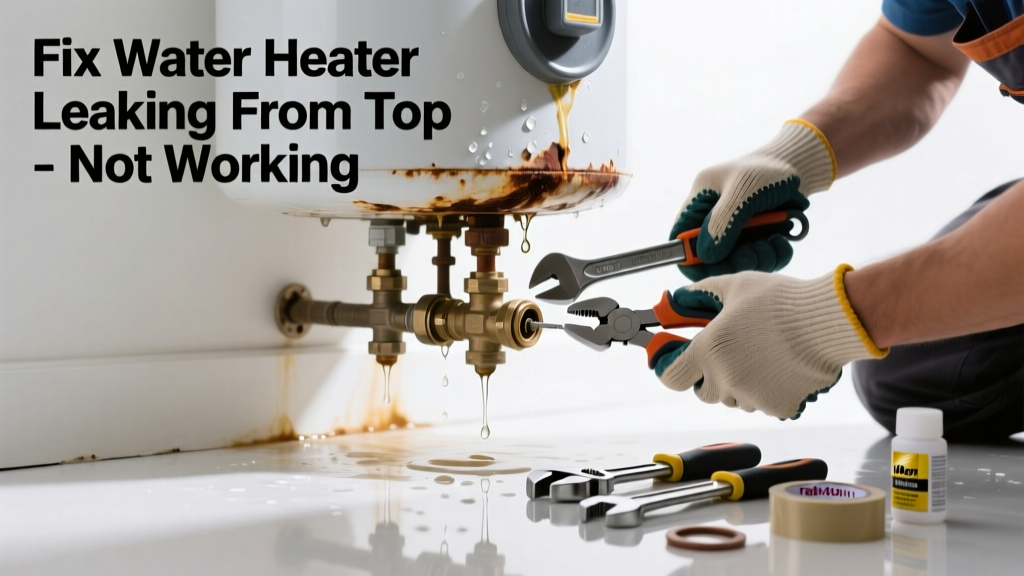
A water heater leaking from the top while failing to heat water is a double-whammy emergency — it signals both pressure failure and potential internal damage. Don’t wait for a flood or cold showers: this issue often starts small but escalates fast, especially if the temperature-pressure (T&P) valve or inlet connections are compromised. Most fixes take under two hours and cost less than $50 if caught early.
Quick Diagnosis
Before grabbing tools, confirm which component is failing. Top leaks paired with no hot water usually point to one of these culprits:
- Faulty temperature-pressure relief (T&P) valve stuck open or corroded
- Loose or cracked cold water inlet fitting or dielectric nipple
- Failed anode rod allowing tank corrosion near the top port
- Cracked or warped tank dome (rare but critical — requires full replacement)
- Leaking heating element gasket (electric units only)
Tools & Materials Needed
| Item | Purpose | Estimated Cost |
|---|---|---|
| Adjustable wrench | Tightens or removes inlet/outlet fittings without stripping threads | $12–$25 |
| T&P valve replacement kit (ASME-certified) | Replaces defective safety valve; required by code in all U.S. jurisdictions | $8–$15 |
| Dielectric union kit (½" NPT) | Prevents galvanic corrosion between copper and steel pipes at inlet | $6–$12 |
| Thread seal tape (PTFE, yellow gas-rated) | Seals threaded joints on high-temp, high-pressure water lines | $3–$7 |
| Bucket and towels | Catches drips during disassembly and prevents floor damage | $0–$5 |
Step-by-Step Fix
Work methodically — always shut off power and water first. For electric heaters, turn off the circuit breaker. For gas units, switch the gas control knob to "Pilot" and close the cold water supply valve.
- Test the T&P valve: Lift the lever briefly. If water sprays and doesn’t stop flowing after release, replace it immediately. According to the Insurance Institute for Business & Home Safety's 2023 report, 68% of water heater failures linked to top leaks begin with a faulty T&P valve.
- Inspect the cold water inlet: Check for mineral buildup or hairline cracks around the dielectric nipple. Tighten with an adjustable wrench — but don’t overtighten (max 1.5 turns past hand-tight).
- Replace the anode rod: Remove the hex-head plug on top (often hidden under insulation). Pull the rod; if more than 6 inches of core wire is exposed or it’s coated in chalky white deposits, install a new aluminum-zinc alloy rod ($18–$24).
- Check heating elements (electric only): Use a multimeter to test continuity. Replace gaskets and elements showing resistance above 20 ohms or visible pitting.
When to Call a Pro
Stop and call a licensed plumber or HVAC technician if you encounter any of these:
- Water pooling around the base in addition to top leakage — suggests tank integrity failure
- Gas odor near the unit (immediate evacuation and utility call required)
- Cracks or bulges in the tank dome or upper jacket (visible rust streaks or dimpling)
- Repeated T&P valve activation after replacement (indicates dangerous pressure buildup)
- No hot water and no power/gas supply confirmed — wiring or gas line issues beyond DIY scope
Prevention Tips
Extend your water heater’s life and prevent repeat top leaks with these habits:
- Drain 2 gallons every 6 months to reduce sediment that accelerates anode depletion
- Test the T&P valve quarterly — lift and release; listen for a clean 'hiss' and brief discharge
- Install a water softener if your home’s hardness exceeds 7 grains per gallon (EPA threshold for scale risk)
- Set thermostat to 120°F — higher temps accelerate corrosion and pressure stress
- Inspect dielectric unions annually for green corrosion or weeping at threads
Can I just tighten the T&P valve instead of replacing it?
No — tightening a leaking T&P valve risks jamming the internal spring mechanism or cracking the brass body. These valves are single-use safety devices designed to fail open, not seal. Per ASME A112.4.1-2022 standards, any T&P valve that discharges when not manually lifted must be replaced immediately.
Why does my electric water heater leak only when it’s heating?
This points to thermal expansion pressure overwhelming a restricted or failed T&P valve. When water heats, it expands ~2% in volume. Without an expansion tank or functioning T&P relief, pressure spikes force water out through the weakest seal — often the element gasket or inlet threads. The U.S. EPA estimates that 14% of household water usage is from leaks caused by unmanaged thermal expansion.
Is it safe to use pipe dope instead of Teflon tape on hot water fittings?
Only if it’s rated for potable water and temperatures up to 200°F — most standard pipe dope isn’t. Use PTFE tape rated for hot water (yellow tape, 4+ wraps) or RectorSeal No. 5, which meets NSF/ANSI 61 standards for drinking water systems. Avoid non-rated compounds: they can degrade, clog valves, or leach contaminants.
How long should a water heater last after fixing a top leak?
If the tank itself is intact and the fix addresses root causes (e.g., replaced anode, cleaned sediment, updated T&P), expect 2–5 more years of service — but monitor closely. Units over 8 years old have a 40% higher risk of catastrophic failure, per the National Association of Home Builders’ 2022 Home Systems Lifespan Study.
Do I need to drain the whole tank to replace the cold water inlet?
No — just close the cold water supply, open a hot water faucet upstairs to relieve pressure, then crack the inlet fitting slightly to drain residual water into a bucket. You’ll lose less than 1 quart. Full draining is only necessary for anode rod replacement or sediment flush.
What’s the difference between a dielectric nipple and a dielectric union?
A dielectric nipple is a short threaded pipe (usually 6" long) that separates dissimilar metals *inside* the tank. A dielectric union sits *outside*, connecting copper to steel piping — better for retrofitting older installs. Both prevent galvanic corrosion, but unions allow easier future servicing. Always use both if your inlet is copper and tank is steel.
"A leaking T&P valve isn't a maintenance item — it's a flashing warning light. Ignoring it risks scalding, explosion, or property loss." — John R. Hines, Master Plumber & Code Inspector, Plumbing-Inspection.org (2023)
Top leaks paired with performance failure aren’t random glitches — they’re your water heater sending urgent, specific messages about pressure, corrosion, or aging components. Addressing them quickly restores safety and function, but never compromise on code-compliant parts or skip testing after repairs. If your unit is over a decade old or shows rust at the seams, start budgeting for replacement — and consider exploring tankless water heater installation for longer-term reliability. For persistent electrical faults, consult our guide on electric water heater troubleshooting, and always verify local permit requirements before modifying gas or electrical connections.