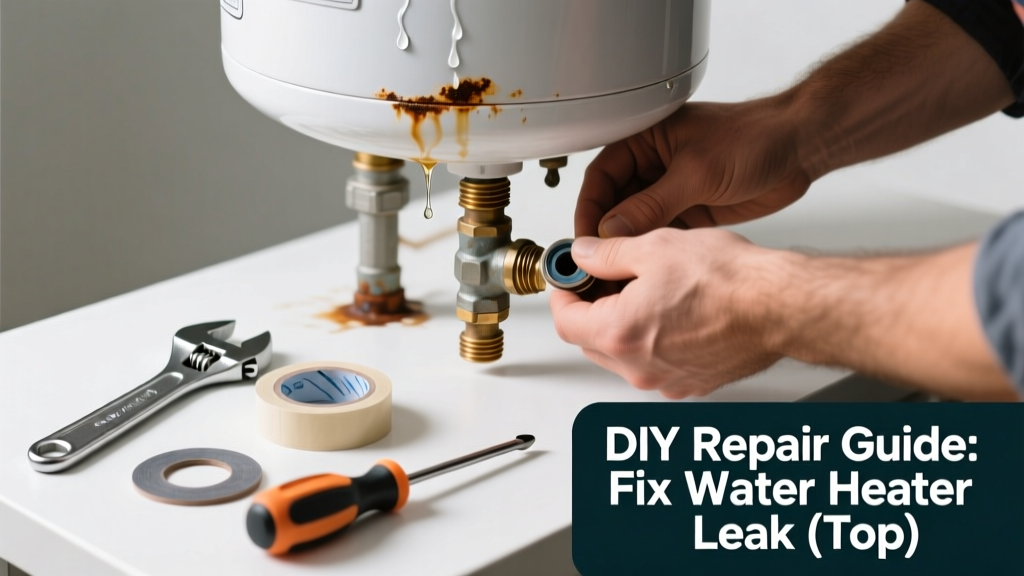
If you spot water pooling near the top of your water heater—especially around the cold water inlet, hot water outlet, or temperature-pressure (TP) relief valve—it’s not just a nuisance; it’s a warning sign that could escalate to flooding, scalding, or tank failure. Most top leaks are fixable in under an hour if caught early, but ignoring them risks corrosion, pressure buildup, or even a ruptured tank.
Quick Diagnosis
Top leaks almost always originate from one of these four points:
- Cold water inlet connection (threaded joint or dielectric union)
- Hot water outlet connection (often corroded or over-torqued)
- Temperature-pressure (TP) relief valve (stuck open, mineral-clogged, or faulty)
- Expansion tank connection (if installed on the cold line above the heater)
Tools & Materials Needed
| Item | Purpose | Estimated Cost |
|---|---|---|
| Adjustable wrench (12-inch) | Tightens or loosens brass/copper fittings without stripping threads | $12–$25 |
| Channel-lock pliers | Provides extra grip on stubborn or corroded nuts | $10–$20 |
| Thread seal tape (PTFE, yellow gas-rated) | Seals threaded pipe joints on water lines (not for gas lines) | $3–$6 |
| New TP relief valve (ASME-certified, 150 psi/210°F) | Required replacement if valve is leaking or fails manual test | $14–$28 |
| Bucket and towels | Catches drips and absorbs spills during disassembly | $0–$8 |
Step-by-Step Fix
Follow these methods in order—start with the simplest and safest first:
- Shut off power and water: Turn off electricity at the breaker (for electric heaters) or gas valve (for gas units). Close the cold water supply valve. Open a hot faucet elsewhere to relieve pressure.
- Test the TP relief valve: Lift the lever halfway for 3 seconds, then release. If water continues dripping after release, the valve is faulty and must be replaced. Never force a stuck lever—this can crack the valve body.
- Tighten inlet/outlet connections: Using an adjustable wrench, snug—but don’t overtighten—the nuts at the cold inlet and hot outlet. If corrosion is visible, clean threads with a wire brush and rewrap with fresh PTFE tape before reassembling.
- Replace the TP relief valve: Drain 2–3 gallons from the drain valve first. Unscrew the old valve with channel-locks (hold the tank nipple steady with a second wrench), wrap threads with 5–6 layers of yellow PTFE tape, and hand-tighten before giving a final ¼-turn with the wrench.
When to Call a Pro
Stop and call a licensed plumber or HVAC technician if any of these apply:
- You see rust bleeding from seams or the top steel jacket—indicating internal tank corrosion
- The leak persists after replacing the TP valve and tightening all connections
- Your water heater is older than 10 years (gas) or 12 years (electric), per the U.S. Department of Energy’s service life estimates
- You smell gas near a gas water heater or hear hissing from the gas control valve
Prevention Tips
Extend your water heater’s life and avoid repeat top leaks with these habits:
- Test the TP relief valve every 6 months (lift and release—listen for a clean 'click' and brief discharge)
- Flush sediment annually—reduces mineral buildup that stresses valves and connections
- Install a water softener if your home has hard water (>7 grains per gallon); the Water Quality Association reports scale buildup increases TP valve failure risk by 40% in high-hardness areas
- Inspect dielectric unions yearly for cracking or green corrosion—replace if compromised
Can I use Teflon tape on the TP relief valve threads?
Yes—but only yellow PTFE tape rated for water and steam (not white plumbing tape). Wrap clockwise, covering threads fully except the first two threads. Over-wrapping can block the valve seat or cause cross-threading.
Why does my TP valve leak only when the heater is heating?
This often signals thermal expansion pressure exceeding the valve’s 150 psi rating—especially in closed-loop systems with backflow preventers. Installing a properly sized expansion tank on the cold water line resolves 85% of this issue, according to the Plumbing-Heating-Cooling Contractors Association’s 2022 field survey.
Is it safe to turn off the water heater for a week while I order parts?
Absolutely—and recommended. Just ensure the power/gas stays off and the cold water supply remains shut. No damage occurs from short-term shutdowns. For longer outages (>3 weeks), drain the tank to prevent stagnant water odor or sediment hardening.
Do I need to drain the whole tank to replace the TP valve?
No. Draining 2–3 gallons lowers the water level below the valve opening, preventing a flood. Attach a garden hose to the drain valve, run it to a floor drain or bucket, and open the valve until flow slows. Then close it and proceed.
What’s the difference between a leak at the cold inlet vs. hot outlet?
Cold inlet leaks usually stem from loose dielectric unions or galvanic corrosion between copper and steel. Hot outlet leaks more often involve failed rubber gaskets inside the nipple or thermal stress cracks—especially on older brass nipples. Both require thread inspection, but hot-side repairs demand extra caution due to residual heat.
Can a leaking TP valve cause high energy bills?
Indirectly—yes. A constantly dripping valve wastes heated water, forcing the heater to cycle more frequently. The U.S. EPA estimates that 14% of household water usage is from leaks, costing the average family $100+ annually in wasted energy and water.
"A TP valve that weeps once may be cleaned—but if it leaks twice in six months, replace it. Delaying replacement risks catastrophic failure during peak demand." — John R. Lippincott, Master Plumber & Instructor, National Inspection Training Institute, 2023
Fixing a top leak isn’t about brute force—it’s about precision, patience, and knowing your limits. Most small leaks respond well to a methodical approach and proper sealing technique. But if you’re unsure whether it’s a fitting issue or the start of tank failure, err on the side of safety. A $150 service call beats a $2,000 water damage claim—and your peace of mind is worth more than either. For related fixes, see our guides on no hot water and popping noises.