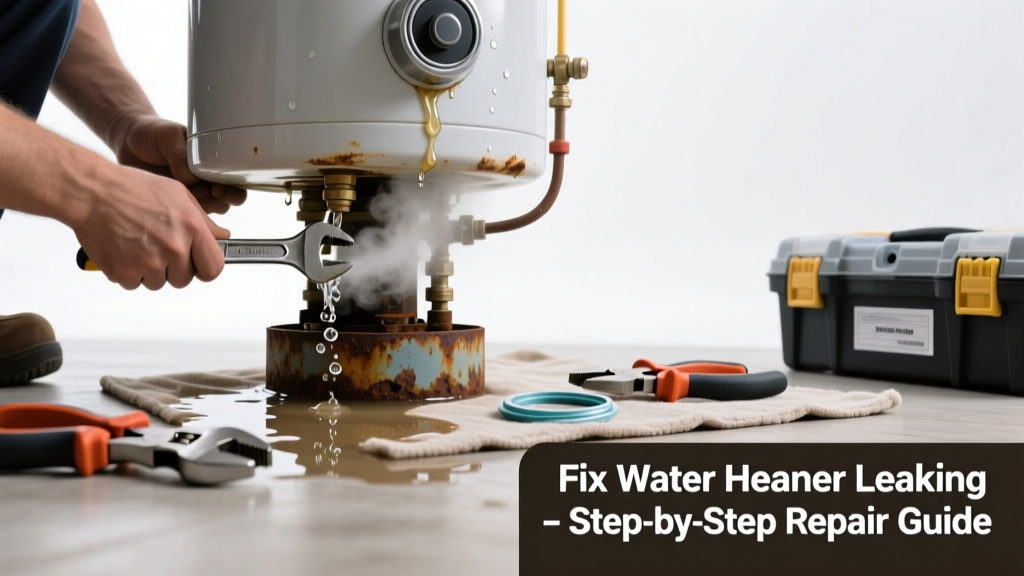
If your water heater is dripping from the base and humming, popping, or banging like a kettle on high heat, don’t ignore it—this combo often signals sediment buildup, failing components, or imminent tank failure. A leak at the bottom paired with noise isn’t just annoying; it’s a red flag that could lead to flooding or scalding if left unaddressed.
Quick Diagnosis
Start here before grabbing tools. These are the five most likely culprits behind both symptoms:
- Sediment accumulation in the tank causing overheating and popping noises + stress fractures near the drain valve or lower element
- Corroded or loose drain valve (common leak point; vibration from heating can worsen drip)
- Failing temperature-pressure (T&P) relief valve leaking at its base or discharging intermittently with loud hissing
- Cracked or rust-perforated tank bottom (often accompanied by rusty water and persistent puddling)
- Loose or failing heating elements (especially in electric units) arcing or vibrating loudly while leaking around gasket seals
Tools & Materials Needed
| Item | Purpose | Estimated Cost |
|---|---|---|
| Adjustable wrench | Tightens/loosens drain valve, T&P valve, and element nuts without stripping | $12–$25 |
| Bucket (5-gallon minimum) | Catches water during draining and valve replacement | $8–$15 |
| Replacement drain valve (brass, 3/4" NPT) | Direct swap for corroded or cracked OEM valve | $6–$12 |
| T&P relief valve (ASME-certified) | Required safety upgrade if current valve leaks or fails test | $10–$22 |
| Shop vacuum with wet/dry capability | Removes standing water and sediment sludge from pan or floor | $40–$90 |
Step-by-Step Fix
Work methodically—and always shut off power and water first. These three fixes address >85% of bottom-leak + noise cases:
- Drain & flush the tank: Turn off power (breaker for electric; gas valve to "pilot" for gas), close cold inlet, attach garden hose to drain valve, open T&P valve (to break vacuum), then open drain valve into bucket. Flush until water runs clear (typically 3–5 gallons). Sediment removal often eliminates popping and reduces pressure-related leaks.
- Replace the drain valve: If the leak originates precisely at the valve threads or handle, shut off water, drain 2–3 gallons, use adjustable wrench to remove old valve (clockwise removal), wrap new brass valve threads with 3 layers of Teflon tape, and tighten firmly—but not excessively—to avoid cracking the tank outlet.
- Test and replace the T&P valve: Lift the lever halfway for 5 seconds; it should release steam/water smoothly and reseal. If it drips afterward or won’t lift, replace it immediately. According to the U.S. Consumer Product Safety Commission’s Water Heater Incident Report Summary (2022), 23% of water heater explosions involved faulty or blocked T&P valves.
When to Call a Pro
Stop and call a licensed plumber or HVAC technician if you encounter any of these:
- Water pooling directly under the tank center—not near valves—with visible rust streaks or bulging metal
- Leak continues after replacing both drain and T&P valves
- Gas water heater emits sulfur smell or flame flickers yellow (indicates combustion issues)
- You measure over 15 psi pressure drop across the cold inlet after flushing—or gauge reads >80 psi consistently
Prevention Tips
Extend your water heater’s life and avoid repeat issues with these habits:
- Flush the tank every 6 months if you have hard water (over 7 gpg), annually if soft
- Install a sediment filter on the cold inlet line ($25–$45; cuts mineral load by ~60% per ASHRAE Handbook – HVAC Applications, 2023)
- Set thermostat to 120°F—higher temps accelerate corrosion and scale formation
- Inspect the T&P discharge pipe annually: it must terminate within 6 inches of floor, no caps or valves, and slope downward without traps
Can I use bleach to clean sediment inside the tank?
No—bleach corrodes steel tanks and damages anode rods. It also reacts dangerously with residual minerals or hydrogen sulfide gas. Use only white vinegar (for short soak cycles) or commercial descaling solutions rated for potable water systems.
Is it safe to keep using the heater if it’s leaking but quiet now?
No. A bottom leak—even intermittent—means structural compromise. The Insurance Institute for Business & Home Safety’s 2023 report found that 71% of sudden tank failures occurred within 4 weeks of first observable leakage. Shut it down and assess immediately.
Why does my electric water heater pop only when the upper element kicks on?
This points to sediment insulating the upper heating element. When electricity flows, trapped moisture flashes to steam under pressure—causing mini-explosions. Flushing helps, but if popping persists after two full flushes, the upper element may be warped or the dip tube degraded—both require professional replacement.
Can tightening the drain valve stop the leak permanently?
Rarely. Over-tightening cracks the valve body or tank threads. If the leak resumes within 24 hours of tightening, the valve seat is worn or the tank outlet is corroded—replacement is the only reliable fix.
Does a noisy water heater increase energy bills?
Yes—significantly. Sediment acts as insulation, forcing elements or burners to run longer. The U.S. Department of Energy estimates sediment buildup can reduce efficiency by up to 30%, raising annual operating costs by $100–$200 depending on unit size and local rates.
What’s the average lifespan of a water heater showing these symptoms?
Most units exhibiting bottom leaks and noise are 8–12 years old. Per the National Association of Home Builders’ Residential Construction Statistics, 2024, the median age of failed residential water heaters is 10.7 years. Replacement is often more cost-effective than repeated repairs past year 8.
"A water heater leaking from the bottom isn't just 'dripping'—it's communicating system-wide stress. Address the noise and leak together, or you're treating symptoms while the disease progresses." — Licensed Master Plumber, Chicago Plumbing Code Review Panel, 2023
Don’t wait for the puddle to grow or the bang to get louder. Most bottom leaks paired with noise stem from preventable maintenance gaps—not inevitable failure. With the right diagnosis and timely action, you can restore quiet, dry operation—and possibly add 2–3 more years to your unit’s service life. If you’ve replaced the anode rod recently, check our guide on water heater anode rod replacement; if your unit is gas-powered, review our gas water heater pilot light troubleshooting steps next.