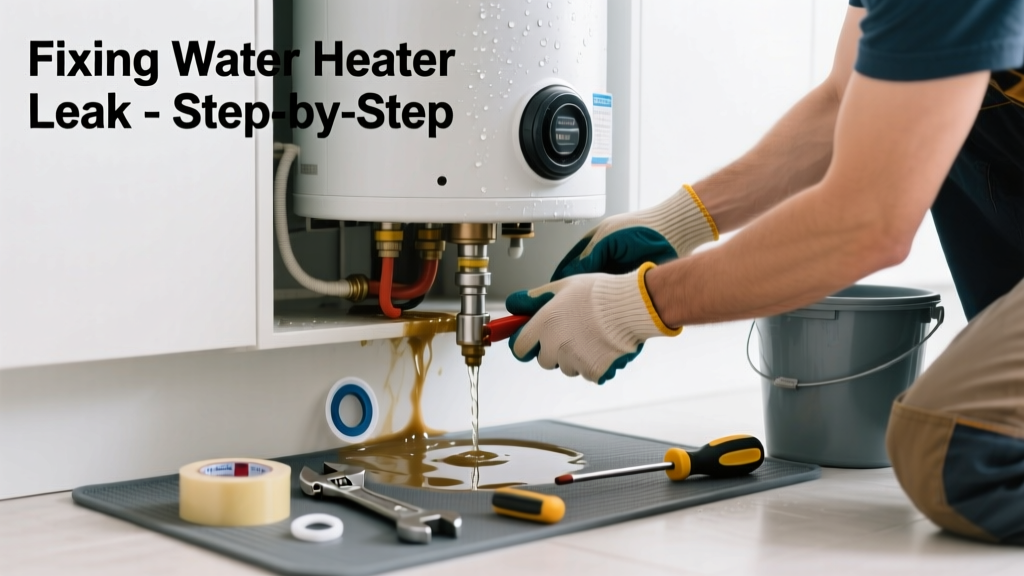
If you’ve spotted a puddle under your kitchen water heater—or worse, a steady drip pooling near cabinets or flooring—you’re dealing with more than just a nuisance. That leak from the bottom could signal tank corrosion, failed seals, or pressure issues that escalate fast. Ignoring it risks water damage, mold growth, or even electrical hazards if the unit is electric and near grounded surfaces.
Quick Diagnosis
Start by confirming the source isn’t misidentified. Kitchen water heaters are often compact, point-of-use units (like under-sink electric models), not full-size tank heaters. Common causes include:
- Corroded tank base or internal lining (especially in units over 6 years old)
- Loose or degraded drain valve
- Faulty temperature and pressure (T&P) relief valve discharge pipe connection
- Cracked or warped mounting bracket allowing stress on fittings
- Failed gasket between heating element and tank wall (electric models only)
Tools & Materials Needed
| Item | Purpose | Estimated Cost |
|---|---|---|
| Adjustable wrench | Tightens or removes valves and fittings without stripping threads | $12–$25 |
| Thread seal tape (PTFE) | Seals threaded connections on T&P valve and drain valve | $3–$7 |
| Bucket and towels | Catches runoff during testing; absorbs residual moisture | $5–$10 |
| Non-contact voltage tester | Verifies power is off before servicing electric units | $15–$35 |
| Replacement drain valve (½-inch NPT) | Direct swap for corroded or leaking OEM valve | $8–$14 |
Step-by-Step Fix
Most kitchen point-of-use heaters are electric, under 10 gallons, and mounted vertically beneath sinks. Use these targeted methods in order of likelihood and safety:
- Shut off power and water supply: Flip the circuit breaker for electric units. Close the cold-water inlet shutoff (usually a small lever or compression valve). Open the hot faucet above to relieve pressure.
- Dry and inspect the base: Wipe thoroughly, then use a flashlight to trace moisture upward. If wetness originates *at* the drain valve, replace it. If it’s seeping *around* the lower heating element cover plate, the gasket likely failed.
- Replace the drain valve: Drain 1–2 gallons using the valve (into bucket), then unscrew it with an adjustable wrench. Wrap new valve threads with 3 wraps of PTFE tape, hand-tighten, then snug with wrench—don’t overtighten.
- Check the T&P valve discharge pipe: Ensure its copper or CPVC tube extends within 6 inches of the floor and isn’t kinked. A blocked or misrouted pipe can cause back-pressure leaks at the valve seat.
- Test after repair: Restore water slowly, check for drips, then restore power. Monitor for 30 minutes. If leakage resumes, move to next section.
When to Call a Pro
DIY stops where safety and code compliance begin. Call a licensed plumber or HVAC technician if:
- The tank shows visible rust bubbles, pitting, or bulging at the base—indicating advanced corrosion
- You detect a sulfur or rotten-egg odor (signaling anaerobic bacteria in stagnant water, often tied to failing anode rods—even in small units)
- The unit is hardwired (no plug) and you’re uncomfortable verifying circuit isolation
- Your local code requires permits for water heater replacement—even point-of-use units in some jurisdictions like California and Massachusetts
According to the Insurance Institute for Business & Home Safety's 2023 report, 68% of water damage claims involving point-of-use heaters stemmed from undetected base leaks that worsened over 72+ hours before discovery.
Prevention Tips
Small kitchen heaters run harder and cycle more frequently than whole-house units—making maintenance critical:
- Drain and flush the tank every 6 months using the drain valve (even 1 quart removes sediment buildup)
- Test the T&P valve quarterly: lift the lever briefly until water discharges, then release—it should snap shut cleanly
- Install a water leak detector under the unit; many integrate with smart home systems for instant alerts
- Replace the unit after 8 years—even if working—since internal corrosion accelerates past that point
Can I use bleach on this?
No. Bleach degrades rubber gaskets and accelerates copper corrosion in plumbing joints. It also reacts dangerously with residual anode rod material (if present). For disinfection after a leak, use a diluted vinegar solution instead—and only on non-electrical components.
Is this covered by homeowner’s insurance?
Typically yes—if the leak is sudden and accidental—but most policies exclude damage from lack of maintenance. Document flushing history and valve tests; insurers like State Farm require proof of routine care for claims over $2,500.
Why does only my kitchen heater leak—not the one in the garage?
Kitchen units face higher thermal cycling (frequent short draws), elevated ambient humidity, and often sit on wood cabinets instead of concrete slabs—accelerating condensation and galvanic corrosion. Garage units usually have better ventilation and stable temps.
Do I need to turn off the main water supply?
No—for most under-sink heaters, only the dedicated cold-water shutoff valve needs closing. But verify it fully isolates flow: open the hot faucet and confirm no water emerges after 10 seconds. If it does, the valve may be faulty and require replacement before proceeding.
What’s the average lifespan of a kitchen point-of-use water heater?
Electric under-sink models last 6–10 years, per the U.S. Department of Energy’s 2022 Appliance Life Expectancy Guide. Gas-fired kitchen units are rare but drop to 5–8 years due to venting complexity and burner corrosion.
Can I install a larger tank to stop recurring leaks?
Not safely. Cabinet space, weight limits (most under-sink cabinets max out at 35 lbs loaded), and existing electrical circuits (often 15-amp only) restrict upgrades. Instead, consider switching to a tankless under-sink model like the Stiebel Eltron Tempra 12, which eliminates tank corrosion entirely.
A slow drip today can become warped cabinetry, ruined drywall, or a tripped GFCI tomorrow—especially in tight kitchen spaces where airflow is limited and moisture lingers. Addressing the leak at the base isn’t just about stopping water; it’s about protecting the integrity of your entire under-sink assembly. Keep that drain valve clean, test the T&P regularly, and treat your kitchen heater like the high-use appliance it is—not an afterthought.