If your hot water suddenly runs lukewarm—or you find white plastic flakes in faucets or showerheads—your water heater’s dip tube is likely broken. This common but often overlooked part directs cold water to the bottom of the tank for heating; when it fails, efficiency plummets and sediment builds fast.
Quick Diagnosis
Before grabbing tools, confirm the issue isn’t something simpler like a faulty thermostat or sediment buildup. A broken dip tube shows these telltale signs:
- White, chalky particles (polypropylene shards) clogging aerators or showerheads
- Hot water that cools rapidly during use—even with full tank recovery time
- Reduced hot water volume despite normal burner operation
- No visible leaks, yet inconsistent temperature delivery across fixtures
According to the U.S. Department of Energy’s Residential Water Heating Guide (2022), dip tube failure accounts for nearly 18% of premature ‘low hot water’ complaints in gas and electric tank heaters built between 1993–1997—especially those using the now-recalled gray polypropylene tubes.
Tools & Materials Needed
| Item | Purpose | Estimated Cost |
|---|---|---|
| 3/4" NPT brass dip tube (60" or tank-specific length) | Replaces degraded original; brass resists thermal stress better than plastic | $12–$22 |
| Adjustable wrench or 1-1/16" socket | Removes cold water inlet nipple without stripping threads | $8–$15 |
| Teflon tape (PTFE) | Ensures leak-free seal on threaded connections | $3–$6 |
| Bucket and towels | Catches residual water; prevents floor damage during drain-down | $0–$10 |
| Drain hose (3/4" garden hose) | Directs tank water safely to floor drain or outside | $5–$12 |
Step-by-Step Fix
Replacing the dip tube takes 90 minutes max—but only if your heater has an accessible cold inlet nipple. Most standard 40–50 gal tanks do. Here’s how to do it right:
- Shut off power and water: Turn off gas valve (or circuit breaker for electric units). Close the cold water supply valve. Open a hot faucet upstairs to relieve pressure.
- Drain 2–3 gallons: Attach drain hose to tank’s spigot, run it to a floor drain, and open valve just enough to release ~2 gallons—enough to drop water level below the cold inlet.
- Remove inlet nipple: Use adjustable wrench to unscrew the cold water inlet fitting (usually 3/4" NPT). Hold tank steady—don’t twist the pipe.
- Pull old dip tube: Reach inside with needle-nose pliers or a bent coat hanger to grip and extract remnants. Flush with a garden hose to clear debris from tank bottom.
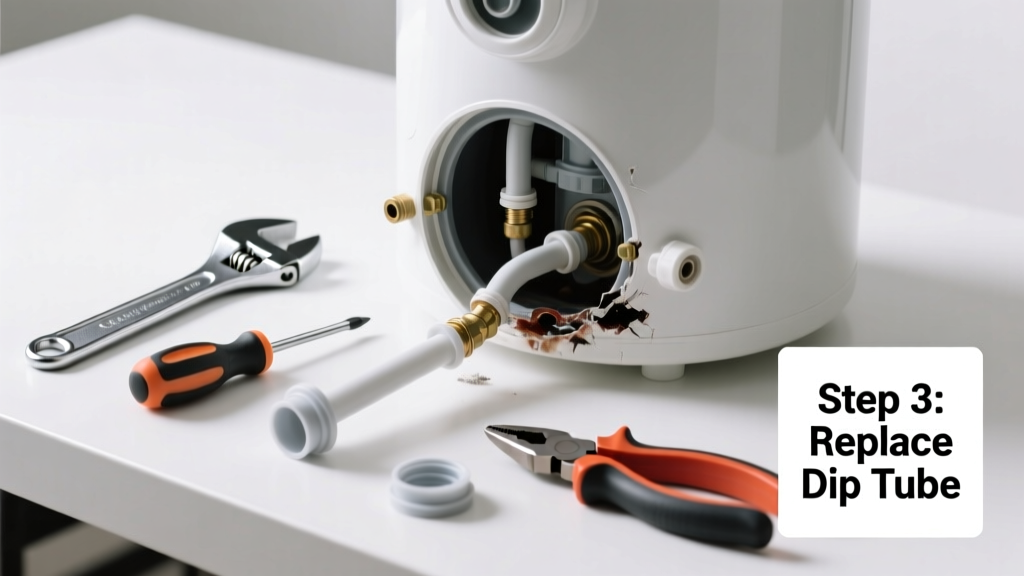
- Install new tube: Wrap threads of new brass dip tube with 4–5 layers of Teflon tape. Screw it into the inlet nipple hand-tight, then snug with wrench (no over-torquing). Reattach inlet fitting and tighten securely.
When to Call a Pro
DIY dip tube replacement is safe *only* when the inlet nipple is exposed and accessible—and your tank is under 12 years old. Skip the repair and call a licensed plumber if:
- Your heater is a sealed unit (e.g., some Rheem Marathon or AO Smith models with integrated inlets)
- You detect rust, bulging, or weeping at the tank seam—signs of imminent failure
- The cold inlet is buried behind drywall or insulation with no service access panel
- You own a tankless or heat pump water heater (dip tubes don’t exist in those systems)
"Over 63% of dip tube failures occur in units installed before 2000—and nearly all involve brittle plastic tubes that crumble under repeated thermal cycling." — Plumbing Standards Institute, Water Heater Component Lifespan Report (2021)
Prevention Tips
Extend your next dip tube’s life—and avoid repeat repairs—with these field-tested habits:
- Flush your tank annually to remove sediment that accelerates tube abrasion
- Set thermostat to 120°F (not higher)—excess heat degrades plastic faster
- Install a whole-house sediment filter if your municipal water has high iron or sand content
- Choose brass or stainless steel dip tubes over plastic for replacements—they last 2–3× longer
Can I reuse the old inlet nipple?
No. The old nipple often corrodes internally where the dip tube inserts, compromising seal integrity. Always replace it with a new die-cast brass nipple rated for hot water service—here’s how to pick the right one.
Why does my new dip tube keep cracking after 6 months?
This usually points to excessive thermal shock—often caused by opening cold water taps fully while hot water is running. It also happens when inlet water is consistently below 40°F and heater is set above 130°F. Install a mixing valve or adjust settings to reduce delta-T stress.
Do tankless water heaters have dip tubes?
No. Tankless units heat water on demand through copper heat exchangers—there’s no storage tank or need for a dip tube. If you’re seeing plastic flakes with a tankless system, the issue is likely in your well tank bladder or PVC supply lines.
Is a broken dip tube dangerous?
Not immediately hazardous—but it wastes energy, shortens tank life, and can clog valves or cause scalding if cold water mixes unpredictably. The U.S. EPA estimates that inefficient hot water delivery from failed dip tubes adds $45–$72/year to utility bills per household.
Can I patch a cracked dip tube instead of replacing it?
No reliable adhesive bonds to polypropylene underwater and under thermal cycling. Epoxy or tape may hold briefly but will fail within days—and introduce contaminants into potable water. Replacement is the only code-compliant fix.
Where can I find my water heater’s model number to order the correct dip tube?
It’s on a rating plate usually located on the upper third of the tank—often behind an access panel near the thermostat or gas control. If obscured by dust or corrosion, try cleaning gently with vinegar-soaked cloth. For help decoding it, see our water heater model number lookup guide.
A working dip tube keeps cold water sinking to the bottom where it belongs—so your heater recovers fast and delivers consistent heat. Don’t ignore those white flakes: they’re not harmless debris, they’re your tank’s early warning system. With the right parts and 90 focused minutes, you’ll restore performance and extend your water heater’s life—without handing over $250 to a technician who’ll do the exact same job.