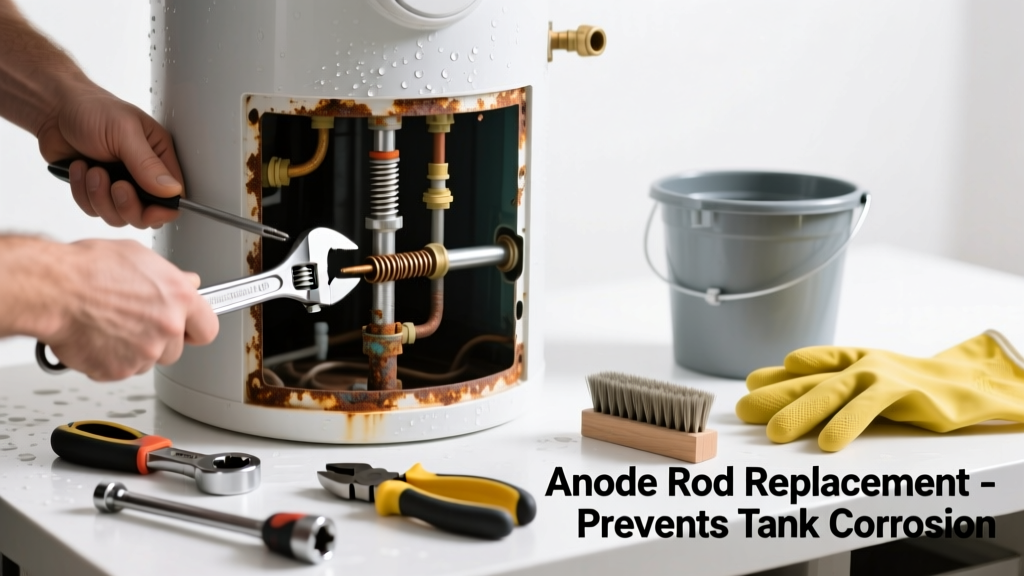
If your water heater suddenly starts making loud popping, rumbling, or banging noises—especially when heating—you’re likely hearing the telltale signs of a severely depleted anode rod. This sacrificial metal rod is silently failing, allowing sediment buildup and accelerated tank corrosion. Ignoring it risks premature tank failure and costly replacement.
Quick Diagnosis
Unusual noise rarely means just one issue—but when combined with other clues, a depleted anode rod is highly probable. Check for these indicators:
- Distinctive popping or cracking sounds during or right after heating cycles
- Reduced hot water volume or inconsistent temperature
- Rusty or metallic-tasting hot water
- Visible white or yellowish mineral scale around the drain valve or pressure relief outlet
- Age of unit: Most anode rods degrade fully by year 5–7 (sooner in hard water areas)
Tools & Materials Needed
| Item | Purpose | Estimated Cost |
|---|---|---|
| 6-point socket wrench (1-1/16" or 1-1/8") | Provides torque without rounding the hex head on most anode rods | $12–$24 |
| Anode rod replacement (aluminum-zinc or powered magnesium) | Replaces corroded rod; choose based on water chemistry (see Prevention Tips) | $28–$45 |
| Adjustable pipe wrench | Secures tank inlet/outlet pipes while loosening the rod to prevent stress on fittings | $18–$32 |
| Shop vacuum with wet/dry capability | Removes loose sediment from tank before reinstalling new rod | $45–$85 |
| Thread sealant (non-petroleum, Teflon-based) | Ensures leak-free resealing of anode port threads without contaminating water supply | $4–$9 |
Step-by-Step Fix
Replacing the anode rod is straightforward but requires precision. Follow these steps in order:
- Shut off power and water: Turn off electricity at the breaker (for electric heaters) or gas supply valve (for gas units). Close cold water inlet valve and open a hot faucet upstairs to relieve pressure.
- Drain 2–3 gallons: Attach a garden hose to the drain valve, route it to a floor drain or bucket, and open the valve just enough to remove ~2 gallons—this lowers water level below the anode port and reduces backpressure.
- Remove old rod: Locate the anode port (usually on top, near cold inlet). Use the 1-1/16" socket and breaker bar to loosen counterclockwise. Expect resistance—it may take 10–20 minutes of steady torque. If the rod snaps, see "When to Call a Pro" below.
- Vacuum sediment: Insert shop vacuum nozzle into the port and suction out loose rust flakes and sludge. You’ll hear gravel-like sounds—stop once airflow clears.
- Install new rod: Wrap threads with Teflon tape (3 wraps clockwise), hand-thread fully, then tighten snugly—do not overtorque. Reopen cold water inlet, bleed air from hot faucets, then restore power/gas.
When to Call a Pro
Some situations demand licensed expertise—not DIY risk:
- The anode rod shears off inside the tank and cannot be extracted without specialized tools
- Your heater is under warranty and tampering voids coverage (e.g., Rheem, AO Smith require pro installation for validation)
- You detect a sulfur (rotten egg) odor that persists after flushing—could indicate bacterial growth requiring professional sanitization
- Tank shows visible bulging, rust-through, or leaks at seams—signs of advanced corrosion beyond rod replacement
"Anode rods in homes with water hardness above 120 ppm deplete up to 40% faster than average—making annual inspection critical." — Water Quality Association, Residential Water Treatment Guide 2022
Prevention Tips
Extend your water heater’s life beyond 10 years with consistent maintenance:
- Inspect and test anode rod annually—cut a small section off the end to check remaining core thickness (replace if less than 1/4" intact)
- In hard water areas (>120 ppm), use aluminum-zinc alloy rods—they resist scaling better than pure magnesium
- Flush tank every 6 months using a 5-gallon bucket and garden hose to remove sediment before it insulates heating elements
- Install a whole-house water softener if hardness exceeds 7 grains per gallon—reduces anode consumption and scaling dramatically
How often should I replace my anode rod?
Most manufacturers recommend replacement every 3–5 years. But actual lifespan depends heavily on water quality: in soft water, rods last 6+ years; in high-sulfate or chlorinated municipal supplies, they may need changing every 24 months. Test yours yearly with a wire brush and visual inspection—look for pitting, crumbling, or exposed steel core.
Can I replace the anode rod without draining the tank?
Yes—you only need to drain 2–3 gallons to drop water level below the anode port. Full tank drainage isn’t required and adds unnecessary time and risk of sediment disturbance. Just ensure the cold inlet valve is closed and pressure is bled via a hot faucet first.
Why does my water heater make noise only when heating?
That’s classic sediment-related noise. As the depleted anode fails, minerals settle and bake onto the tank bottom or heating elements. When water heats, trapped steam bubbles form under the scale layer and violently collapse—causing the popping sound. It’s not the rod itself making noise, but the condition it failed to prevent.
Is it safe to use a powered magnesium anode rod in a glass-lined tank?
Yes—and often recommended. Powered magnesium rods (with low-voltage DC current) provide consistent protection even in softened or low-conductivity water where standard rods underperform. They’re UL-listed for residential use and won’t damage glass lining when installed per manufacturer instructions. Just verify compatibility with your heater’s brand model number first.
What happens if I don’t replace a depleted anode rod?
Tank corrosion accelerates rapidly. Without sacrificial protection, the steel tank lining begins to oxidize. The U.S. Department of Energy estimates that 30% of premature water heater failures stem from neglected anode maintenance. Once pinhole leaks appear, replacement—not repair—is the only option.
Can I use vinegar to clean sediment instead of vacuuming?
No—vinegar is ineffective for bulk sediment removal and can damage rubber gaskets or anode mounting hardware. It’s useful for descaling small components like showerheads, but for tank sediment, physical removal (vacuum or flush) is the only proven method. Vinegar also won’t address the root cause: the missing anode’s inability to inhibit corrosion.
A properly replaced anode rod won’t eliminate all noise overnight—especially if scale has already formed on heating elements—but it halts further deterioration and buys you 5+ years of reliable service. Pair this fix with regular flushing and water testing, and your heater will outlive its warranty by years. For more on maintaining older units, see our guide on water heater flushing schedule and hard water signs in your home.